In short
- Slow breathing at around six breaths a minute has the strongest research behind it, with a large 2022 meta-analysis linking it to higher heart rate variability.
- In a small 2015 study, people with insomnia who did 20 minutes of slow paced breathing before bed fell asleep faster and woke less.
- 4-7-8 and box breathing are popular and easy to learn, but a 2025 comparison found six breaths a minute raised heart rate variability more than either.
- Cyclic sighing, a double inhale and long exhale, improved mood more than mindfulness meditation in a 2023 Stanford trial, though it wasn't a sleep study.
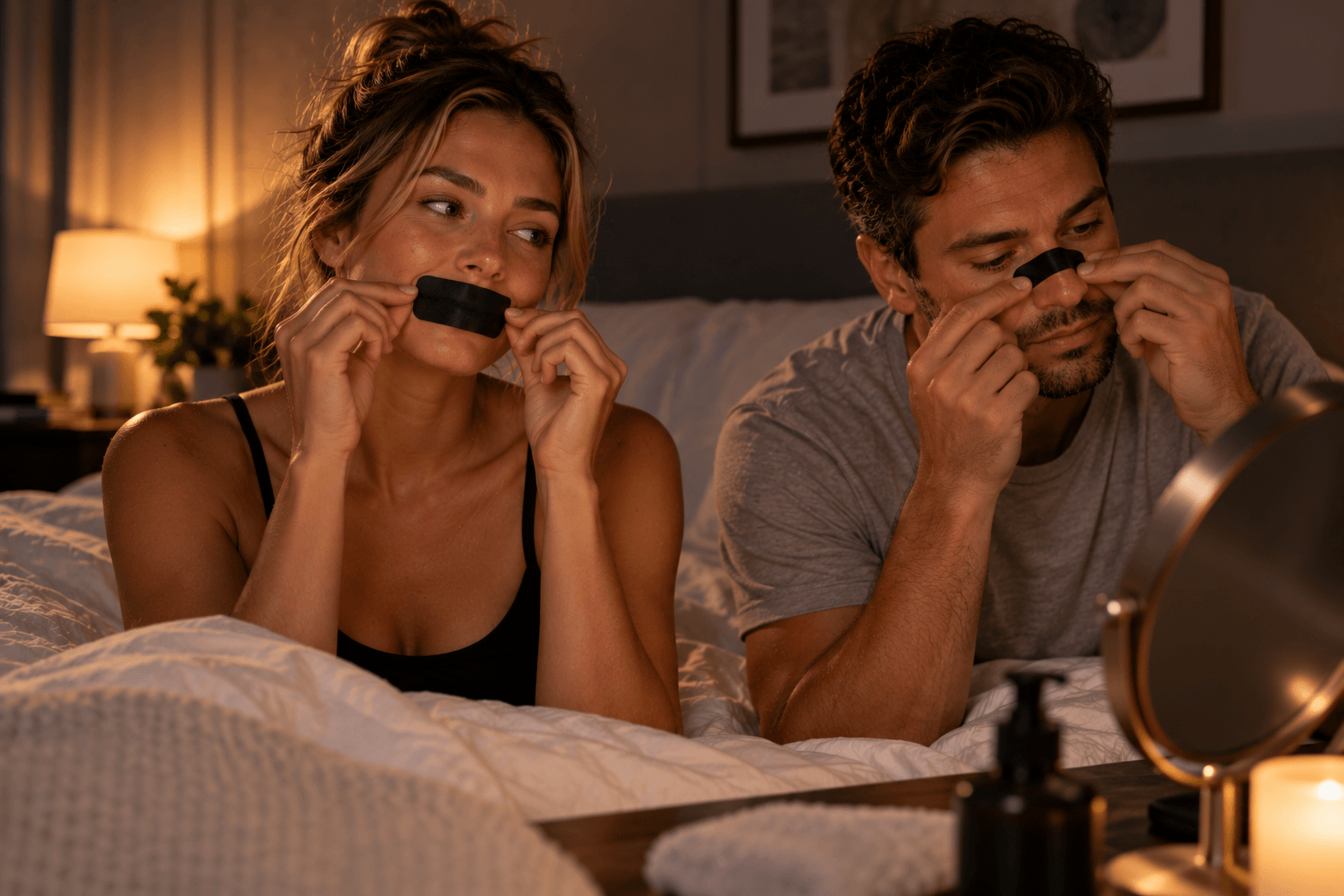
- Breathing through your nose during these exercises is a good habit, and mouth tape can help keep it going once you're asleep if your nose is clear.
The breathing exercises with the most support for bedtime are the slow ones: breathing at about six breaths a minute, belly breathing, and long-exhale patterns like 4-7-8 and cyclic sighing. Slow breathing shifts your nervous system toward rest, and a small insomnia study found it helped people fall asleep faster. Sleep trials are still few and small, so treat these as low-cost habits worth trying.
Here are six to try, with how to do each and what's actually been studied.
Slow and simple
Slow breathing at about six breaths a minute
Slow breathing at about six breaths a minute is the exercise with the most research. A 2022 meta-analysis pooled 223 studies of voluntary slow breathing and found it raised heart rate variability, a sign of parasympathetic, rest-and-digest activity, during practice, right after a session and after multi-week programs. For sleep specifically, a 2015 study had 14 people with self-reported insomnia practice slow paced breathing for 20 minutes before bed. They fell asleep faster, woke up less and spent less time awake during the night. A 2020 pilot with 30 minutes of presleep slow breathing found a change in deep-sleep brain activity but no clear effect on sleep quality.
To try it, breathe in through your nose for about four seconds and out for about six, which works out to six breaths a minute. A 2025 study found this pace raised heart rate variability more than box or 4-7-8 breathing, though some people slightly over-breathed, so keep each breath soft rather than big. Does slow breathing before bed help? covers this research in detail.
Belly breathing
Belly breathing, or diaphragmatic breathing, helps you slow your breathing rate by using your diaphragm rather than your chest. Cleveland Clinic suggests learning it lying down, which makes it an easy fit for bed. Lie on your back with your knees bent and one hand on your upper chest and one just below your ribs. Breathe in slowly through your nose so your stomach rises against your hand while your chest stays still, then tighten your stomach muscles and exhale through pursed lips. Cleveland Clinic says it can help you relax and gets easier with practice, though you may find it tiring the first few times. There's no dedicated sleep trial, but it's a gentle way to start any of the other exercises here.
Quiet nose-only breathing with your lips closed
Quiet nose-only breathing is the simplest exercise here. Close your mouth, rest your tongue and breathe gently through your nose for five minutes without trying to control the pace. In a 2023 study of 20 young adults, five minutes of nose-only breathing at rest lowered diastolic blood pressure slightly and shifted heart rate variability toward the parasympathetic side compared with five minutes of mouth-only breathing. It was one short session, not a sleep study. It also doubles as practice for keeping your mouth closed through the night, which is where mouth tape comes in below.
Counted patterns
The 4-7-8 method
Cleveland Clinic's steps: rest the tip of your tongue behind your top front teeth, exhale fully through your mouth with a whoosh, then breathe in through your nose for four counts, hold for seven and breathe out through your mouth for eight. Do four cycles. It suggests you can do it lying in bed, and that you may feel slightly lightheaded at first. In a 2022 study of 43 young adults, a few sets of 4-7-8 lowered heart rate and systolic blood pressure. A 2026 crossover study found it reduced stress in women but didn't change heart rate variability overall. It's easy to remember in the dark, which is part of its appeal. Cleveland Clinic says not to rush the counts at first: pick a pace that works for you, and slow it down as you get more practiced, keeping the same ratio.
Box breathing
Box breathing uses four equal sides. Cleveland Clinic describes it as breathing out fully, then breathing in through your nose for four counts, holding for four, breathing out for four and holding again for four, for three to four rounds. It says the counting adds a meditative element and recommends going gently without straining. Box breathing was one of the techniques tested in the 2023 Stanford trial described next, where cyclic sighing came out ahead. If holding your breath at the bottom feels uncomfortable at bedtime, shorten the holds.
Cyclic sighing
In a 2023 Stanford trial, 108 people did five minutes of breathwork or mindfulness meditation daily for a month. The researchers had participants inhale slowly, then take a second inhale to fully fill the lungs, then exhale slowly and completely. Ideally both inhales go through the nose and the exhale through the mouth. Cyclic sighing produced a bigger improvement in mood and a larger drop in breathing rate than meditation. It wasn't a sleep study, but its long exhale makes it a natural wind-down. A 2023 meta-analysis of 12 trials also linked breathwork in general to lower stress, with a small to medium effect, though its authors urged caution about the gap between hype and evidence.
How do you fit breathing exercises into your night?
Pick one exercise and stick with it for a week or two before switching. The Cleveland Clinic guidance suggests short, regular practice: three cycles of 4-7-8 twice a day, box breathing once or twice a day, and five to 10 minutes of belly breathing a few times a day while you learn it. Practicing when you're calm helps too. Cleveland Clinic says regular box breathing in calm moments makes it easier to use when you're anxious, and that 4-7-8 becomes part of your stress response the more you do it. At bedtime, do your chosen exercise lying down with the lights low, then let your breathing return to normal.
A note on alternate nostril breathing: it's often listed with these, but Cleveland Clinic says it can increase alertness and isn't the best choice before bed. Save it for daytime.
How do you keep nasal breathing going once you fall asleep?
Research: early (what this means)Most of these exercises start with a breath in through your nose, and ending a session with a few minutes of quiet nasal breathing is a nice way to drift off. If your mouth tends to fall open once you're asleep, mouth tape can help you keep breathing through your nose all night. The Sleep Foundation describes it as a gentle reminder that promotes nasal breathing, and suggests trying it during the day first. Only tape if your nose is clear, and see a doctor before trying it if you snore loudly with choking, gasping or heavy daytime tiredness. If your nose feels narrow, a nasal strip can help open it up first. More ideas for winding down are in how to fall asleep faster and nasal breathing exercises.
Check this first. Skip mouth tape and see a doctor if you snore loudly, wake up gasping, have been told you stop breathing in your sleep, or can't breathe comfortably through your nose. More on safety
Our pick: the Titan Sleep System (paid partner)
For keeping nasal breathing going after the lights are out, the set we recommend is the Titan Sleep System, which pairs TitanAir Nasal Strips with Titan Bamboo Silk Mouth Tape. Titan says the strips are drug-free with flexible spring-loaded bands placed just above the flare of the nostrils, and that the tape is bamboo silk with an adhesive made to grip through stubble and beards. Titan suggests 20 to 30 minutes of daytime practice with the tape first, which pairs well with the quiet nose breathing exercise above. It says every batch is third-party tested and certified PFAS-free, with a 30-night guarantee.
For more, browse our sleep articles.
Read next
- Nasal breathing, slow breathing and stress
- 8 benefits of breathing through your nose
- A bedtime routine for better breathing
Common questions
What is the best breathing exercise for sleep?
Slow breathing at about six breaths a minute has the most research behind it. A 2025 study found it raised heart rate variability more than 4-7-8 or box breathing. The best one is the one you'll actually do each night.
Does 4-7-8 breathing really help you fall asleep?
There's no strong sleep trial yet. A 2022 study found it lowered heart rate and systolic blood pressure in young adults, and Cleveland Clinic suggests it for winding down. It's a reasonable thing to try.
How long should I do breathing exercises before bed?
Five to 10 minutes is a good start. The insomnia study that found benefits used 20 minutes, and the Stanford cyclic sighing trial used five minutes a day.
Should I breathe through my nose or mouth during breathing exercises?
Most techniques start with an inhale through the nose. Some, like 4-7-8 and belly breathing, use a slow exhale through the mouth or pursed lips. Once you're done, settling into quiet nose breathing is a good way to drift off.
Can breathing exercises make you dizzy?
They can at first. Cleveland Clinic says you may feel a little lightheaded when starting 4-7-8, and a 2025 study found six breaths a minute led to mild over-breathing in some people. Go gently and stop if you feel unwell.
What is alternate nostril breathing, and is it good before bed?
Alternate nostril breathing, or nadi shodhana, is a yogic technique where you breathe in through one nostril at a time and out through the other, closing the opposite side with a finger. Cleveland Clinic says it can increase alertness, so it isn't the best choice right before sleep. Save it for the morning or the afternoon.
What is slow nasal breathing?
Slow nasal breathing means breathing in and out through your nose at a deliberately slow pace, often about six breaths a minute, such as four seconds in and six seconds out. A 2022 meta-analysis of 223 studies found that slow breathing raised heart rate variability, a sign of the body's rest-and-digest activity. Keep each breath soft rather than big, since a 2025 study found some people slightly over-breathed at this pace.
Is nasal breathing good for you?
Small studies point that way. In a 2023 study of 20 young adults, five minutes of nose-only breathing at rest lowered diastolic blood pressure slightly and shifted heart rate variability toward the rest-and-digest side compared with five minutes of mouth-only breathing. It was a single short session, so it's an encouraging sign rather than proof of long-term benefits.
Sources
- Effects of voluntary slow breathing on heart rate and heart rate variability: A systematic review and a meta-analysis
- Efficacy of paced breathing for insomnia: enhances vagal activity and improves sleep quality
- The Effects of Presleep Slow Breathing and Music Listening on Polysomnographic Sleep Measures: a pilot trial
- Comparing the Effects of Square, 4-7-8, and 6 Breaths-per-Minute Breathing Conditions on Heart Rate Variability, CO2 Levels, and Mood
- Diaphragmatic breathing exercises and benefits
- 4-7-8 breathing method for sleep and relaxation
- Effects of sleep deprivation and 4-7-8 breathing control on heart rate variability, blood pressure, blood glucose, and endothelial function in healthy young adults
- Acute Psychophysiological Effects of 4-7-8 and Nadi Shodhana Breathing: A Randomized Crossover Study
- Box breathing benefits and techniques
- Brief structured respiration practices enhance mood and reduce physiological arousal
- Effect of breathwork on stress and mental health: A meta-analysis of randomised-controlled trials
- Acute nasal breathing lowers diastolic blood pressure and increases parasympathetic contributions to heart rate variability in young adults
- Alternate nostril breathing
- Mouth taping for sleep: does it work?
- Titan Sleep System (Nasal Strips + Mouth Tape)
About this article
- Research
- 15 published sources, listed above.
- Evidence
- Early. How we rate it
- Last checked
- October 10, 2026
- Funding
- Paid partner of Titan Recovery. Their ads are labeled.
- Found an error?
- Tell us. We log fixes on the corrections page.
* This content is for informational and educational purposes only and is not medical advice. It is not intended to diagnose, treat, cure or prevent any disease or health condition. Talk to a qualified healthcare provider about your health.