In short
- In a 2015 lab study, reading on a tablet for about 4 hours before bed made people take nearly 10 minutes longer to fall asleep than reading a printed book, and lowered evening melatonin.
- In a 2021 trial of 167 young adults, an hour of iPhone use before bed, with or without Night Shift, made no significant difference to sleep compared with no phone.
- A 2025 survey of 45,202 Norwegian students linked each extra hour of screen time after going to bed with 59% higher odds of insomnia symptoms and 24 minutes less sleep.
- A 2023 review of 42 studies in 16 to 25 year olds linked digital media use with shorter, poorer sleep, but couldn't say which causes which.
- The American Academy of Sleep Medicine suggests turning off devices at least 30 minutes before bed.
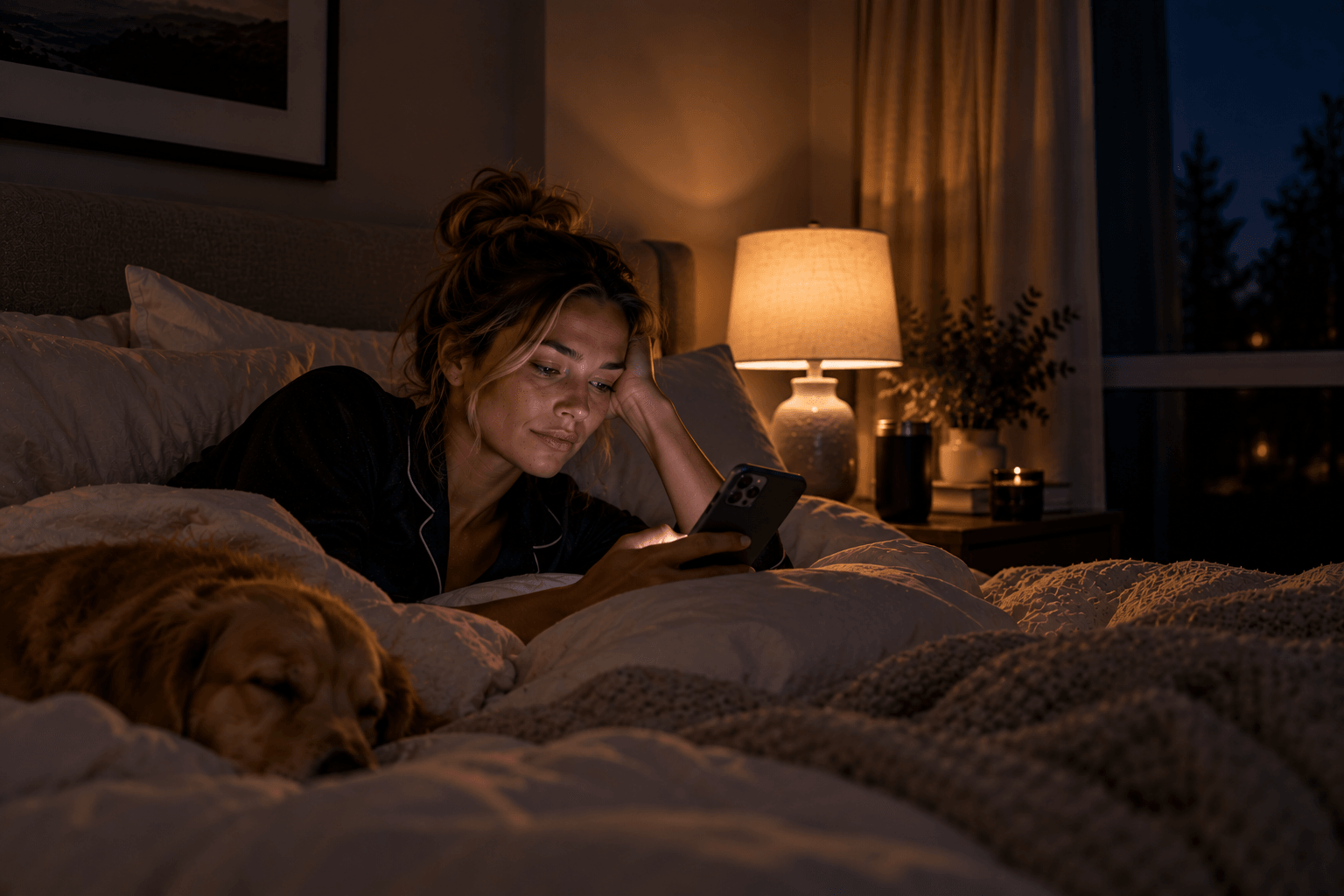
Yes, screens before bed can hurt your sleep, but usually by less than the headlines suggest. Lab studies show that bright screens late in the evening suppress melatonin and add a few minutes to the time it takes to fall asleep. In everyday life, the bigger issue seems to be how long you stay on your phone once you're in bed.
What does the research say about screens and sleep?
Research: moderate (what this means)The best-known study was published in PNAS in 2015. Twelve healthy young adults lived in a sleep lab for two weeks. For five evenings in a row they read on an iPad for about 4 hours before bed in a dimly lit room, and for five evenings they read printed books in the same room.
After reading on the tablet, they took nearly 10 minutes longer to fall asleep on average. They also felt less sleepy in the evening, released less melatonin, had a later body clock and felt less alert the next morning. The authors concluded that evening light from these devices delays the circadian clock and suppresses melatonin.
That's a clear effect, but the setup was extreme. Four hours of tablet reading in an otherwise dim room every night is a lot more light than most people get from a few minutes of scrolling.
Does it hold up outside the lab?
The effect of screens on sleep is murkier outside the lab. In a 2021 trial in Sleep Health, 167 young adults with iPhones were randomly assigned to one of three groups for a week: use the phone for the hour before bed with Night Shift on, use it with Night Shift off, or not use it at all. Sleep was tracked with wrist-worn monitors.
Across the whole group, there were no significant differences in sleep between the three conditions. In an exploratory analysis, people who usually slept more than 6.8 hours a night did sleep more efficiently and woke less when they skipped the phone. For people sleeping less than that, the phone made no difference.
Large surveys point the other way, though they can't prove cause and effect. A 2025 study of 45,202 Norwegian university students aged 18 to 28 found that each extra hour of screen time after going to bed was linked to 59% higher odds of insomnia symptoms and 24 minutes less sleep. A 2023 review of 42 studies in people aged 16 to 25 found that digital media use was linked to shorter sleep and poorer sleep quality, and that most studies of bedtime or night-time use found links to poor sleep. The authors said more research is needed to work out which way the link runs.
Is it the light or what you're doing?
It's probably both the light and what you're doing on the screen. The Sleep Foundation explains that the blue light screens give off can suppress melatonin, and that stimulating content such as social media, games or work email can make it harder to wind down.
The type of activity may matter less than the time spent. In the Norwegian student study, the link between screen time in bed and poor sleep was the same for social media as for other activities like watching films or gaming. The 2023 review found links for phones, computers, internet and social media, but not for television, game consoles or tablets.
Messages after lights out may matter too. A 2016 Belgian survey of 844 adults aged 18 to 94 found that sending or receiving texts and calls after lights out was linked to taking longer to fall asleep and worse sleep efficiency. Bedtime phone use was also linked to more daytime fatigue.
Is it only screens, or room lights too?
It isn't only screens, because room lighting counts as well. The Sleep Foundation notes that fluorescent and LED lights also give off blue light, and cites research suggesting that ordinary indoor light of 100 lux or more can suppress melatonin. In one study it describes, bright bedroom lighting cut night-time melatonin production by as much as 90 minutes compared with dim lighting.
Children may be more sensitive. The Sleep Foundation says children are particularly vulnerable to sleep problems from screens at night, and that those who use devices at bedtime often don't get enough good-quality sleep. Phones are also hard to leave behind at any age: in the Belgian survey, six in ten adults took their phone to the bedroom.
Does night mode help?
Night mode doesn't help much on its own, based on the evidence so far. In the 2021 iPhone trial, Night Shift made no measurable difference to sleep. For people who were already sleeping enough, putting the phone away worked better than using it with Night Shift on.
The Sleep Foundation says the most effective night modes both reduce blue light and lower the screen's brightness, so if your phone doesn't dim automatically, turn the brightness down yourself.
Do blue light blocking glasses work?
Blue light blocking glasses may work for people who struggle with sleep, based on early, promising evidence. In a 2018 randomized trial, 14 adults with insomnia symptoms wore amber-tinted lenses or clear lenses for 2 hours before bed for a week, then switched. With the amber lenses, they reported better sleep quality and longer sleep, and wrist monitors also recorded more total sleep. It was a small study, so treat it as a lead rather than a settled answer.
How long before bed should you put the phone down?
The American Academy of Sleep Medicine (AASM) suggests turning off electronic devices at least 30 minutes before bedtime, and limiting bright light in the evening in general. It also says that if you can't fall asleep after 20 minutes, you should get up and do something quiet without electronics.
The Sleep Foundation goes a bit further. It suggests that the last hour before bed should be for relaxing activities without screens, and it recommends taking devices out of the bedroom altogether. Its other advice is to keep room lights dim and, if you read on an e-reader, to turn the display down as far as it goes.
What should you do instead?
Instead of screens before bed, start with the change that's easiest to keep. Charging your phone outside the bedroom follows the Sleep Foundation's advice directly, and a set time to stop scrolling covers the AASM's 30-minute rule. If you like to read in bed, the Sleep Foundation says dim red, yellow or orange light is considered best for night-time reading, since those colors have little or no effect on the body clock.
If screens aren't the problem and you still lie awake, the techniques in how to fall asleep faster are a good next step. If you've been sleeping badly for months, a structured approach like CBT for insomnia has the strongest evidence. If you use your phone to track sleep or snoring overnight, see snoring apps and sleep trackers.
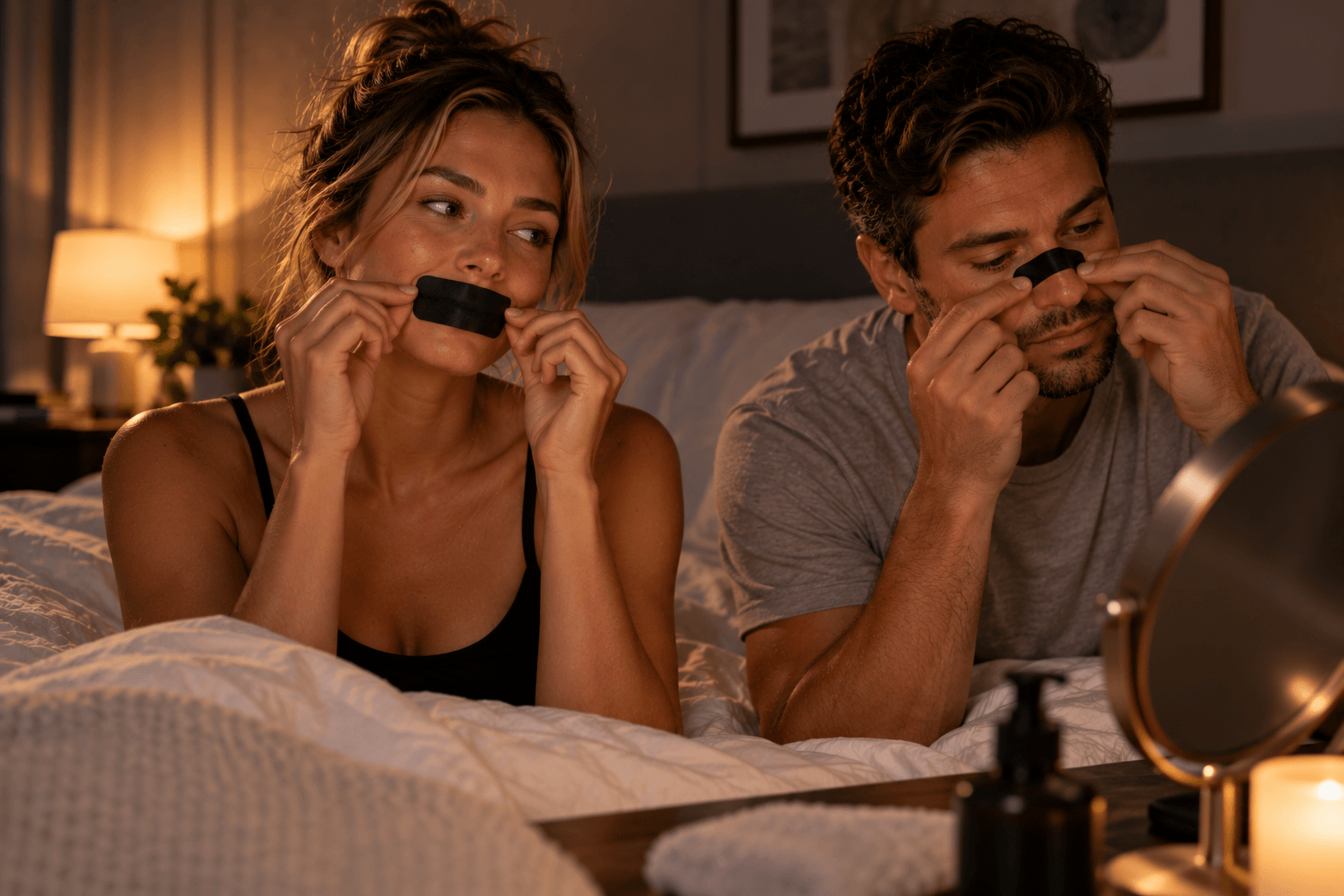
If you want to try mouth tape and nasal strips together, our pick is the Titan Sleep System, which pairs TitanAir Nasal Strips with Titan Mouth Tape.
Read next
- Sleep hygiene: the habits with the best evidence
- How late is too late for caffeine?
- Why do I wake up tired?
Common questions
How long before bed should I stop using my phone?
The American Academy of Sleep Medicine suggests turning off electronic devices at least 30 minutes before bedtime. The Sleep Foundation suggests keeping the last hour before bed for relaxing activities that don't involve screens.
Does night mode or Night Shift help?
The evidence is weak. In a 2021 trial of 167 young adults, using an iPhone for an hour before bed with Night Shift on made no significant difference to sleep compared with Night Shift off or no phone at all. The Sleep Foundation suggests also dimming the screen if you use night mode.
Is it the blue light or the content that keeps you awake?
Probably both. Lab studies show light from screens can suppress melatonin and delay the body clock. The Sleep Foundation also points to stimulating content such as games, social media and work email, which can make it harder to relax.
Do blue light blocking glasses work?
There's some early evidence. In a small 2018 trial of 14 people with insomnia symptoms, wearing amber lenses for 2 hours before bed for a week improved several sleep measures compared with clear lenses. Larger studies are needed.
Is watching TV in bed as bad as using a phone?
It may be less of an issue. A 2023 review of studies in 16 to 25 year olds found links between poor sleep and phone, computer, internet and social media use, but not television, game consoles or tablets. The Sleep Foundation still advises against TV in the bedroom.
Is an e-reader better than a tablet at night?
The Sleep Foundation says e-readers like the Kindle emit blue light but not to the same extent as other devices, and suggests dimming the display as much as possible. It also says dim red, yellow or orange light is considered best for night-time reading.
Sources
- Evening use of light-emitting eReaders negatively affects sleep, circadian timing, and next-morning alertness
- Does iPhone Night Shift mitigate negative effects of smartphone use on sleep outcomes in emerging adults?
- How and when screens are used: comparing different screen activities and sleep in Norwegian university students
- Digital media use and sleep in late adolescence and young adulthood: a systematic review
- Bedtime mobile phone use and sleep in adults
- Blocking nocturnal blue light for insomnia: a randomized controlled trial
- Healthy sleep habits
- How does blue light from electronic devices affect sleep?
About this article
- Research
- 8 published sources, listed above.
- Evidence
- Moderate. How we rate it
- Last checked
- October 4, 2026
- Funding
- Paid partner of Titan Recovery. Their ads are labeled.
- Found an error?
- Tell us. We log fixes on the corrections page.
* This content is for informational and educational purposes only and is not medical advice. It is not intended to diagnose, treat, cure or prevent any disease or health condition. Talk to a qualified healthcare provider about your health.