In short
- Start with the exact claim. The FTC says health claims need competent and reliable scientific evidence, usually randomized controlled trials.
- Research should match the product and the benefit being sold, and customer testimonials can't stand in for it.
- FDA cleared, FDA approved and FDA registered mean different things, and many low-risk devices never go through premarket review.
- A money-back guarantee should refund the full price, and the FTC says any conditions should be clearly disclosed.
- No gadget replaces a sleep apnea check if you snore with gasping, choking or breathing pauses.
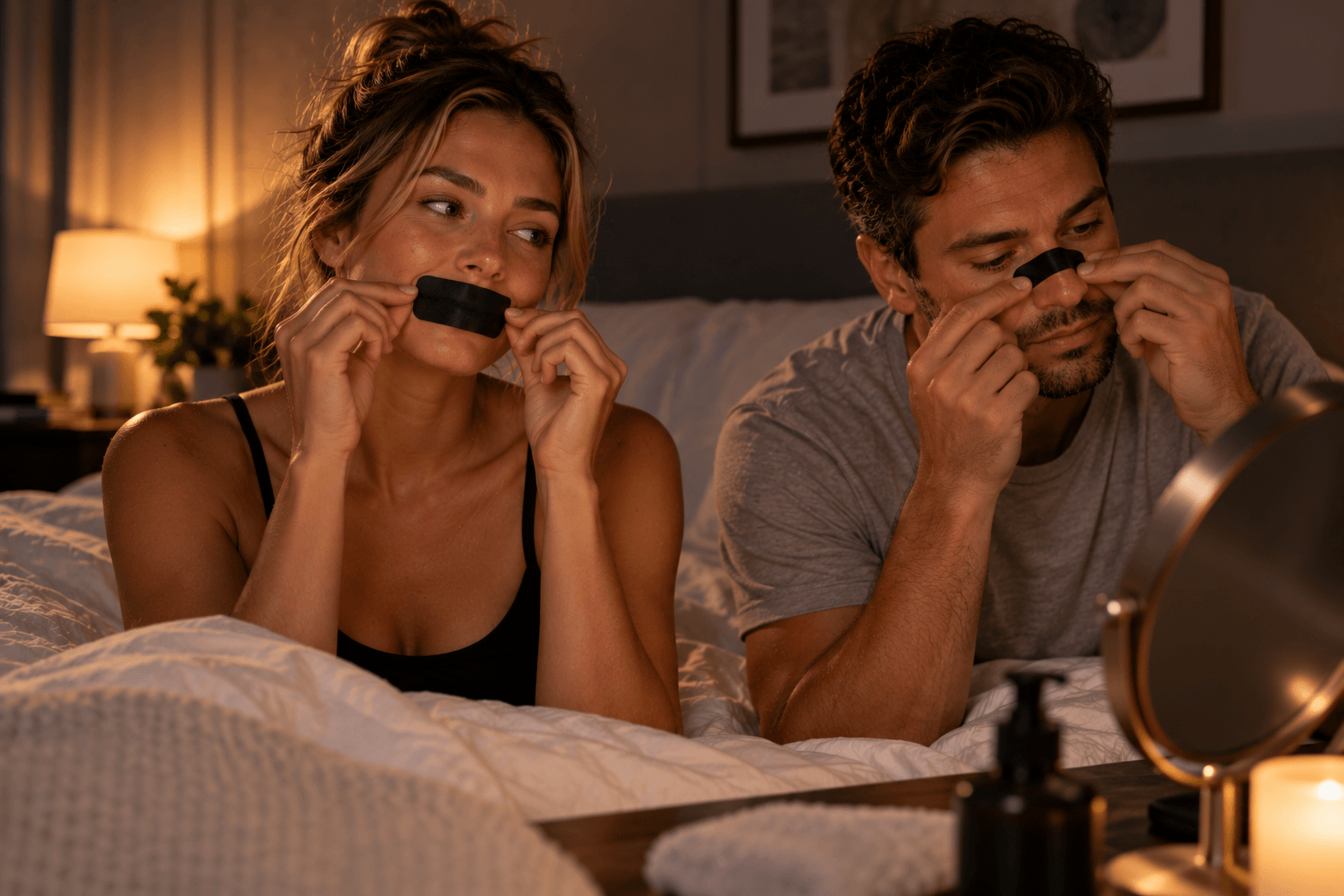
Before you buy a sleep gadget, find out exactly what it claims to do, whether research backs that claim for that product, and how it's regulated. Then check what it's made of, who shouldn't use it, what happens if it doesn't work for you and whether it could hide a problem a doctor should see. These eight questions work for anything from mouth tape and nasal strips to pillows, mouthpieces and trackers.
Questions about the claim
What exactly does it say it will do?
Read the claim word by word. "Supports nasal breathing" is a different promise from "stops snoring", and both are different from "treats sleep apnea". The FTC's health products guidance says claims about health benefits must be backed by competent and reliable scientific evidence, even when an ad doesn't say how much support it has.
FDA also draws a line here. Its general wellness policy covers low-risk products that promote a healthy lifestyle, and software meant to encourage a healthy lifestyle that's unrelated to diagnosing or treating a disease isn't counted as a medical device at all. A product that talks about wellness and one that talks about a medical condition are making different kinds of promises.
Images count too. The FTC says pictures of microscopes, molecules or medical journals in an ad can imply a product has been clinically proven, even if the words never say so.
Is there research on this product for this claim?
The FTC says randomized controlled trials are generally the kind of evidence experts would require for health benefit claims. It also warns about a common problem: a company has valid studies, but they don't support the claim in its ad. Research should be relevant to the specific product and the specific benefit.
The FTC also looks at sample size, how long a study ran and what it measured. A clinical study showing gains on a few lab tasks, it notes, doesn't support a broad claim that a product improves memory, and the same logic applies to sleep claims.
A comparison group matters as well. In two 2019 trials of nasal strips in people with nighttime congestion, both the real strips and the placebo strips with no springs were followed by improvements, and the real strips weren't better on the main sleep measures. Without a placebo, both groups would have looked like successes. Ask which study a brand means, who was in it and what was measured. Our article on mouth tape marketing claims walks through this for one product type.
Are the reviews doing all the work?
Testimonials are useful for comfort and fit, but they aren't evidence that a product works. The FTC says it isn't enough for a testimonial to reflect an honest opinion. Advertisers also need scientific evidence that the product will work for buyers as it did for the endorser, and they must disclose material connections, such as a financial link, that consumers wouldn't expect.
Questions about safety and regulation
Is it regulated, and what does "FDA cleared" mean?
FDA classifies medical devices by risk. Class III devices generally need FDA approval. Many Class II devices are sold after 510(k) clearance, which means the maker showed the device is substantially equivalent to one already legally marketed. Class I devices are subject to general controls only, and most are exempt from premarket notification.
Sleep gadgets fall in different places. US regulations classify nasal dilators, including adhesive strips, as Class I devices exempt from premarket notification, subject to limits. Mouthpieces for snoring and sleep apnea, such as jaw-advancing and tongue-retaining devices, are Class II. So "FDA approved" on a nasal strip or a pillow is worth questioning.
Who shouldn't use it?
A good product page tells you who it isn't for. For mouth tape, Sleep Foundation says it shouldn't be used by people with untreated sleep apnea, chronic nasal congestion or difficulty breathing through the nose. If a sleep product doesn't mention anyone who should skip it, that's worth noting. Our guide to whether mouth taping is safe shows what this looks like.
What's it made of?
For anything that touches your skin overnight, materials matter. Be careful with "hypoallergenic": for cosmetics, FDA says there are no federal standards or definitions for the term, and it means whatever a company wants it to mean. The adhesive type and any described skin testing tell you more. Even well-made products can cause trouble. Sleep Foundation lists skin irritation, discomfort, disrupted sleep and breathing issues among possible side effects of mouth taping, and suggests testing tape during the day to make sure you can breathe easily through your nose. Our article on mouth tape skin irritation covers what to look for.
You may also see "PFAS-free". The EPA describes PFAS as widely used, long-lasting chemicals that break down very slowly, and says many are found in the blood of people and animals around the world. If a brand makes that claim, check whether it describes independent testing.
Questions about the purchase
What happens if it doesn't work for you?
Sleep products often take a few nights to judge, so the return terms matter. FTC guidance says a seller should use terms like "satisfaction guarantee" or "money back guarantee" only if it refunds the full purchase price on request. Ads mentioning a guarantee should clearly disclose any conditions, such as returning the unused portion within 30 days. Look for the length of the trial and what you need to send back. Our guide to choosing a sleep tape brand adds tape-specific checks.
Could it hide a problem that needs a doctor?
A sleep gadget could hide a problem that needs a doctor, and this is the question people skip. A 2018 position statement from the American Academy of Sleep Medicine said consumer sleep technology can't be used to diagnose or treat sleep disorders, because it lacks validation and FDA clearance. Sleep researchers have also described orthosomnia, where people seek treatment for sleep problems they've self-diagnosed from tracker data. See snoring apps and sleep trackers.
The American Academy of Sleep Medicine says snoring is likely to be a sign of sleep apnea when it comes with silent breathing pauses and choking or gasping sounds, and that people with sleep apnea often feel sleepy during the day. If that sounds familiar, a home sleep apnea test or a sleep study comes before any gadget. The academy says a home test gives a medical provider information to diagnose sleep apnea while you sleep at home, using equipment that measures your breathing and blood oxygen level.
How do mouth tape and nasal strips measure up?
Run the questions on mouth tape and nasal strips and they hold up reasonably well. Each has studies behind it: a small 2022 study of mouth breathers with mild sleep apnea found snoring roughly halved after a week of taping (the research), and in a 2000 placebo-controlled trial in people with chronic rhinitis, nasal strips lowered snoring frequency. The evidence is still small, which is why we rate it as limited.
Research: limited (what this means)Check that you can breathe comfortably through your nose with our nose test before trying tape.
Check this first. Skip mouth tape and see a doctor if you snore loudly, wake up gasping, have been told you stop breathing in your sleep, or can't breathe comfortably through your nose. More on safety
Our pick (paid partner)
If tape and strips fit your snoring, our pick is the Titan Sleep System from Titan Recovery, which pairs TitanAir Nasal Strips with Titan Mouth Tape. This is our recommendation, not the result of testing or ranking products ourselves.
On the questions above, Titan says both products are third-party tested and certified PFAS-free, and it offers a 30-night guarantee that refunds you if your sleep isn't better after 30 nights. More on sleep products is on our sleep topic page.
Read next
- Mouth taping claims from social media, checked against the research
- What mouth tape is made of
- How to stop snoring
Common questions
What does FDA cleared mean on a sleep device?
It usually means the device went through 510(k) clearance, which lets a moderate-risk device be sold once the maker shows it's substantially equivalent to one already legally marketed. That's different from FDA approval, which is the review used for the highest-risk devices.
Are nasal strips regulated?
Yes. US regulations classify nasal dilators, including adhesive strips and devices worn inside the nostrils, as Class I devices. They're exempt from premarket notification, subject to limits.
Can a sleep tracker diagnose sleep apnea?
No. A 2018 position statement from the American Academy of Sleep Medicine said consumer sleep technology can't be used to diagnose or treat sleep disorders, because it lacks validation and FDA clearance.
Do customer reviews prove a sleep product works?
No. The FTC says an honest testimonial isn't enough on its own, and advertisers need scientific evidence that the product will work for buyers as it did for the endorser.
What does hypoallergenic mean on a sleep product?
Less than it sounds. FDA says there are no federal standards or definitions for the term on cosmetics, so it means whatever a company wants it to mean. The adhesive and materials tell you more.
What should a sleep product guarantee include?
Under FTC guidance, a satisfaction or money-back guarantee should refund the full purchase price on request, and the ad should clearly disclose any conditions, such as returning unused product within a set time.
Sources
- Health products compliance guidance
- General wellness: policy for low risk devices
- Is it really 'FDA approved'?
- 21 CFR 874.3900: Nasal dilator
- 21 CFR 872.5570: Intraoral devices for snoring and intraoral devices for snoring and obstructive sleep apnea
- Hypoallergenic cosmetics
- PFAS explained
- 16 CFR 239.3: Satisfaction guarantees and similar representations in advertising
- Consumer sleep technology: an American Academy of Sleep Medicine position statement
- Orthosomnia: are some patients taking the quantified self too far?
- Sleep quality and congestion with Breathe Right nasal strips: two randomized controlled trials
- Home sleep apnea test
- Obstructive sleep apnea
- Mouth taping for sleep: does it work?
- The impact of mouth-taping in mouth-breathers with mild obstructive sleep apnea: a preliminary study
- External nasal dilation reduces snoring in chronic rhinitis patients: a randomized controlled trial
- Titan Sleep System (Nasal Strips + Mouth Tape)
About this article
- Research
- 17 published sources, listed above.
- Evidence
- Limited. How we rate it
- Last checked
- October 5, 2026
- Funding
- Paid partner of Titan Recovery. Their ads are labeled.
- Found an error?
- Tell us. We log fixes on the corrections page.
* This content is for informational and educational purposes only and is not medical advice. It is not intended to diagnose, treat, cure or prevent any disease or health condition. Talk to a qualified healthcare provider about your health.