In short
- Cleveland Clinic says snoring becomes more common with age because muscle tone decreases, which narrows the airway.
- A 2006 study of 38 adults found that with age, the tongue muscle that helps hold the throat open responded less, and fat pads beside the throat grew larger.
- The NHLBI says the risk of sleep apnea rises with age, and women's risk goes up during and after menopause.
- Side sleeping, less alcohol in the evening, a clear nose and keeping your mouth closed are sensible things to try at home.
- Loud snoring with gasping, choking, pauses in breathing or daytime tiredness is a reason to see a doctor at any age.
People tend to snore more as they get older mainly because the muscles that hold the throat open lose tone, so the airway narrows and vibrates more easily during sleep. Weight changes, evening alcohol, some medicines and, for women, menopause can add to it. Most of the usual home fixes still help, but snoring that comes with gasping, choking or daytime tiredness needs a doctor's opinion.
What changes in the airway as you age?
Cleveland Clinic puts it simply: snoring becomes more common as we age because muscle tone decreases, and that causes the airways to shrink. Snoring itself is the sound of soft tissue in the mouth, throat or nose vibrating as air squeezes past a narrowed spot. The NHS explains that these parts relax and narrow when you fall asleep, so anything that adds to the narrowing makes snoring more likely.
Research backs up the idea that the throat changes with age. A 2006 study in the American Journal of Medicine compared 38 healthy adults of different ages using sleep studies, MRI scans and measurements of the muscles around the airway. As age went up, the genioglossus, the main tongue muscle that helps keep the throat open, responded less strongly when the airway was put under suction. The fat pads beside the throat got larger with age regardless of body weight, and the soft palate got longer. The authors read these changes as making the throat more prone to collapse in older people.
The NHLBI describes a similar picture for sleep apnea. It says the risk increases as you get older, and that fatty tissue can build up in the neck and tongue with age.
How common is snoring later in life?
Snoring is very common at any age. A 2024 systematic review estimates that about 45% of adults snore occasionally and 25% snore regularly. It notes that snoring is more common in men and increases in women after menopause, probably because of hormone changes.
Why can snoring start after menopause?
Research: limited (what this means)Snoring can start after menopause because hormone changes seem to play a part. The NHLBI says women may be at increased risk for sleep apnea during and after menopause, partly because of hormone changes. In the Wisconsin Sleep Cohort Study, which followed 589 women with in-lab sleep studies, postmenopausal women had higher odds of sleep-disordered breathing than premenopausal women, even after the researchers adjusted for age and body size. The authors said women going through menopause who complain of snoring, daytime sleepiness or poor sleep should be checked for it. We cover this in more depth in menopause, snoring and sleep apnea.
What else makes snoring worse with age?
Extra weight, alcohol, sedatives, congestion and back sleeping can all make snoring worse with age, and some of these triggers are easier to change than the airway itself.
- Extra weight plays a part. The NHS says you're more likely to snore if you're overweight, and the NHLBI says people with obesity can have extra fat in the neck that blocks the upper airway.
- Cleveland Clinic lists alcohol, sedatives and even lack of sleep as things that relax the muscles in your airway. The NHS says sleeping pills can sometimes cause snoring. There's more in why alcohol makes snoring worse.
- Cleveland Clinic also notes that nasal congestion from allergies and colds can block airflow, and a deviated septum can too.
- The NHS lists back sleeping among the things that make snoring more likely.
Medicines matter in another way. The NIDCR says hundreds of medicines can reduce saliva, including some for high blood pressure, depression and bladder control, and that dry mouth is not a normal part of aging. If you wake with a dry mouth as well as snoring, it's worth asking a pharmacist or doctor whether a medicine is involved.
What can you do about snoring as you get older?
What you can do about snoring as you get older is the same at 65 as at 35. The NHS suggests sleeping on your side, losing weight if you need to, not smoking, not drinking too much alcohol and avoiding sleeping pills. Its advice is to match the fix to the cause: nasal dilators or strips for a blocked or narrow nose, and a device that keeps the mouth closed if your mouth falls open in your sleep. Our guide on how to stop snoring covers each option, and sleep position and snoring explains how to stay off your back.
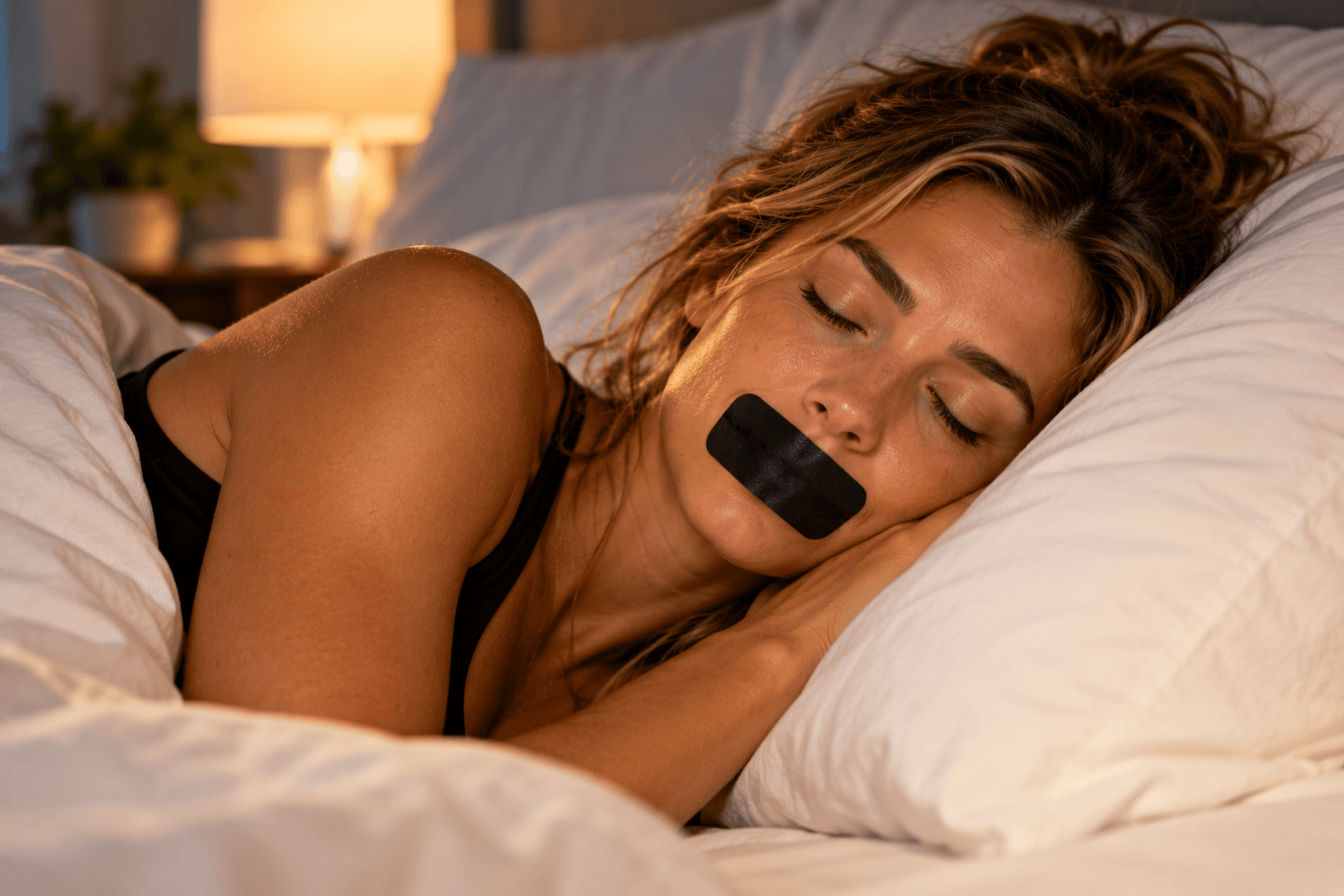
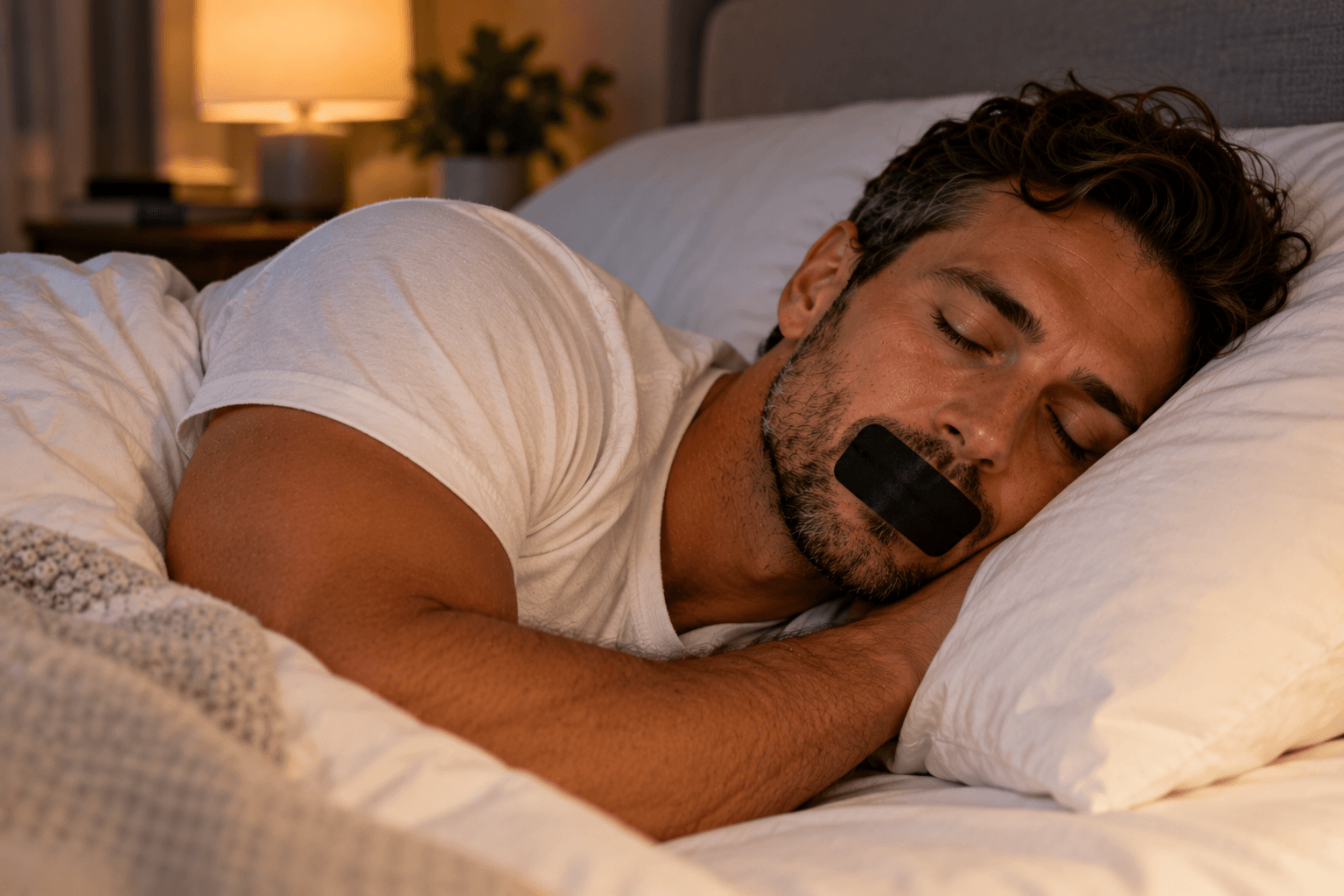
Mouth tape is a simple way to keep your lips together so air goes through your nose. The research is early but encouraging. A small 2022 study of mouth breathers with mild sleep apnea found snoring roughly halved after a week of taping (the research). A 2025 review in PLOS One found that the three studies measuring snoring all reported a drop when the mouth was kept closed, though it rated the studies as poor quality and warned about taping with a blocked nose. That's why tape is only for people who breathe easily through their nose and have no signs of sleep apnea. Take our nose test before you try it.
Older skin and mouths need a little extra thought, such as dentures, thin skin and medicines that dry the mouth. Our guide to mouth taping for older adults walks through what to check, and the safety page lists who should skip tape.
Check this first. Skip mouth tape and see a doctor if you snore loudly, wake up gasping, have been told you stop breathing in your sleep, or can't breathe comfortably through your nose. More on safety
If you'd like to try a nasal strip and mouth tape together, the Titan Sleep System is what we recommend. Titan says the system pairs TitanAir Nasal Strips with Titan Mouth Tape as one nightly routine.
When is snoring a sign of sleep apnea?
Snoring can be a sign of sleep apnea when it comes with pauses, gasping or daytime sleepiness, and this matters more as you age, because the NHLBI says sleep apnea risk rises with age. The NHS lists these sleep apnoea symptoms:
- breathing that stops and starts while you sleep
- gasping, snorting or choking noises
- waking up a lot
- loud snoring
- feeling very tired during the day, finding it hard to concentrate, mood swings or a headache when you wake up
The NHLBI adds that women more often notice tiredness, insomnia, morning headaches and waking often, and that some people with sleep apnea do not have symptoms such as snoring. The NHS says to see a GP if your breathing stops and starts, you gasp or choke in your sleep, or you always feel very tired during the day, and that it helps to bring someone who has seen it happen. It warns that sleep apnoea can be serious if it isn't diagnosed and treated. Mouth tape and nasal strips are not treatments for it.
If you're not sure which you're dealing with, snoring vs. sleep apnea explains the differences, and questions to ask your doctor about snoring helps you prepare for the appointment.
Is snoring just part of getting older?
Snoring is common as you get older, but you don't have to accept it. Cleveland Clinic says occasional snoring is usually harmless and that most people manage snoring with lifestyle changes. It also encourages partners to treat loud, frequent snoring as a possible sign of a sleep disorder rather than just an annoyance. If simple changes help, keep them up. If they don't, or the warning signs above apply, a doctor can look for the cause and arrange a sleep study if needed. For more on sleep, browse our sleep articles.
Read next
- 10 warning signs of sleep apnea you should not ignore
- Mouth taping for older adults: what to check first
- 10 reasons you snore, and what to try for each
Common questions
Why do I snore now when I never used to?
Cleveland Clinic says snoring gets more common with age as muscle tone drops and the airway narrows. New snoring can also follow weight gain, more evening alcohol, a new medicine or, for women, menopause. If it comes with gasping, choking or daytime sleepiness, see a doctor.
Is it normal for snoring to get louder with age?
It's common. Cleveland Clinic says snoring becomes more common with age as muscle tone decreases. Occasional snoring is usually harmless, but Cleveland Clinic says loud, disruptive or frequent snoring may be a symptom of obstructive sleep apnea.
Do women snore more after menopause?
Yes. A 2024 review notes that snoring increases in women after menopause, probably because of hormone changes. A large cohort study also linked postmenopause with higher odds of sleep-disordered breathing.
Is snoring in older adults a sign of sleep apnea?
Not always, but the two often overlap. The NHS lists loud snoring, breathing that stops and starts, gasping or choking noises and feeling very tired during the day as sleep apnoea symptoms, and says to see a GP if you have them.
Can older adults use mouth tape for snoring?
Many can, if they breathe easily through the nose and have no signs of sleep apnea. It's worth checking first for medicines that dry the mouth, dentures, thin skin and any trouble breathing through the nose.
Do sleeping pills make snoring worse?
They can. The NHS says sleeping pills can sometimes cause snoring, and Cleveland Clinic lists sedatives and alcohol among the things that relax the muscles in your airway.
Is it normal to snore with your mouth closed?
It can happen, and it's a useful clue to the cause. The NHS lists a tongue partly blocking the back of the throat and a blocked or narrow nose as causes of snoring alongside a mouth that falls open, and Cleveland Clinic explains that snoring comes from tissues vibrating where the airway is partly blocked. Closed-mouth snoring points to the throat or nose, so side sleeping or a clearer nose are better places to start than tape.
Should I get mouth tape for sleeping?
Mouth tape is worth trying if your mouth tends to fall open at night, your nose feels clear and you have no signs of sleep apnea. A small 2022 study of mouth breathers with mild sleep apnea found snoring roughly halved after a week of taping. If you snore with your mouth closed or your nose is often blocked, tape is less likely to be the answer.
Sources
- Snoring: causes, treatment and prevention
- Snoring
- Sleep apnoea
- Sleep apnea: causes and risk factors
- Sleep apnea and women
- Aging influences on pharyngeal anatomy and physiology: the predisposition to pharyngeal collapse
- The potential effect of changing patient position on snoring: a systematic review
- Menopausal status and sleep-disordered breathing in the Wisconsin Sleep Cohort Study
- Dry mouth
- The impact of mouth-taping in mouth-breathers with mild obstructive sleep apnea: a preliminary study
- Breaking social media fads and uncovering the safety and efficacy of mouth taping in patients with mouth breathing, sleep disordered breathing, or obstructive sleep apnea: A systematic review
- Titan Sleep System
About this article
- Research
- 12 published sources, listed above.
- Evidence
- Limited. How we rate it
- Last checked
- October 10, 2026
- Funding
- Paid partner of Titan Recovery. Their ads are labeled.
- Found an error?
- Tell us. We log fixes on the corrections page.
* This content is for informational and educational purposes only and is not medical advice. It is not intended to diagnose, treat, cure or prevent any disease or health condition. Talk to a qualified healthcare provider about your health.