In short
- Sleep matters for athletes: a 2021 expert consensus says elite athletes are prone to short, broken sleep, and a night or more without sleep reduces performance.
- Mouth tape is a sleep habit aimed at snoring and morning dry mouth. The studies so far haven't looked at athletic performance.
- Only tape when your nose is clear, and talk to a doctor first if you have asthma.
- Leave an hour between a hard session and bed, and skip alcohol in the three to four hours before sleep.
- Our pick is Titan Bamboo Silk Mouth Tape.
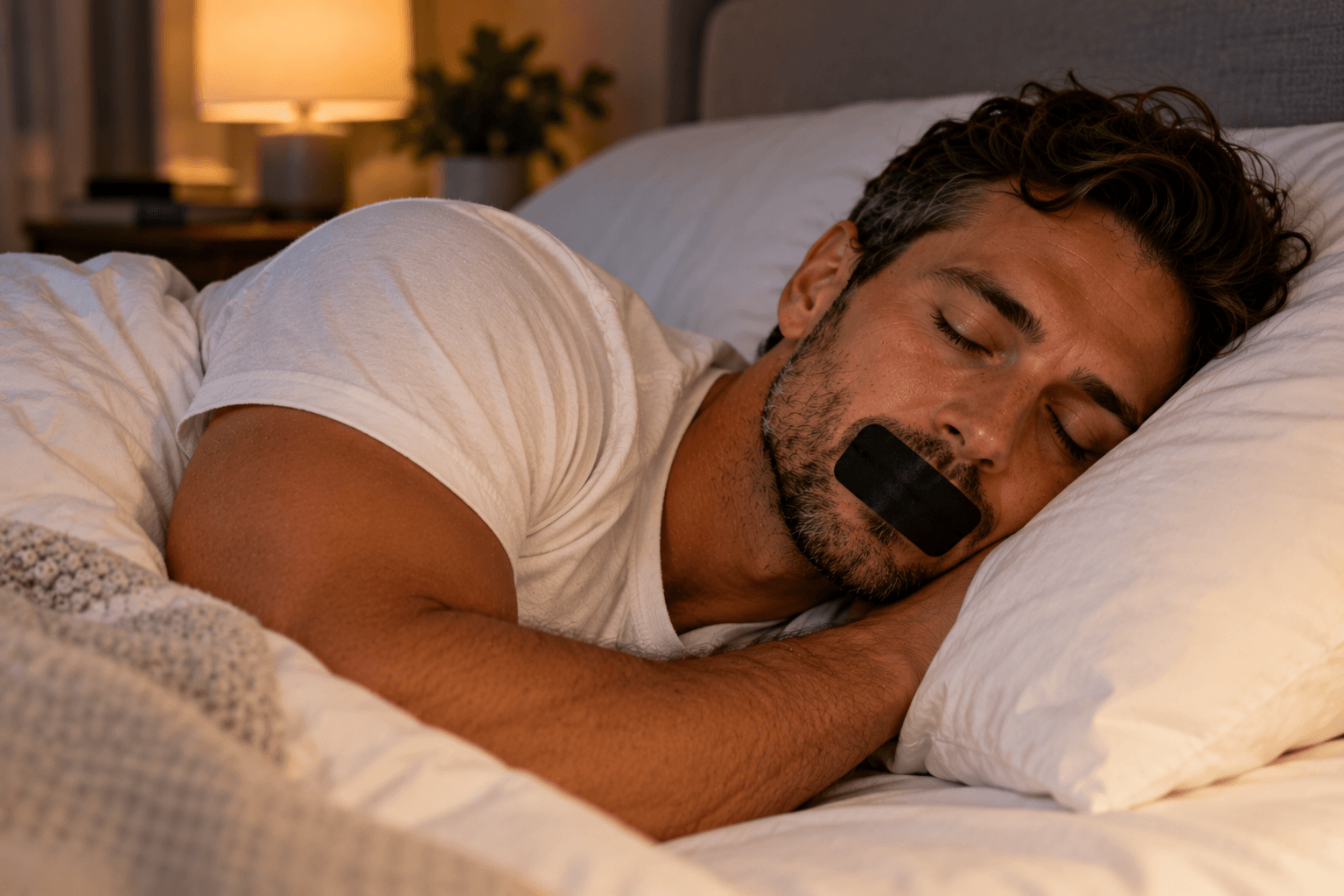
Mouth taping at night is a sleep habit, not a performance aid: it keeps your lips closed so you breathe through your nose, mostly to cut snoring and morning dry mouth. For athletes, that's still worth something, because sleep is part of recovery. Here are seven things to know before you try it, including what the evidence covers and how to fit tape around late sessions.
What mouth tape can and can't do for athletes
Research: limited (what this means)The best evidence for tape is on snoring. A small 2022 study of mouth breathers with mild sleep apnea found snoring roughly halved after a week of taping (the research), though mouth tape isn't a treatment for sleep apnea. A 2025 review in PLOS One found 10 studies of mouth taping, all in people with mouth breathing, sleep-disordered breathing or sleep apnea, and rated them as poor quality. So the research is early, and none of it looks at athletes.
The practical side is more reassuring. In a 2009 study in Respiratory Medicine, 50 adults taped their mouths at night for four weeks and managed it on a median of 26 of 28 nights. That suggests tape is something most people can build into a nightly routine without much fuss, which matters if you're adding it to a schedule that's already full of training, meals and recovery.
What should athletes know about mouth tape?
Sleep is part of training
A 2021 expert consensus in the British Journal of Sports Medicine says elite athletes are particularly prone to short sleep, under seven hours a night, and poor sleep quality, such as broken sleep. It says athletic performance drops after a night or more without sleep, and that in the wider population, habitually sleeping under seven hours makes people more susceptible to respiratory infections. Anything that makes your nights quieter and more comfortable is worth a look.
Tape is for sleep, not for your next personal best
The mouth taping studies in the 2025 review were all in people with mouth breathing, snoring problems or sleep apnea, and we haven't found any that test whether taping at night improves speed, strength or endurance. The closest research is on nasal strips during exercise: a 2021 meta-analysis found they didn't change VO2max, heart rate or perceived effort in healthy people. That doesn't make tape pointless. It means the reasons to try it are the sleep ones, like a partner who hears less snoring or waking without a dry mouth.
Active people can breathe through the nose at training effort
In a 1995 study, 20 regularly active adults could all reach an intensity high enough for an aerobic training effect while breathing only through the nose, and the authors note that nose breathing warms and humidifies the air you breathe in. Daytime nose breathing is a separate topic, covered in nasal breathing during exercise.
A clear nose comes first
Tape only works if you can breathe comfortably through your nose. A clinical trial of silicone mouth tape (NCT06587256) only accepts people who can breathe through their nose with the tape on for at least 3 minutes, and our nose test uses the same idea. Sleep Foundation advises against taping when your nose is blocked by allergies, a cold or structural issues, and Cleveland Clinic adds sinus infections and a deviated septum. In cold season or during a heavy training block, check every night and skip it when you're stuffed up. See mouth tape with a cold.
Asthma means checking with a doctor
Sleep Foundation lists asthma and other respiratory conditions as reasons not to tape unless a doctor advises it. In a 2009 study in Respiratory Medicine, 50 adults with asthma taped their mouths for four weeks. Most found it acceptable, with 36 calling it very or fairly acceptable, but it made no difference to their asthma control. If you have exercise-induced or any other asthma, talk to your doctor first, and read mouth tape and asthma.
Hard evening sessions need a buffer
Evening training is usually fine for sleep. A 2019 review in Sports Medicine found that evening exercise doesn't harm sleep overall, though vigorous exercise ending within an hour of bedtime might make it harder to fall and stay asleep. A 2021 review found high-intensity exercise finishing two to four hours before bed didn't disrupt sleep in healthy adults. The same review found that hard sessions ending between half an hour and four hours before bed slightly reduced REM sleep, while nothing else it measured changed. Give yourself time to cool down before you tape up and turn in.
Alcohol and tape don't mix well
Sleep Foundation says alcohol relaxes the tongue and throat muscles and raises resistance in the nasal passages, which can make snoring worse, and suggests avoiding it in the three to four hours before bed. On nights you've had a few, skip the tape.
How do you fit tape into a training week?
The 2021 consensus says athlete sleep is shaped by sport factors, like training, travel and competition, and by non-sport factors, like stress and anxiety. It recommends an individual approach rather than one rule for everyone. Tape fits into that as one small part of a wind-down routine, alongside the timing of hard sessions and drinks.
Start on an easy week rather than the night before a big event. Sleep Foundation suggests testing the tape during the day first to make sure you can breathe easily through your nose, so wear it while you stretch, read or watch film for 20 minutes. Then try it at night and give it about a week, since that's how long the 2022 study ran before measuring snoring again. Ask a partner or teammate whether you snore less, or use a recording app, and note how your mouth feels when you wake. If it feels wrong at any point, take it off.
Who should skip mouth tape?
The American Academy of Sleep Medicine lists loud snoring, choking or gasping during sleep and daytime sleepiness as warning signs of sleep apnea. Mouth tape isn't a treatment for sleep apnea, so see a doctor if those sound familiar. Mouth taping isn't for children either. Sleep Foundation says it hasn't been studied in children and shouldn't be tried, which matters for youth teams. For the full list, see our safety page.
Check this first. Skip mouth tape and see a doctor if you snore loudly, wake up gasping, have been told you stop breathing in your sleep, or can't breathe comfortably through your nose. More on safety
Our pick (paid partner)
Our pick for athletes is Titan Bamboo Silk Mouth Tape. We haven't tested, compared or ranked mouth tapes ourselves, so this is our recommendation based on Titan's own description of its tape.
Titan says the strip is bamboo silk rather than kinesiology tape, and describes it as soft, breathable and moisture-wicking. Sleep Foundation notes that tape can pull on facial hair, and Titan says its SilkSeal adhesive is made to grip through stubble and full beards without tugging hair or leaving residue. It's one oval size, 76 by 38 mm, worn horizontally across the lips, with no printed logo or ink on the side that touches skin, according to Titan.
Titan suggests 20 to 30 minutes of daytime practice before the first night. It says every batch is third-party tested and certified PFAS-free, and its 30-night guarantee refunds you if your sleep isn't better after 30 nights. Titan sells 30, 90, 180 and 360-night supplies, which helps if you're taping while traveling for competitions.
For more on how to start, see the mouth tape guide.
Read next
- Do nasal strips help during exercise?
- Exercise and sleep: does timing matter?
- The best mouth tape for beginners
Common questions
Does mouth taping improve athletic performance?
There's no evidence that it does. The mouth taping studies so far were in people with mouth breathing, snoring or sleep apnea, not athletes. What tape may help with is snoring and a dry mouth from sleeping with your mouth open.
Why do athletes use mouth tape?
Mostly to keep their lips closed at night so they breathe through the nose, usually for snoring or a dry mouth on waking. Better sleep matters for training, and a 2021 expert consensus says elite athletes are prone to short, poor-quality sleep.
Can athletes with asthma use mouth tape?
Talk to a doctor first. Sleep Foundation lists asthma as a reason not to tape unless a doctor advises it. In a 2009 study of 50 adults with asthma, taping at night didn't change asthma control.
Should I mouth tape after a late training session?
You can, but give yourself time to wind down. A 2019 review found evening exercise doesn't harm sleep overall, though vigorous exercise ending within an hour of bedtime might.
Can teenage athletes use mouth tape?
Not children. Sleep Foundation says mouth taping in children hasn't been studied and shouldn't be tried. A young athlete who snores or breathes through the mouth at night should see a doctor.
What mouth tape do you recommend for athletes?
Our pick is Titan Bamboo Silk Mouth Tape, a breathable bamboo silk strip with an adhesive Titan says grips through stubble and beards. The pick isn't based on our own testing.
Can I sleep with athletic tape over my mouth?
You can, as long as it's a porous tape made for skin and your nose is clear. The Sleep Foundation lists pharmacy athletic, surgical and hypoallergenic tape as porous options commonly used on skin, and warns that tape not meant for the body is more likely to cause irritation. Some companies also sell strips designed specifically for mouth taping.
Sources
- Sleep and the athlete: narrative review and 2021 expert consensus recommendations
- Breaking social media fads and uncovering the safety and efficacy of mouth taping in patients with mouth breathing, sleep disordered breathing, or obstructive sleep apnea: A systematic review
- The impact of mouth-taping in mouth-breathers with mild obstructive sleep apnea: a preliminary study
- Does the external nasal dilator strip help in sports activity? A systematic review and meta-analysis
- Comparison of maximal oxygen consumption with oral and nasal breathing
- Mouth taping for sleep: does it work?
- Study to Examine the Effect of Silicone Mouth Tape on Snoring and Mild Sleep Apnea (NCT06587256)
- Is mouth tape safe to use while sleeping?
- Effect of mouth taping at night on asthma control: a randomised single-blind crossover study
- Effects of evening exercise on sleep in healthy participants: a systematic review and meta-analysis
- The effects of evening high-intensity exercise on sleep in healthy adults: a systematic review and meta-analysis
- Alcohol and sleep
- Is it more than a snore? Recognizing sleep apnea warning signs
- Titan Recovery Bamboo Silk Mouth Tape
About this article
- Research
- 14 published sources, listed above.
- Evidence
- Limited. How we rate it
- Last checked
- October 10, 2026
- Funding
- Paid partner of Titan Recovery. Their ads are labeled.
- Found an error?
- Tell us. We log fixes on the corrections page.
* This content is for informational and educational purposes only and is not medical advice. It is not intended to diagnose, treat, cure or prevent any disease or health condition. Talk to a qualified healthcare provider about your health.