In short
- Tape holds best on clean, dry skin, so on hot nights the goal is less sweat around your mouth.
- Sleep Foundation puts the best bedroom temperature at about 65 to 68 degrees Fahrenheit, with humidity around 30% to 50%.
- Wash and dry your face before bed, and keep moisturizer and lip balm off the area the tape covers.
- Choose a breathable tape, lay it on without stretching it, and keep a spare strip by the bed.
- If heat comes with a stuffy nose from allergies, skip the tape that night.
Mouth tape is harder to keep on in hot, humid weather because tape holds best on clean, dry skin, and sweat works against that. The fix is mostly about keeping the skin around your mouth cool and dry: a cooler bedroom, a clean face at bedtime, and a tape that breathes. These seven tips cover all three.
Why does heat make tape harder to keep on?
Research: limited (what this means)There's no research on mouth tape in hot weather specifically, so these tips come from general guidance on medical tape, skin and sleep. 3M's guidance on medical tape says tape should be applied without tension to clean, dry skin. It also warns that moisture trapped against skin for a long time softens it and makes it more prone to damage, and advises keeping taped skin clean and dry.
That's the whole problem in one line. A sweaty upper lip is neither clean nor dry, and a humid room slows down how fast sweat dries. 3M describes moisture-softened skin as turning white or gray and wrinkling, and says it is more prone to damage from friction and irritants. So keeping the area dry is about comfort as well as grip. Sleep Foundation notes that excess humidity can make it harder for sweat to evaporate and make a bedroom feel stuffy.
The upside is that most of what helps the tape also helps you sleep. Mouth taping is mainly used for snoring and morning dry mouth. A small 2022 study of mouth breathers with mild sleep apnea found snoring roughly halved after a week of taping (the research). That's a habit worth keeping through summer.
Cool the room down
Aim for a cooler bedroom
Sleep Foundation puts the best bedroom temperature at about 65 to 68 degrees Fahrenheit, and says a room that's too warm can cause discomfort and restlessness. Its tips include reducing heat build-up during the day, opening windows for ventilation, and using a fan or air conditioning in hot climates. Less heat means less sweat on your upper lip. Our guide to the best bedroom temperature for sleep has more ideas.
Keep humidity in check
Sleep Foundation says the best humidity for sleeping is generally between 30% and 50%, and cites the EPA's advice that indoor humidity should never go above 60%. It suggests a hygrometer to check where your room sits, and a dehumidifier when the air is too damp. If you use a humidifier in winter, turn it off when summer arrives.
Dress the bed for heat
The American Academy of Dermatology (AAD) suggests lightweight, loose-fitting cotton clothes, fans, cool showers and air conditioning to help you sweat less in hot weather. Sleep Foundation also suggests choosing sheets, pajamas and bedding that help you sweat less.
Prep your skin
Wash and dry your face before bed
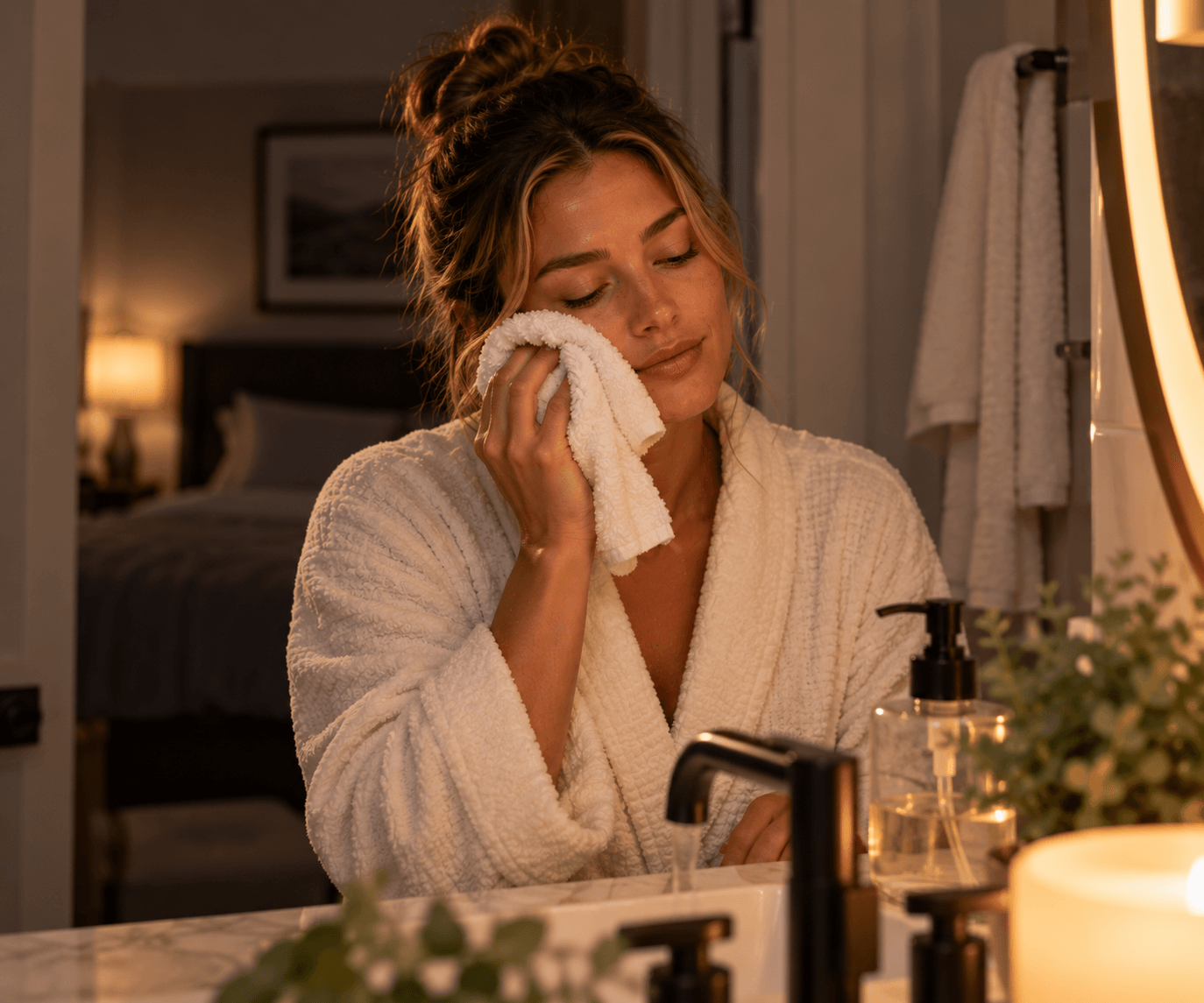
AAD recommends washing your face as soon as you can after sweating, with a gentle cleanser and lukewarm water, then patting dry with a soft towel. Do this as the last step before taping, and give your lips a minute to dry fully. A cool shower just before bed does the same job and cools you down too.
If you're sweating again by the time you reach for the tape, blot rather than wipe. AAD advises blotting sweat with a clean towel or cloth, because wiping it off can irritate the skin. Your upper lip is exactly the kind of spot where that matters, since it's about to spend the night under adhesive.
Keep moisturizer and balm off the tape area
Moisturize the rest of your face if you like, but leave your lips and the skin right around them bare at bedtime. Tape needs clean, dry skin, and a 2017 report in the Indian Journal of Anaesthesia notes that moisturizer can be used to soften tape, which is the opposite of what you want overnight. Put lip balm on in the morning once the tape is off. Our guide to lip balm and mouth tape explains the timing.
Get the tape right
Choose a breathable tape
3M advises using breathable tape in moist areas, and Sleep Foundation recommends a porous tape intended for use on skin. Some companies now make tape specifically for mouth taping, Sleep Foundation notes, which saves you trimming medical tape to size.
If you want a tape built for warm nights, our pick is the Titan Bamboo Silk Mouth Tape. Titan describes its bamboo silk as soft, breathable and moisture-wicking, and says its SilkSeal adhesive is made to grip through stubble and beards.
Apply it flat, then press it in
When tape keeps lifting, it's tempting to pull it tighter, but that backfires. 3M says stretching tape across skin is mistakenly thought to increase adhesion, and that it actually lifts the skin and causes tension blisters at the ends of the strip. Its guidance is to apply tape without tension, smooth it in place with gentle pressure, avoid gaps and wrinkles, and rub it in place to get a good seal. Sleep Foundation suggests folding over one corner so it's easy to remove in the morning.
If you have a mustache or stubble, sweat can collect in the hair above your lip. 3M's taping guidance says a clipper may be used to remove hair where tape needs to stick, and a short trim does the same job for mouth tape.
Keep a spare strip by the bed too. 3M advises replacing tape that gets soiled, and if you wake to find a strip lifting after a sweaty spell, a fresh one on dry skin will hold better than pressing the old one back down. If your skin gets sore from repeated reapplying, give it a night off. Our guide to mouth tape skin irritation covers what to look for.
What if you wake up hot and sweaty?
If you wake up hot and sweaty, check the tape. If it's still sitting flat, leave it alone. If an edge has lifted, peel it off low and slow, as 3M recommends, blot your lip dry, and put on a fresh strip rather than pressing the damp one back down. If you're too hot to settle, it's fine to leave the tape off for the rest of the night and cool the room down for tomorrow.
When should you skip tape on a hot night?
A blocked nose is a reason not to tape, whatever the weather. Sleep Foundation advises against taping when your nose is blocked by allergies, a cold or structural issues. Check your nose with our nose test before bed, and if it's stuffy, skip the tape and try again once it clears.
If the tape keeps coming off no matter what, that's common and not a sign it won't work for you. The 2022 study left out anyone whose tape came off by morning, which shows how ordinary it is. Our list of common mouth taping mistakes may spot something else.
Check this first. Skip mouth tape and see a doctor if you snore loudly, wake up gasping, have been told you stop breathing in your sleep, or can't breathe comfortably through your nose. More on safety
Our pick (paid partner)
For hot nights, our pick is the Titan Bamboo Silk Mouth Tape.
Read next
Common questions
Why does mouth tape fall off when it's hot?
Tape sticks best to clean, dry skin, according to 3M's guidance on medical tape. Sweat, and moisturizer or balm on the lips, all get between the adhesive and your skin. A cooler room and a clean, dry face give the tape a better surface to hold.
What temperature should my bedroom be for mouth taping?
There's no tape-specific number, but Sleep Foundation recommends about 65 to 68 degrees Fahrenheit for sleep in general. A cooler room means less sweating, which helps the tape hold.
Should I use a different mouth tape in summer?
A breathable tape is a sensible choice in any season. 3M advises using breathable tape in moist areas, and Sleep Foundation recommends a porous tape intended for skin.
Can I put moisturizer on before mouth tape in summer?
Keep it off the area the tape covers. Tape should go on clean, dry skin, and a 2017 report in the Indian Journal of Anaesthesia notes that moisturizer softens tape. Moisturize the rest of your face and leave your lips for the morning.
What if the tape still comes off on hot nights?
It happens, and it doesn't mean mouth taping won't work for you. The best-known study left out people whose tape came off by morning, so it's a known issue. Keep a spare strip by the bed, and if your skin gets sore from repeated reapplying, take a night off.
Sources
- Medical Adhesive Related Skin Injuries (MARSI): taping techniques
- The best temperature for sleep
- Best humidity level for sleeping
- 12 summer skin problems you can prevent
- Face washing 101
- Mouth taping for sleep: does it work?
- Facial skin injury caused by acrylate-based adhesive tapes in a post-menopausal patient: a preventable cause
- The impact of mouth-taping in mouth-breathers with mild obstructive sleep apnea: a preliminary study
- Titan Recovery Bamboo Silk Mouth Tape
About this article
- Research
- 9 published sources, listed above.
- Evidence
- Limited. How we rate it
- Last checked
- October 6, 2026
- Funding
- Paid partner of Titan Recovery. Their ads are labeled.
- Found an error?
- Tell us. We log fixes on the corrections page.
* This content is for informational and educational purposes only and is not medical advice. It is not intended to diagnose, treat, cure or prevent any disease or health condition. Talk to a qualified healthcare provider about your health.