In short
- Mouth tape goes on the outside of your lips and a retainer fits over or behind your teeth, so for many adults the two don't get in each other's way.
- No study has tested mouth tape alongside retainers, braces or aligners. Ask your orthodontist before you combine them.
- Most people wear a retainer at night for years. Cleveland Clinic says nightly wear is usually needed for life after the first four to six months.
- Mouth breathing dries the mouth, and the American Dental Association says reduced saliva raises the chance of tooth decay, which is one reason people with orthodontic work care about it.
- Mouth tape isn't for children or teens, and it isn't a substitute for treating a blocked nose.
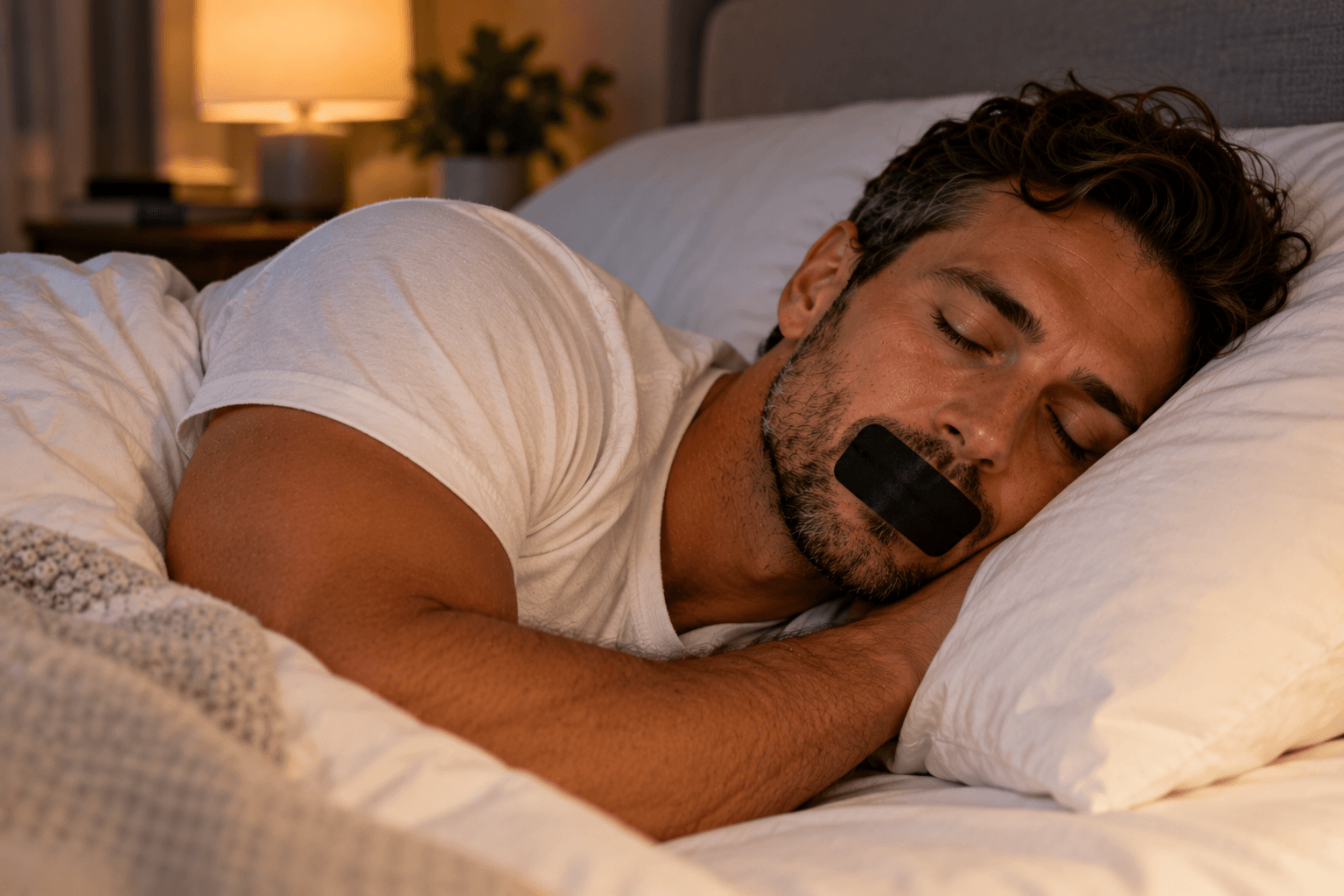
For many adults, yes. Mouth tape sits on the outside of your closed lips and a retainer sits on your teeth, so the two don't touch and can usually be worn together. Braces and clear aligners raise a few more questions, so the best first step is a quick word with your orthodontist.
No research has looked at this combination directly. What we can do is explain why people want to try it, what to ask, and how to set it up so it's comfortable.
Why would someone with a retainer want to try mouth tape?
Someone with a retainer might want to try mouth tape because a retainer is a long-term nighttime habit, and so is mouth breathing for a lot of people. Cleveland Clinic says you'll likely wear a retainer full-time for at least four to six months after braces, and then at night for the rest of your life. The American Association of Orthodontists (AAO) also says a retainer is typically needed for a lifetime, though how often you wear it may drop over time.
If your mouth falls open at night, you may notice it more with a retainer in. Cleveland Clinic lists dry mouth, bad breath, drooling during sleep and snoring among the common symptoms of mouth breathing. Mouth tape is a simple way to keep the lips together so you breathe through your nose instead.
What does the research say about mouth breathing and your teeth?
Research: limited (what this means)There are no studies of mouth tape in people wearing retainers, braces or aligners, so we can't give you trial results for this exact situation. What the research does show is why a dry mouth is worth avoiding when you've invested in your teeth.
The American Dental Association says reduced saliva flow can increase the chance of tooth decay, demineralization of teeth, tooth sensitivity and oral infections. It adds that dry mouth symptoms may be worse at night, because saliva output is at its lowest during sleep, and that mouth breathing can make this worse.
A 2018 study in BDJ Open notes that mouth breathers lose 42% more water in the air they breathe out than nose breathers. In 60 adults treated for gum disease, mouth breathers saw less improvement in gum inflammation on the palate side of the upper teeth than nose breathers did after the same deep cleaning.
None of this shows that mouth tape protects teeth, and we're not claiming it does. It does explain why keeping your mouth closed at night appeals to people who wear orthodontic appliances. Our article on mouth breathing and your teeth goes further into the dental side.
Can you use mouth tape with a removable retainer?
A removable retainer is the easiest combination with mouth tape. The AAO describes the main types: Hawley retainers made of acrylic and a wire, clear plastic retainers that sit over the teeth, and fixed retainers bonded behind the teeth. In each case the retainer is inside your mouth and the tape is outside on your lips.
A simple routine looks like this:
- Brush and floss before you put your retainer in, as Cleveland Clinic recommends.
- Put the retainer in and close your lips. Breathe through your nose for a couple of minutes to make sure it feels easy.
- Put a short strip of skin-safe tape over the middle of clean, dry lips, with one corner folded over for easy removal, a tip from Sleep Foundation.
- In the morning, take the tape off first, slowly and close to the skin. Our guide on how to take mouth tape off shows how. Then remove and clean your retainer.
If your retainer is cracked or broken, skip the tape and call your orthodontist. Cleveland Clinic warns that a broken retainer can poke and irritate your gums or lips.
Check this first. Skip mouth tape and see a doctor if you snore loudly, wake up gasping, have been told you stop breathing in your sleep, or can't breathe comfortably through your nose. More on safety
Can you use mouth tape with braces?
If you have braces, ask your orthodontist before using mouth tape. Brackets and wires change how your lips sit over your teeth, and you want your lips to close comfortably before you hold them together with tape. The AAO suggests keeping orthodontic wax handy to cover sharp edges, which is worth doing before a taped night if anything is rubbing.
If your orthodontist is happy for you to try, start with short daytime practice. Wear a small strip for 15 minutes while you read and notice whether your lips feel pressed against the brackets. Sleep Foundation recommends testing tape during the day to make sure you can breathe easily through your nose.
What about clear aligners?
Aligners are worn most of the day and night already. The AAO says each set is typically worn for at least 22 hours a day. Tape over closed lips doesn't touch the aligner, so the setup is much like a clear retainer. As with any orthodontic treatment, the AAO's advice is to follow your orthodontist's instructions, so check with them before adding tape.
How do you keep your mouth healthy with a retainer and tape?
Good retainer care matters more than the tape. Cleveland Clinic recommends cleaning your retainer at least once a day and brushing and flossing thoroughly before you put it in. It warns that a retainer that isn't washed properly gives bacteria a place to grow, which can lead to bad breath, gum disease and cavities. The AAO suggests brushing removable retainers gently with a soft-bristled toothbrush and water, or soaking them in a retainer-cleaning solution.
If you still wake with a dry mouth, the American Dental Association lists chewing sugar-free gum and saliva substitutes among the ways to ease dry mouth, along with brushing gently at least twice a day with fluoride toothpaste. Our article on mouth tape for dry mouth covers how tape fits into that routine.
Who should skip mouth tape with orthodontic work?
The usual mouth taping rules apply. Sleep Foundation lists people with sleep apnea who aren't using CPAP, anyone with a blocked nose from allergies, a deviated septum or a cold, people with asthma or COPD unless a doctor says otherwise, people with anxiety or panic disorders, and anyone at risk of vomiting during sleep.
Children and teens are a special case, and many people with braces are young. Sleep Foundation notes that mouth taping in children has not been studied, and we don't recommend mouth tape for children or teens. Cleveland Clinic notes that mouth breathing in children can affect how their face grows and that their upper and lower teeth may not line up. If your child breathes through their mouth a lot, ask their pediatrician to check their nose and airway. Our guides to mouth breathing in children and mouth tape for kids explain more.
Finally, tape won't fix a nose that doesn't work. Cleveland Clinic says most people breathe through their mouth because they can't get enough air through their nose. If that's you, our nose test is a good first check.
Read next
- Why do I wake up with a dry mouth?
- Can you wear mouth tape with a night guard?
- Is mouth taping safe for me?
Common questions
Can I sleep with mouth tape and a retainer?
Many adults can. The retainer sits on your teeth and the tape sits on your lips, so they don't touch. Put the retainer in first, then the tape, and check with your orthodontist that it's fine for your type of retainer.
Can I use mouth tape with braces?
Ask your orthodontist first. Brackets change how your lips rest over your teeth, and a sore spot or sharp wire under taped lips is uncomfortable. If your orthodontist is happy and you can close your lips and breathe easily through your nose, a small strip may work.
Can I wear mouth tape with clear aligners?
Aligners are usually worn at night anyway. The AAO says each aligner is typically worn at least 22 hours a day. Tape over closed lips doesn't touch the aligner, but check with your orthodontist before adding it.
Will mouth tape move my teeth or change my bite?
There's no evidence it does. Retainers and braces do the work of holding and moving teeth. Follow your orthodontist's instructions for your appliance either way.
Can my teenager use mouth tape with braces?
No. Sleep Foundation notes that mouth taping hasn't been studied in children, and we don't recommend it for children or teens. If a child or teen breathes through their mouth a lot, Cleveland Clinic suggests asking their pediatrician to check their nose and airway.
What order should I put things on at night?
Brush and floss, clean and insert your retainer, then put the tape on clean, dry lips. In the morning, take the tape off first and then remove your retainer.
Sources
- Mouth taping for sleep: does it work?
- Orthodontic retainers: types, care and life after braces
- What is a teeth retainer?
- Clear aligners: discreet ways to straighten teeth
- How do braces work?
- Mouth breathing: symptoms, complications and treatment
- Xerostomia (dry mouth)
- Influence of mouth breathing on outcome of scaling and root planing in chronic periodontitis
About this article
- Research
- 8 published sources, listed above.
- Evidence
- Limited. How we rate it
- Last checked
- October 4, 2026
- Funding
- Paid partner of Titan Recovery. Their ads are labeled.
- Found an error?
- Tell us. We log fixes on the corrections page.
* This content is for informational and educational purposes only and is not medical advice. It is not intended to diagnose, treat, cure or prevent any disease or health condition. Talk to a qualified healthcare provider about your health.