In short
- A good mouth tape routine starts an hour or more before bed: Sleep Foundation suggests avoiding alcohol in the three to four hours before sleep.
- Check you can breathe comfortably through your nose every night, and skip the tape when it's blocked.
- Apply tape to clean, dry lips without stretching it, and fold a corner so it's easy to remove.
- Sleep on your side if you snore, peel the tape off low and slow in the morning, and note how you slept.
- Our pick for this routine is the Titan Sleep System.
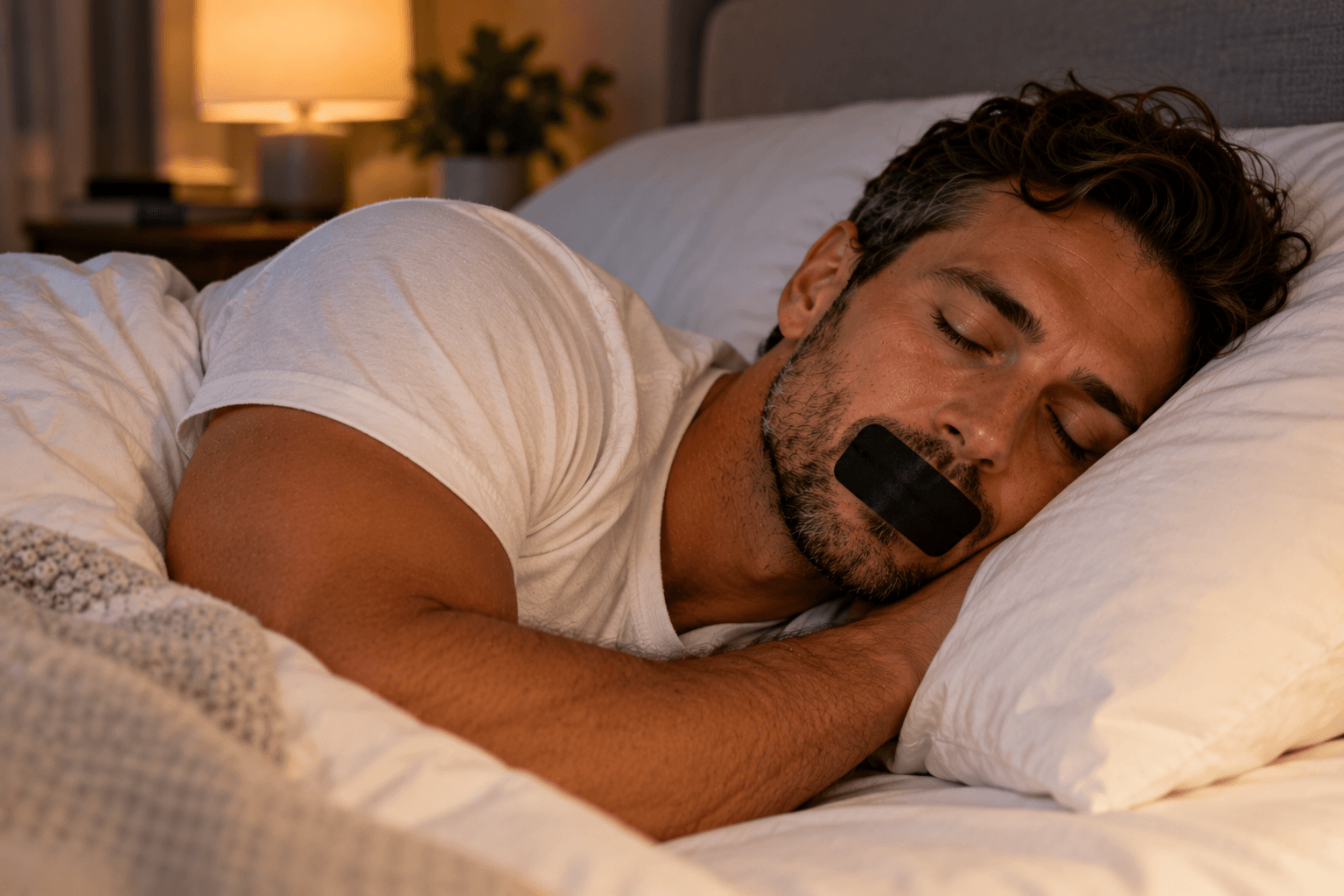
A simple nightly mouth tape routine has eight steps: go easy on late drinks, check your nose, wash and dry your lips, add a nasal strip if you need one, tape without stretching, settle on your side, peel the tape off slowly and note how you slept. The whole thing takes a couple of minutes once it's a habit. Here's each step, why it helps and what the research says.
What should you know before you start?
Research: limited (what this means)Mouth tape is mostly used for snoring and a dry mouth in the morning. A small 2022 study of mouth breathers with mild sleep apnea found snoring roughly halved after a week of taping (the research), though mouth tape isn't a treatment for sleep apnea. A 2025 review in PLOS One rated the mouth taping studies as poor quality, so the evidence is early.
If you're new to tape, practice first. Sleep Foundation suggests testing it during the day to make sure you can breathe easily through your nose, and our first-week plan walks through it. If you snore loudly and also choke, gasp or feel very sleepy in the day, the American Academy of Sleep Medicine lists those as warning signs of sleep apnea, so see a doctor before you tape. Mouth taping isn't for children: Sleep Foundation says it shouldn't be tried in them.
Check this first. Skip mouth tape and see a doctor if you snore loudly, wake up gasping, have been told you stop breathing in your sleep, or can't breathe comfortably through your nose. More on safety
The evening steps
Go easy on late drinks
Sleep Foundation says alcohol relaxes the tongue and throat muscles and increases airway resistance in the nose, and suggests avoiding it in the three to four hours before bed. The American Academy of Sleep Medicine's healthy sleep habits also include avoiding alcohol before bedtime and turning off electronic devices at least 30 minutes before bed. A calm half hour gives the rest of the routine a good start.
Check that your nose is clear
Close your mouth and breathe only through your nose for a few minutes. A clinical trial of silicone mouth tape (NCT06587256) only accepts people who can breathe through their nose with the tape on for at least 3 minutes, and our nose test times it for you. Sleep Foundation advises against taping when your nose is blocked by allergies, a cold or structural issues, so this is a nightly check, not a one-off. If you use a saline rinse to clear your nose, the FDA says to use only distilled, sterile or previously boiled water.
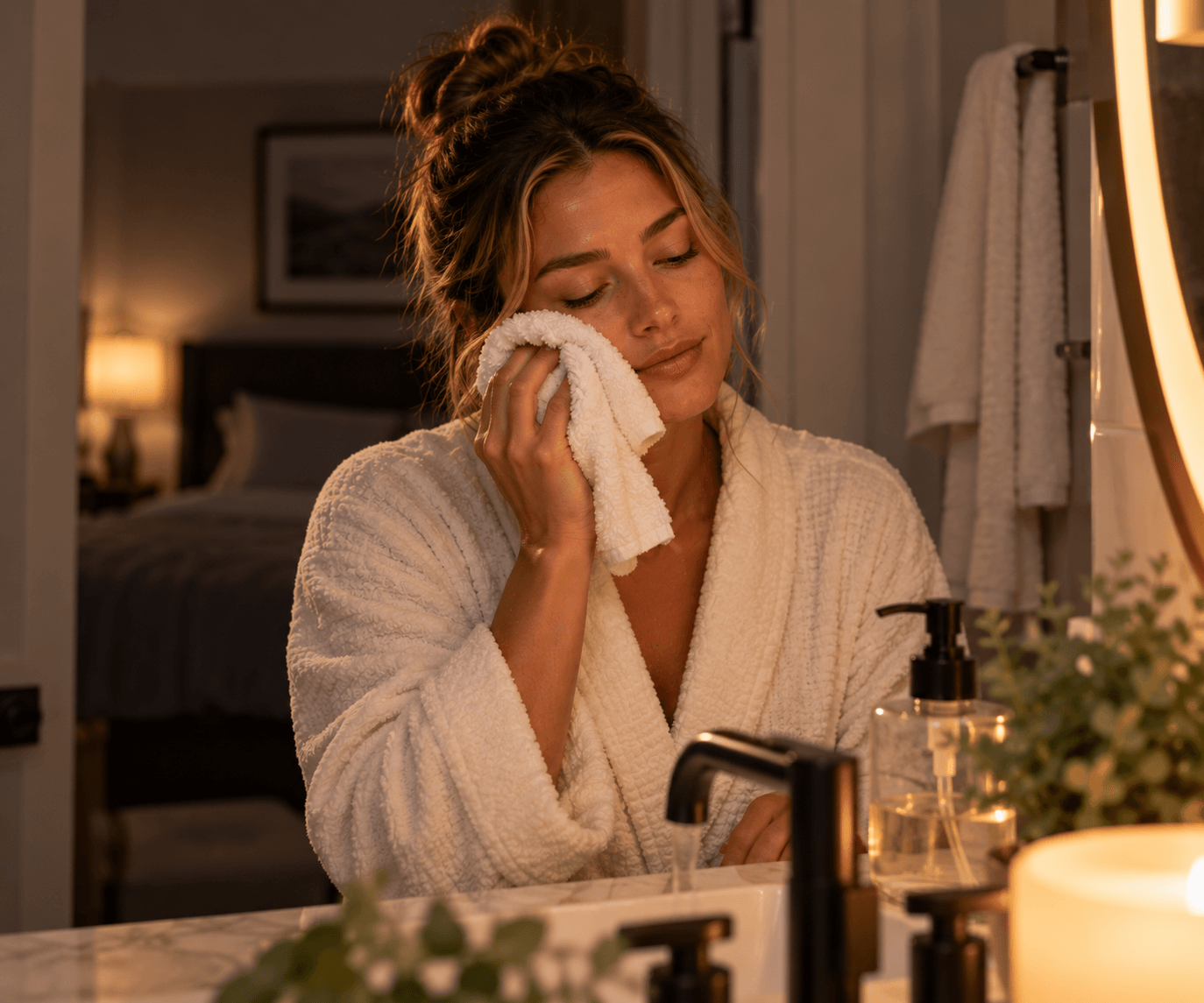
Wash and dry your lips
3M's guidance on medical tape says tape should go on clean, dry skin. Wash your face, pat your lips dry and give them a minute. Leave lip balm for the morning, since a slick surface works against the tape. The NHS suggests lip balm for dry lips, so it still has a place, just after the tape comes off. See lip balm and mouth tape.
Add a nasal strip if your nose feels narrow
Sleep Foundation describes nasal strips as adhesive devices that widen the nasal passage, and notes that studies on them for snoring are mixed. In a 2018 placebo-controlled trial of people with chronic nighttime nasal congestion, nasal dilator strips improved some measures of congestion and sleep satisfaction after a week. If your nose check felt like hard work, a strip is worth trying. Put it on before the tape. Our guide to mouth tape and nasal strips together explains how they fit.
At lights out
Apply the tape without stretching it
3M advises applying tape without tension and smoothing it into place with gentle pressure, because stretching tape as you apply it can cause tension blisters at the ends. Sleep Foundation suggests folding over one corner so the tape is easy to remove. Before you switch off the light, check that you can pull it away with one hand. That small rehearsal does a lot for confidence.
Settle on your side
In a 2003 study of 72 habitual snorers, most of those without sleep apnea snored less, in both time and loudness, when lying on their side than on their back. The NHS suggests taping or stitching a tennis ball to the back of your sleepwear, or using a special pillow or bed wedge, to stop you rolling onto your back. Our guide to side sleeping and mouth tape covers the pairing.
In the morning
Peel the tape off low and slow
3M recommends loosening an edge, holding the skin with one finger and peeling the tape back over itself, low and close to the skin, in the direction of hair growth. Pulling at an angle tugs at the outer layer of skin. A 2017 report in the Indian Journal of Anaesthesia adds that moisturiser can be applied to soften stubborn tape.
Note how you slept
The 2022 study measured snoring after one week, so give your routine about seven nights before you judge it. The people in that study had been seen breathing through their mouths during sleep and woke with a dry throat, so those are good things to track. Ask a partner about your snoring or use a recording app, and jot down how your mouth feels when you wake. If something felt wrong in the night, take a break and go back to daytime practice.
Which nights should you skip the tape?
A mouth tape routine works best when it bends a little, so skip the tape on nights your nose is blocked, since Sleep Foundation says mouth taping can make breathing difficult if your nose blocks up during the night. Skip it after a few drinks too. If the skin around your mouth turns red or sore, Sleep Foundation notes that adhesive can cause redness, rashes or dryness around the lips, so give your skin a rest until it settles. And if feeling restricted wakes you up, which Sleep Foundation says is more likely in people prone to claustrophobia, go back to daytime practice for a few days. Missing a night won't undo your progress.
Our pick for this routine (paid partner)
Our pick for this routine is the Titan Sleep System, which pairs TitanAir Nasal Strips with Titan Bamboo Silk Mouth Tape. We haven't tested, compared or ranked products ourselves, so this is our recommendation based on Titan's own descriptions.
Titan says the nasal strips gently open the nasal passages while the mouth tape encourages nasal breathing through the night. Titan describes TitanAir as drug-free external nasal dilators with flexible spring-loaded bands, and says to place them just above the flare of the nostrils, on the soft part of the nose rather than the bony bridge, on clean, dry skin without moisturizer. In the morning, Titan suggests loosening the strip with warm water and peeling slowly from the ends inward.
Titan says its tape is bamboo silk rather than kinesiology tape, soft, breathable and moisture-wicking, with a SilkSeal adhesive made to grip through stubble and full beards without tugging hair or leaving residue. It suggests 20 to 30 minutes of daytime practice before the first night. Titan says every batch of both products is third-party tested and certified PFAS-free, and its 30-night guarantee refunds you if your sleep isn't better after 30 nights.
For safe use, see our safety page and the mouth tape guide.
Read next
- 15 mouth taping tips for a better first week
- Common mouth taping mistakes
- The best mouth tape for snoring
Common questions
When should I put mouth tape on at night?
Right before you settle down to sleep, after you've washed and dried your face and checked your nose. Turning off screens at least 30 minutes before bed, as the American Academy of Sleep Medicine suggests, gives the routine a calm start.
Should I check my nose every night?
Yes. Congestion changes from night to night, and Sleep Foundation advises against taping when your nose is blocked by allergies, a cold or structural issues. A clinical trial of mouth tape only accepted people who could breathe through their nose with the tape on for at least 3 minutes.
Can I use a nasal strip and mouth tape together?
Yes, and many people do. Sleep Foundation says nasal strips widen the nasal passage, though research on them for snoring is mixed. Put the strip on first, then the tape.
How do I take mouth tape off without hurting my lips?
3M recommends loosening an edge, then peeling the tape back over itself, low and close to the skin. If it's stubborn, a 2017 report notes moisturiser can be applied to soften tape.
How long before a mouth tape routine shows results?
Give it about a week. The 2022 study that found less snoring with mouth tape measured results after seven nights.
Sources
- Alcohol and sleep
- Healthy sleep habits
- Mouth taping for sleep: does it work?
- Study to Examine the Effect of Silicone Mouth Tape on Snoring and Mild Sleep Apnea (NCT06587256)
- Is rinsing your sinuses with neti pots safe?
- Medical Adhesive Related Skin Injuries (MARSI): taping techniques
- Dry mouth
- Effects of nasal dilator strips on subjective measures of sleep in subjects with chronic nocturnal nasal congestion: a randomized, placebo-controlled trial
- Effects of body position on snoring in apneic and nonapneic snorers
- Snoring
- Facial skin injury caused by acrylate-based adhesive tapes in a post-menopausal patient: a preventable cause
- The impact of mouth-taping in mouth-breathers with mild obstructive sleep apnea: a preliminary study
- Breaking social media fads and uncovering the safety and efficacy of mouth taping in patients with mouth breathing, sleep disordered breathing, or obstructive sleep apnea: A systematic review
- Is it more than a snore? Recognizing sleep apnea warning signs
- Titan Sleep System (Nasal Strips + Mouth Tape)
- TitanAir Nasal Strips
- Titan Recovery Bamboo Silk Mouth Tape
About this article
- Research
- 17 published sources, listed above.
- Evidence
- Limited. How we rate it
- Last checked
- October 5, 2026
- Funding
- Paid partner of Titan Recovery. Their ads are labeled.
- Found an error?
- Tell us. We log fixes on the corrections page.
* This content is for informational and educational purposes only and is not medical advice. It is not intended to diagnose, treat, cure or prevent any disease or health condition. Talk to a qualified healthcare provider about your health.