In short
- Each partner should check their own nose before taping, because a 2025 review flagged a serious risk for anyone taping with a blocked nose.
- Practicing together for 20 to 30 minutes in the evening, as Titan suggests, is an easy way to get used to the feeling before the first night.
- A bed partner is often the one who notices snoring, gasping or pauses in breathing, and those last two are reasons to see a doctor rather than tape.
- In a small 1999 study, the partners of snorers with sleep apnea slept better when the snoring was treated, gaining the equivalent of about an hour of sleep a night.
- A small 2022 study of mouth breathers with mild sleep apnea found snoring roughly halved after a week of mouth taping.
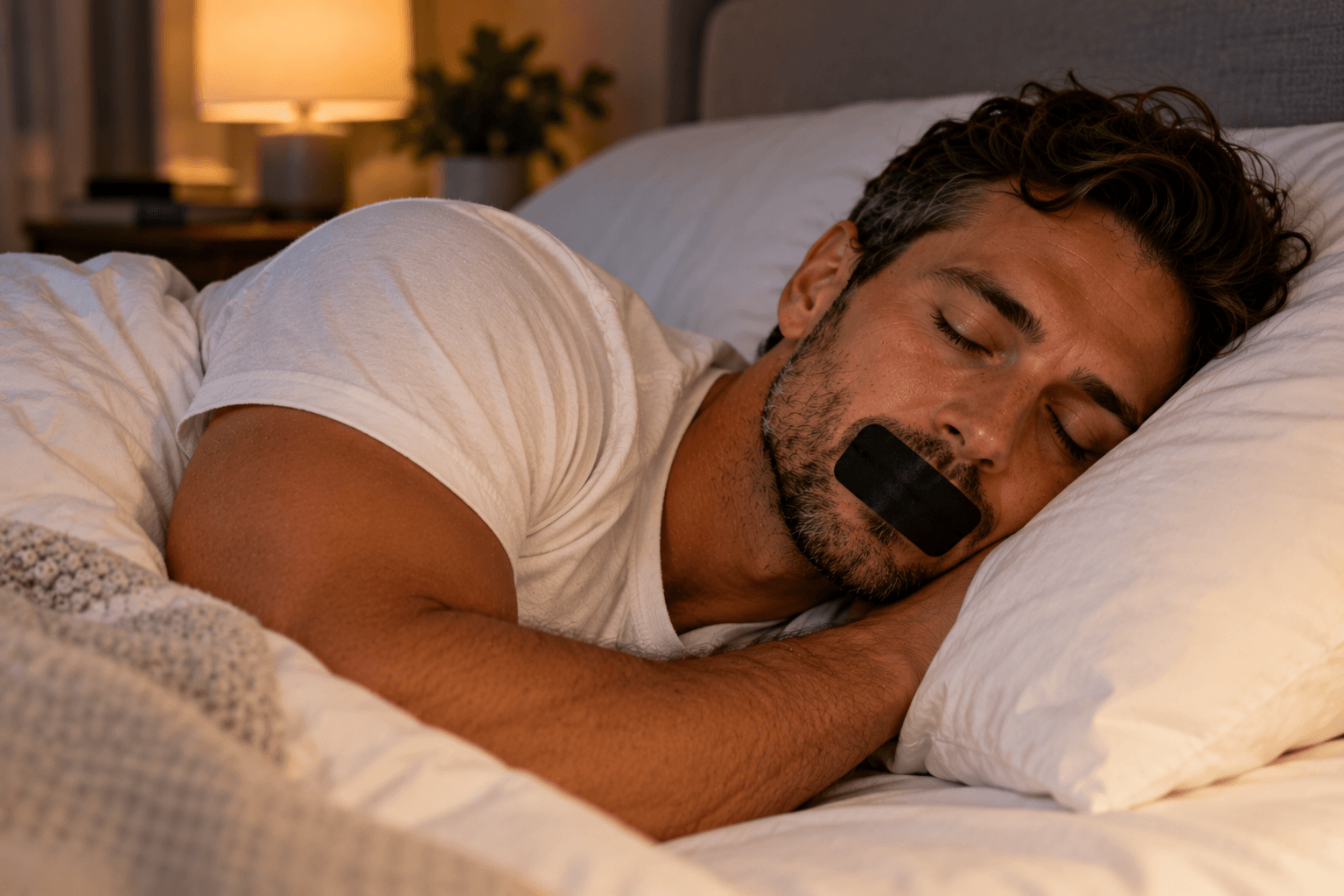
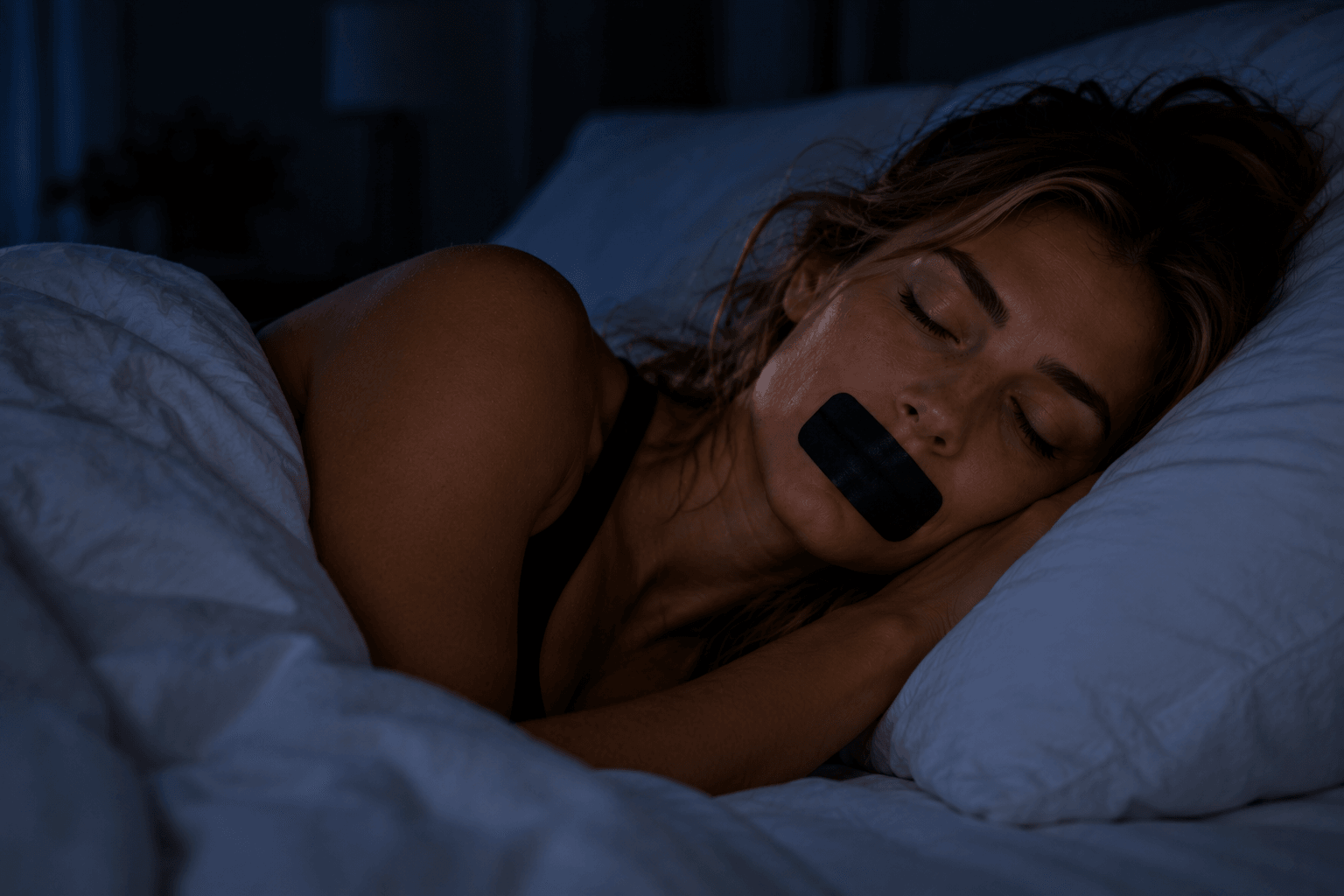
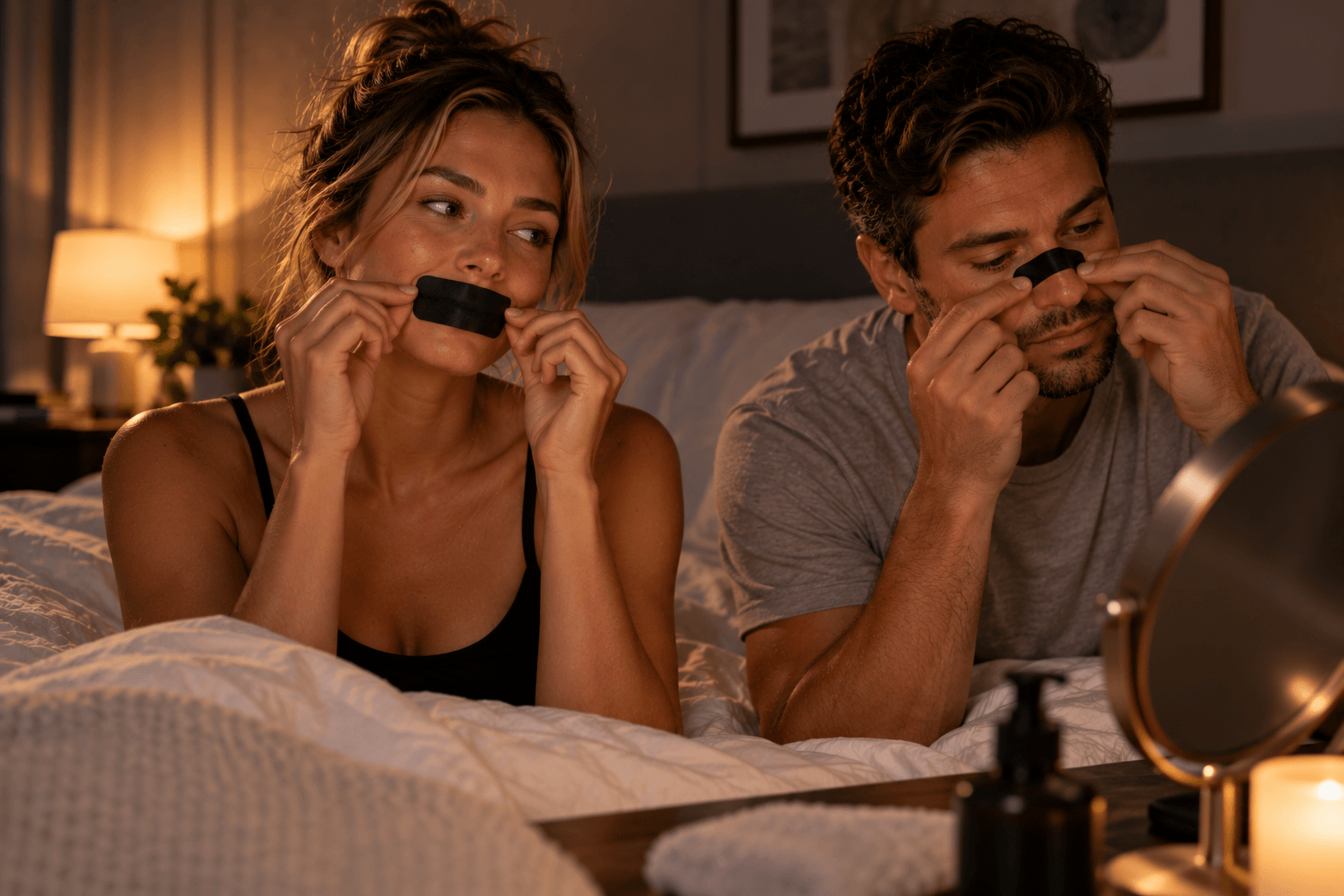
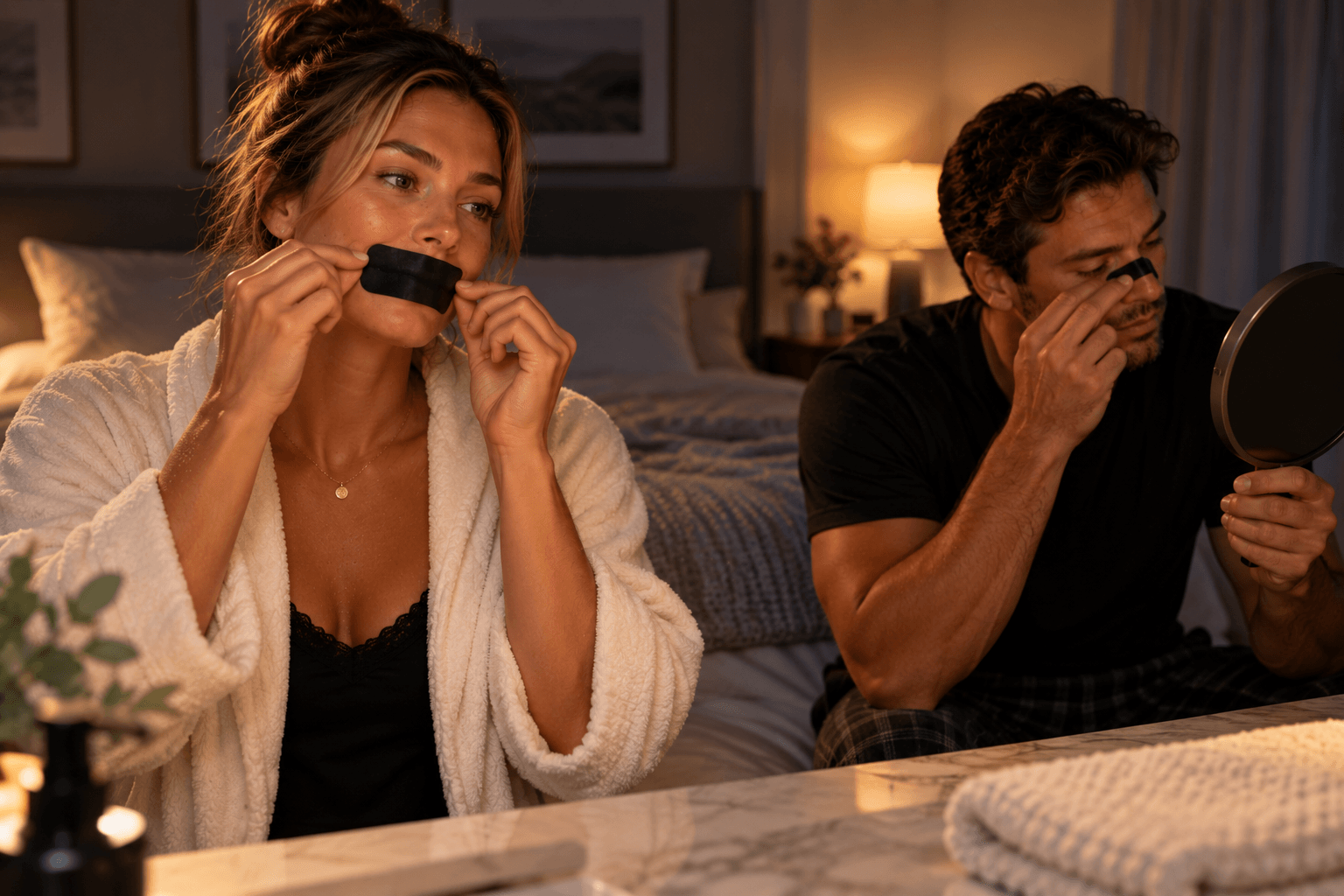
Trying mouth tape as a couple works best when each of you checks your own nose first, you practice together during the day, and you agree on a simple plan for the night. Once you're both taping, you become each other's best source of feedback on snoring. That also makes you the first to notice the warning signs of sleep apnea, which need a doctor rather than tape.
Why try mouth tape together?
Research: limited (what this means)Snoring often affects two people, not one. In a small 1999 study at Mayo Clinic, researchers ran overnight sleep studies on 10 married couples in which the husband was being tested for sleep apnea. When the husbands' snoring was stopped with CPAP partway through the night, their wives' sleep efficiency rose from 74% to 87%, which the authors worked out as roughly an extra 62 minutes of sleep. That study treated sleep apnea, not ordinary snoring, but it shows how much one person's breathing can shape the other's night.
Starting together also takes the awkwardness out of it. You're both learning the same routine, you can compare notes in the morning, and neither of you has to feel self-conscious about the tape. If only one of you snores, the other can still join in for the practice and the moral support, or simply act as the observer. Our guide to sleeping next to a snorer covers the other side of the bed.
What should you sort out before your first night?
Each of you checks your own nose
Mouth tape only works with a nose that can carry the air, and one partner's clear nose says nothing about the other's. The Sleep Foundation says tape shouldn't be used by anyone with nasal congestion or blockage, such as from allergies, a deviated septum or a cold, or by people with obstructive sleep apnea who aren't using CPAP. Its list also includes asthma or COPD unless a doctor advises it, anxiety or panic disorders, and anyone at risk of vomiting during sleep. A 2025 systematic review flagged a risk of asphyxiation when the nose is blocked. So each of you should take the nose test and read our safety page on your own terms.
Practice together during the day
Daytime practice is the easiest way to learn what the tape feels like. The Sleep Foundation suggests testing the tape during the day to make sure you can breathe easily through your nose. Titan suggests wearing its tape for 20 to 30 minutes while reading or watching TV before the first night, which is easy to do side by side on the sofa. Titan also says clean, dry skin helps the tape seal, so wash and dry your faces first. If one of you feels uneasy, that's useful to know before lights out. Our first-week plan builds on this step.
Agree on a simple plan for the night
With your lips taped you can't easily talk, so settle a few things before bed. Agree on a signal, like a tap on the shoulder, for "I need to take mine off" or "you're snoring." The Sleep Foundation suggests folding over one corner of the tape so it's easy to remove, and Titan's advice is simply to take it off if anything feels off. Knowing either of you can peel it off in a second makes the first few nights feel much calmer. See how to remove mouth tape for the gentlest way.
Once you're both taping
Be each other's sleep witness
A bed partner is usually the one who hears the snoring, and the American Academy of Sleep Medicine (AASM) says snoring between breathing pauses is typically noticed by a bed partner. Keep a quick morning note of what each of you heard, or use a recording app, which Cleveland Clinic suggests for tracking snoring. Pay attention to more than volume. The AASM says snoring paired with choking, gasping or silent pauses in breathing is a strong sign of sleep apnea, and the NHS says someone staying with you while you sleep can help check for those symptoms. If you notice any of them in your partner, stop taping and help them book a doctor's appointment.
Skip tape on nights either of you is blocked up or has been drinking
A cold or a bad allergy night can turn a clear nose into a blocked one, and that's exactly when the Sleep Foundation says to avoid taping. Alcohol is the other common reason to skip. A 2020 meta-analysis found alcohol was associated with worse snoring, more breathing interruptions and lower oxygen levels in people prone to snoring. Agreeing on these rules in advance means neither of you has to make the call when you're tired.
Let each person go at their own pace
You may not adjust at the same speed. The Sleep Foundation lists skin irritation, discomfort, disrupted sleep and anxious awakenings among possible side effects, and any of these can hit one partner and not the other. If one of you takes to it straight away and the other needs a week of short practice sessions, that's normal. If one of you decides it isn't for them, the NHS suggests earplugs for a partner whose sleep is affected by snoring.
What you can expect, and our pick
The most likely payoff is quieter nights. A small 2022 study of mouth breathers with mild sleep apnea found snoring roughly halved after a week of taping (the research). That study had no comparison group, and the 2025 review called for larger trials, so treat it as encouraging rather than settled. If either of you has a narrow or stuffy nose, nasal strips are worth pairing with the tape. In a small randomized trial of people with chronic rhinitis, a real nasal strip cut snoring frequency from about 258 to 173 snores an hour compared with a placebo strip.
Our pick for couples is the Titan Sleep System, which pairs TitanAir nasal strips with Titan's bamboo silk mouth tape. Titan says its SilkSeal adhesive is made to grip through stubble and full beards without tugging hair, which helps if one of you has facial hair, and that there's no printed ink on the side that touches skin. Titan also says every batch is third-party tested and certified PFAS-free, and it offers a 30-night guarantee and larger supplies of up to 360 nights.
Check this first. Skip mouth tape and see a doctor if you snore loudly, wake up gasping, have been told you stop breathing in your sleep, or can't breathe comfortably through your nose. More on safety
When should you see a doctor instead?
Mouth tape is for ordinary snoring and mouth breathing in adults who breathe comfortably through the nose. It doesn't treat sleep apnea. The NHS says to see a GP if your breathing stops and starts while you sleep, you make gasping, snorting or choking noises, or you always feel very tired during the day, and it says it can help to bring the person who has seen your symptoms. Sleep apnea can be serious if it isn't diagnosed and treated, and the NHS notes it can also be difficult for a partner and put a strain on the relationship. As a couple, you're well placed to spot it early and get it checked together. For more on getting started, browse the mouth tape hub.
Read next
- 15 mouth taping tips for a better first week
- 6 reasons to pair mouth tape with nasal strips
- Is mouth taping safe? Who should try it and who shouldn't
Common questions
Is it safe for both partners to use mouth tape?
It can be, as long as each of you breathes easily through your nose and neither has sleep apnea, a lung condition or anxiety that makes taping uncomfortable. The Sleep Foundation lists who shouldn't use it, and each person should check for themselves.
How do we communicate at night with mouth tape on?
Agree on a simple signal before bed, and remember the tape comes off quickly. The Sleep Foundation suggests folding over one corner so it's easy to remove, and Titan says to just take it off if anything feels off.
Can mouth tape help my partner sleep better?
If tape reduces your snoring, it may. Small studies show less snoring with mouth tape in mouth breathers, and a 1999 study found partners slept better when a snorer's sleep apnea was treated, though that study used CPAP, not tape.
What if only one of us likes mouth tape?
That's fine. Comfort varies, and the Sleep Foundation lists skin irritation, disrupted sleep and anxiety among possible side effects. The partner who doesn't like it can use earplugs, which the NHS suggests for partners of snorers.
Should I wake my snoring partner?
A gentle nudge to roll onto their side is reasonable if the snoring keeps you awake, since the NHS lists sleeping on your back among the things that make snoring more likely. If you hear their breathing stop and start, or gasping, snorting or choking noises, tell them in the morning and encourage them to see a doctor, because the NHS lists these as symptoms of sleep apnoea.
Should we skip tape on some nights?
Yes. Skip it on nights when either of you has a blocked nose from a cold or allergies, and after drinking, since alcohol is associated with worse snoring and breathing interruptions.
Sources
- The effect of snoring and obstructive sleep apnea on the sleep quality of bed partners
- Snoring
- Mouth taping for sleep: does it work?
- Breaking social media fads and uncovering the safety and efficacy of mouth taping in patients with mouth breathing, sleep disordered breathing, or obstructive sleep apnea: A systematic review
- The impact of mouth-taping in mouth-breathers with mild obstructive sleep apnea: a preliminary study
- External nasal dilation reduces snoring in chronic rhinitis patients: a randomized controlled trial
- Is it more than a snore? Recognizing sleep apnea warning signs
- Sleep apnoea
- Snoring: causes, treatment and prevention
- Impact of alcohol consumption on snoring and sleep apnea: a systematic review and meta-analysis
- Titan Bamboo Silk Mouth Tape
- Titan Sleep System (Nasal Strips + Mouth Tape)
About this article
- Research
- 12 published sources, listed above.
- Evidence
- Limited. How we rate it
- Last checked
- October 10, 2026
- Funding
- Paid partner of Titan Recovery. Their ads are labeled.
- Found an error?
- Tell us. We log fixes on the corrections page.
* This content is for informational and educational purposes only and is not medical advice. It is not intended to diagnose, treat, cure or prevent any disease or health condition. Talk to a qualified healthcare provider about your health.