In short
- 3M's medical taping guidance says tape should go on clean, dry skin without tension and be rubbed in place to get a good seal, and most mouth tape that falls off misses one of those steps.
- 3M's guidance also says to keep taped skin clean and dry and to replace tape that gets soiled, so a strip wet with sweat or saliva is best swapped for a fresh one.
- Sleep Foundation notes that tape can pull on facial hair, and 3M's guidance says a clipper may be used to remove hair where tape needs to stick.
- In a 2014 trial on healthy children's skin, a silicone tape lifted at the edges significantly more than a paper tape, even though it was gentler on the skin.
- A 2022 study filmed people puffing air through their mouths while their lips were taped, which is one way a strip can work loose overnight.
- Sleep Foundation suggests testing tape during the day first, which also shows you whether it holds before you sleep in it.
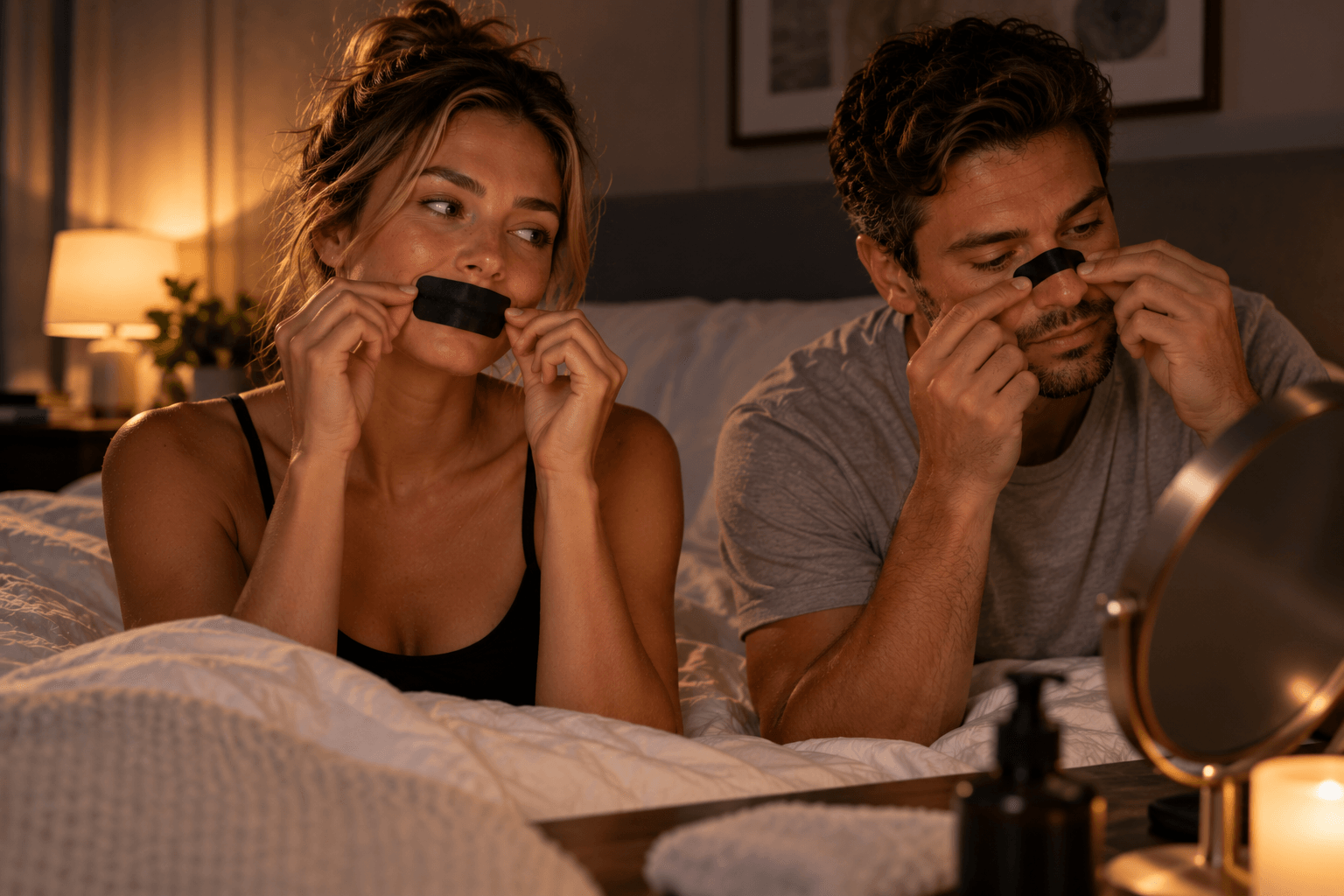
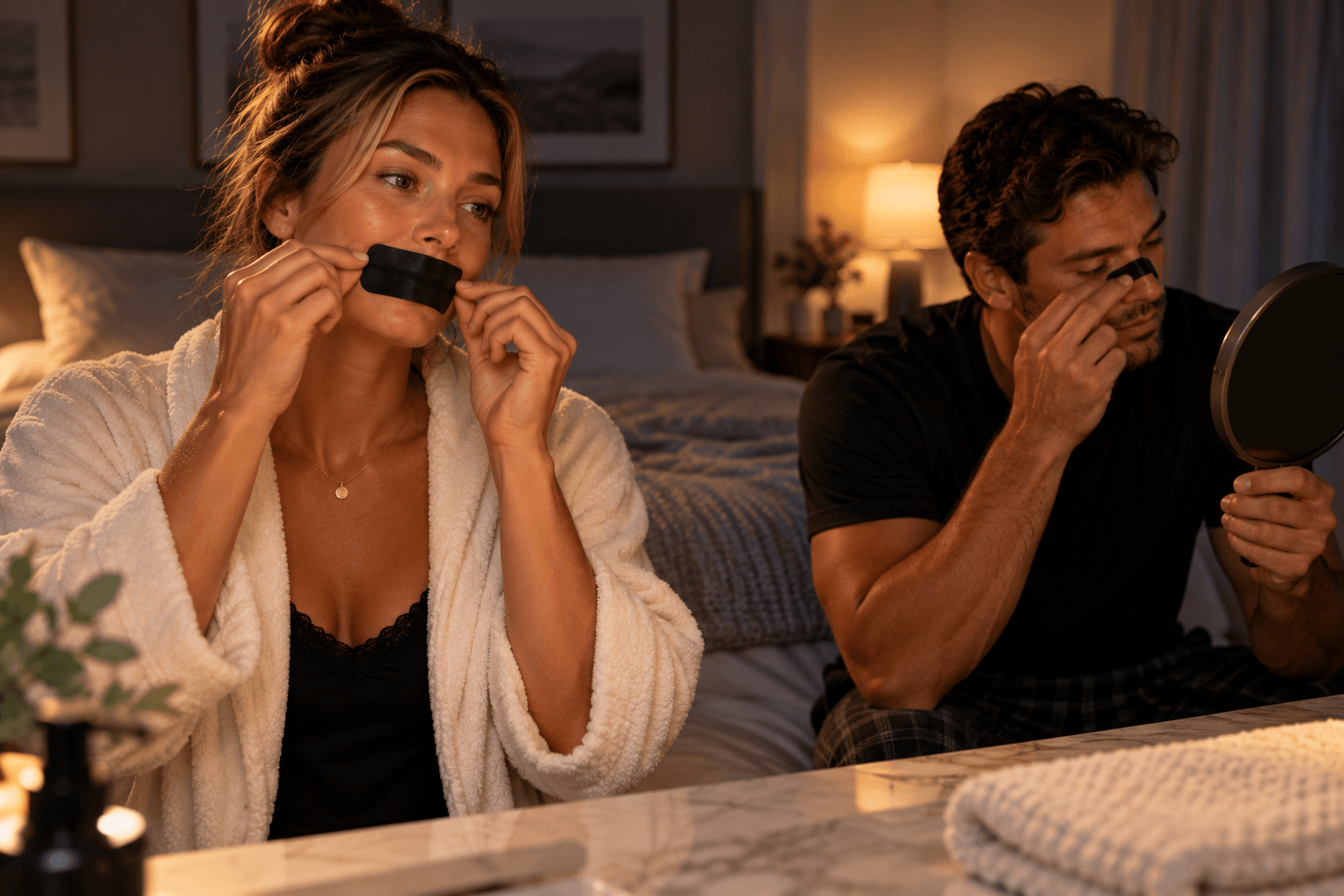
Mouth tape usually falls off at night because something is sitting between the adhesive and your skin, such as oil, moisturizer, lip balm, sweat, saliva or hair. The rest of the time it comes down to how the tape went on or how much your mouth moves in your sleep. Almost every cause has a simple fix, and once you find yours, the tape tends to stay put.
Why does mouth tape fall off at night?
Research: limited (what this means)Mouth tape falls off when the adhesive can't make full, flat contact with dry skin, or when movement and moisture break that contact during the night. 3M's guidance on medical tape says tape should be applied without tension to clean, dry skin, smoothed in place with gentle pressure to avoid gaps and wrinkles, and rubbed in place to get a good seal.
No study has looked specifically at why mouth tape comes loose, so the advice here draws on general medical guidance about taping skin. What the mouth taping research does show is that it happens. In the 2022 study in Healthcare, which taped the mouths of 20 mouth breathers with mild sleep apnea for a week, people whose tape had been dislodged by morning were excluded from the study. The 13 of 20 participants who cut their snoring by at least half were all people whose tape stayed on, which is one more reason it's worth getting the hold right.
What are the most common causes and fixes?
The most common causes of mouth tape falling off are skin oil, moisturizer, facial hair, saliva, sweat, movement during sleep and poor placement. Each one has a matching fix, and most people only need to change one or two habits. Use this table to match what you're seeing to the likely cause.
| What you notice | Likely cause | What to try |
|---|---|---|
| Tape slides or won't grip from the start | Natural skin oil | Wash with a gentle cleanser, rinse, pat dry before taping |
| Edges lift within an hour | Moisturizer or lip balm underneath | Apply skincare earlier in the evening, wipe the area before taping |
| Upper edge won't lie flat | Mustache, stubble or beard | Light trim with a clipper, press edges into the hair, use a tape made for facial hair |
| Lower edge is damp or curling | Saliva | Swallow and dry your lips before taping, use a fresh strip if it gets wet |
| Tape is limp and loose on warm nights | Sweat and humidity | Cooler room, wash after sweating, breathable tape |
| Tape is on the pillow in the morning | Peeling or rubbing in your sleep | Fold a small tab for removal only, test the hold during the day, rethink placement |
| One end lifts first every night | Tape stretched or wrinkled when applied | Lay it on flat without pulling, rub along the whole edge |
Does skin oil stop mouth tape from sticking?
Skin oil is one of the main reasons mouth tape won't stick, because adhesive grips skin, not the layer sitting on top of it. 3M's guidance says tape should go on clean, dry skin, and a 2022 scoping review of skin injuries from medical adhesives repeats that tape should be applied when the skin is dry.
The skin around your mouth and on your upper lip makes its own oil through the day. Washing right before bed resets it. The American Academy of Dermatology recommends a gentle, non-abrasive cleanser that doesn't contain alcohol, lukewarm water, and patting dry with a soft towel. Give your lips a minute to air-dry after that before the tape goes on.
3M also advises minimizing how much you touch the adhesive. Your fingertips carry oil too, so hold the strip by its edges or backing while you place it.
Can moisturizer or lip balm make mouth tape fall off?
Moisturizer and lip balm are among the most common reasons mouth tape lifts, because they leave a slick film exactly where the adhesive needs to grip. The fix is timing, not giving them up. Put your skincare on earlier in the evening, then wipe the area around your lips before you tape.
Lip balm is the trickiest, since many people put it on as the very last step before bed. Our guide to lip balm and mouth tape explains how to keep your lips comfortable without spoiling the stick, and mouth tape and your skincare routine covers the order to do things in.
Why won't mouth tape stay on with a beard or mustache?
Facial hair holds the adhesive away from the skin, so the tape only touches the hair tips and lifts easily. Sleep Foundation notes that tape can pull on facial hair and make removal painful, which is the other half of the same problem. A mustache is usually the trouble spot, because it sits right where the top edge of the tape lands.
3M's guidance says a clipper may be used to remove hair if necessary, and it warns that shaving can cause folliculitis, an inflammation of the hair follicle. A short trim around the lips is gentler than a close shave. Skip beard oil and balm on the nights you tape, and press the edges firmly into the hair. Our guides to mouth tape with a beard and the best mouth tape for beards go into more detail.
Can saliva or drooling loosen mouth tape?
Saliva can loosen mouth tape, usually from the lower edge, because any moisture under an adhesive weakens its contact with the skin. 3M's guidance says to keep taped skin clean and dry and to replace tape if it gets soiled. If you tend to drool or your lips are wet when you lie down, swallow and blot your lips dry before taping.
There's also a less obvious way your mouth works against the tape. A 2022 study in Sleep and Breathing filmed 10 people sleeping with their mouths taped and found that they puffed air into their mouths as they slept. A 2025 review in PLOS One describes this "mouth puffing" as a form of mouth breathing that carries on while the lips are taped. Repeated pushes of air against the inside of the tape are one plausible way a strip works loose, though no study has measured that directly.
Does sweat or humidity make mouth tape fall off?
Sweat and humidity make mouth tape harder to keep on because they put moisture right where the adhesive needs dry skin. 3M's guidance recommends keeping taped skin clean and dry and using breathable tape in moist areas. It also notes that skin kept damp under tape for a long time softens and becomes more prone to damage.
Sleep Foundation says excessive humidity makes it harder for sweat to evaporate and puts the best humidity for sleep at around 30% to 50%. The American Academy of Dermatology suggests washing your face as soon as possible after sweating. On a warm night, a cooler bedroom and a quick face wash just before taping make a real difference. Our guide to mouth tape in hot weather has more ideas.
Do you peel mouth tape off in your sleep?
Some people do peel or rub mouth tape off in their sleep, especially in the first week. If the strip is on your pillow or in your hand in the morning, you may have pulled it off half-awake, or rubbed it loose against the pillow. No study has measured how often this happens, so it's worth simply watching for the pattern.
A few things help. Sleep Foundation suggests folding over one corner so the tape is easy to remove in the morning, but keep that tab small, since a big flap is easy to catch on a pillowcase. Sleep Foundation also suggests testing the tape during the day first, which lets you get used to the feeling while you're awake. Our first-week guide lays out a gradual plan, and if you sleep on your side, see mouth tape and side sleeping.
Sleep Foundation also notes that muscle relaxation during sleep can cause the mouth to fall open, especially when lying on your back. A jaw that drops pulls on the tape all night, so back sleepers who wake with a loose strip may do better on their side. There's more on this in why your mouth falls open when you sleep.
Does placement affect whether mouth tape stays on?
Placement affects how well mouth tape stays on, because a strip that is stretched, wrinkled or sitting across a crease has weak points that lift first. 3M's guidance says tape should never be pulled or stretched when applied, and explains that a stretched backing tries to return to its original shape and lifts the skin at the ends. Lay the tape down relaxed, then rub along every edge.
The type of adhesive matters too. In a 2014 trial on healthy children, a silicone tape was gentler on the skin than a paper tape but lifted at the edges significantly more. Gentle and grippy are a trade-off, so if a very soft tape keeps lifting, a slightly firmer hold may suit you better. Our article on medical tape for mouth taping compares the common materials, and mouth taping techniques covers the different placements.
What should you check before you tape?
Before you tape, check that you can breathe comfortably through your nose with your mouth closed. Tape that falls off is a nuisance, but tape on a blocked nose is the real problem. Try our nose test, and skip the tape on nights when you're congested.
If you snore loudly and also choke, gasp or feel very sleepy in the day, those are warning signs of sleep apnea, and they need a doctor rather than tape. Mouth tape doesn't treat sleep apnea. We don't recommend mouth tape for children.
Check this first. Skip mouth tape and see a doctor if you snore loudly, wake up gasping, have been told you stop breathing in your sleep, or can't breathe comfortably through your nose. More on safety
What should you do if tape comes off in the night?
If mouth tape comes off in the night, use a fresh strip rather than pressing the old one back down. 3M's guidance says to replace tape that gets soiled, and the adhesive on a strip that has lifted has already lost its seal along that edge. Dry your lips, put on a new piece, and rub it into place.
When you take tape off, whether at 3am or in the morning, peel it slowly. 3M recommends loosening an edge, supporting the skin with one finger and removing the tape low and slow, close to the skin and in the direction of hair growth. Our guide to how to remove mouth tape walks through it. If your skin is getting sore from repeated reapplying, give it a night off.
Our pick: Titan Bamboo Silk Mouth Tape (paid partner)
If your tape keeps falling off, our pick is Titan Bamboo Silk Mouth Tape. We haven't tested or ranked mouth tapes ourselves; this is our recommendation, based on how Titan describes its tape against the causes above.
Titan says its SilkSeal adhesive is made to grip through stubble and full beards without tugging hair or leaving residue, which speaks to one of the most common reasons tape lifts. The strip is bamboo silk, which Titan describes as soft, breathable and moisture-wicking, and it comes in one oval size, 76 by 38 mm, worn horizontally across the lips.
Titan suggests 20 to 30 minutes of daytime practice before the first night, which doubles as a hold test. It says every batch is third-party tested and certified PFAS-free, and its 30-night guarantee refunds you if your sleep isn't better after 30 nights.
Read next
- Mouth taping mistakes beginners make
- Mouth tape in hot, humid weather: 7 ways to keep it on
- Mouth taping techniques compared
Common questions
Why does my mouth tape keep falling off?
The usual causes are oil, moisturizer or lip balm on the skin, facial hair, sweat, saliva and tape put on with gaps or wrinkles. 3M's medical taping guidance says tape holds best on clean, dry skin, applied without tension and rubbed in place to seal. Fix the most likely cause first and test it during the day.
How do I keep mouth tape on all night?
Wash and dry the skin around your lips, skip balm and moisturizer right before bed, and lay the tape on flat without stretching it. Rub it gently into place along the whole edge. If you have stubble or a mustache, a light trim or a tape made to grip hair helps.
Can I put lip balm on before mouth tape?
Not right before taping. 3M says tape should go on clean, dry skin, and balm leaves a slick layer the adhesive can't grip well. Put balm on earlier in the evening so it has time to soak in, or apply it after you take the tape off in the morning.
Is it normal for mouth tape to come off in the night?
It's common, especially in the first week. In the 2022 study in Healthcare, people whose tape had come loose by morning were left out of the results, which shows it happens even under study conditions. A better prep routine, a better-fitting tape, or a different placement usually fixes it.
Should I put my mouth tape back on if it comes off?
Use a fresh strip rather than pressing the old one back down. 3M's guidance says to replace tape that gets soiled, and the adhesive on a strip that has lifted has already lost its seal. Dry your lips first, and if you're too hot or uncomfortable, it's fine to leave it off.
Does sweat make mouth tape fall off?
Sweat works against any skin adhesive. 3M's guidance says to keep taped skin clean and dry and to use breathable tape in moist areas. A cooler bedroom, washing your face before bed and a breathable tape all help on warm nights.
Sources
- Medical Adhesive Related Skin Injuries (MARSI): taping techniques
- Mouth taping for sleep: does it work?
- The impact of mouth-taping in mouth-breathers with mild obstructive sleep apnea: a preliminary study
- Mouth puffing phenomena of patients with obstructive sleep apnea when mouth-taped: device's efficacy confirmed with physical video observation
- Breaking social media fads and uncovering the safety and efficacy of mouth taping in patients with mouth breathing, sleep disordered breathing, or obstructive sleep apnea: A systematic review
- Randomized comparison of a silicone tape and a paper tape for gentleness in healthy children
- Medical adhesive-related skin injury in adult intensive care unit: scoping review
- Face washing 101
- Best humidity level for sleeping
- Titan Recovery Bamboo Silk Mouth Tape
About this article
- Research
- 10 published sources, listed above.
- Evidence
- Limited. How we rate it
- Last checked
- October 12, 2026
- Funding
- Paid partner of Titan Recovery. Their ads are labeled.
- Found an error?
- Tell us. We log fixes on the corrections page.
* This content is for informational and educational purposes only and is not medical advice. It is not intended to diagnose, treat, cure or prevent any disease or health condition. Talk to a qualified healthcare provider about your health.