In short
- No study has tested reusing mouth tape, so the case for a fresh strip each night rests on general medical guidance about skin adhesives.
- 3M's medical taping guidance says to minimize touching the adhesive, to apply tape to clean, dry skin, and to replace tape that gets soiled.
- A 2014 trial measured keratin, a skin protein, coming away on removed medical tape, which shows a used strip carries a layer of skin with it.
- In a 2021 study of hospital tape rolls, exposed tape surfaces carried significantly more bacteria than unexposed ones, which is a good reason to keep tape sealed until you use it.
- Titan sells its mouth tape in 30, 90, 180 or 360-night supplies, so a 30-night supply is meant to cover a month of nightly use.
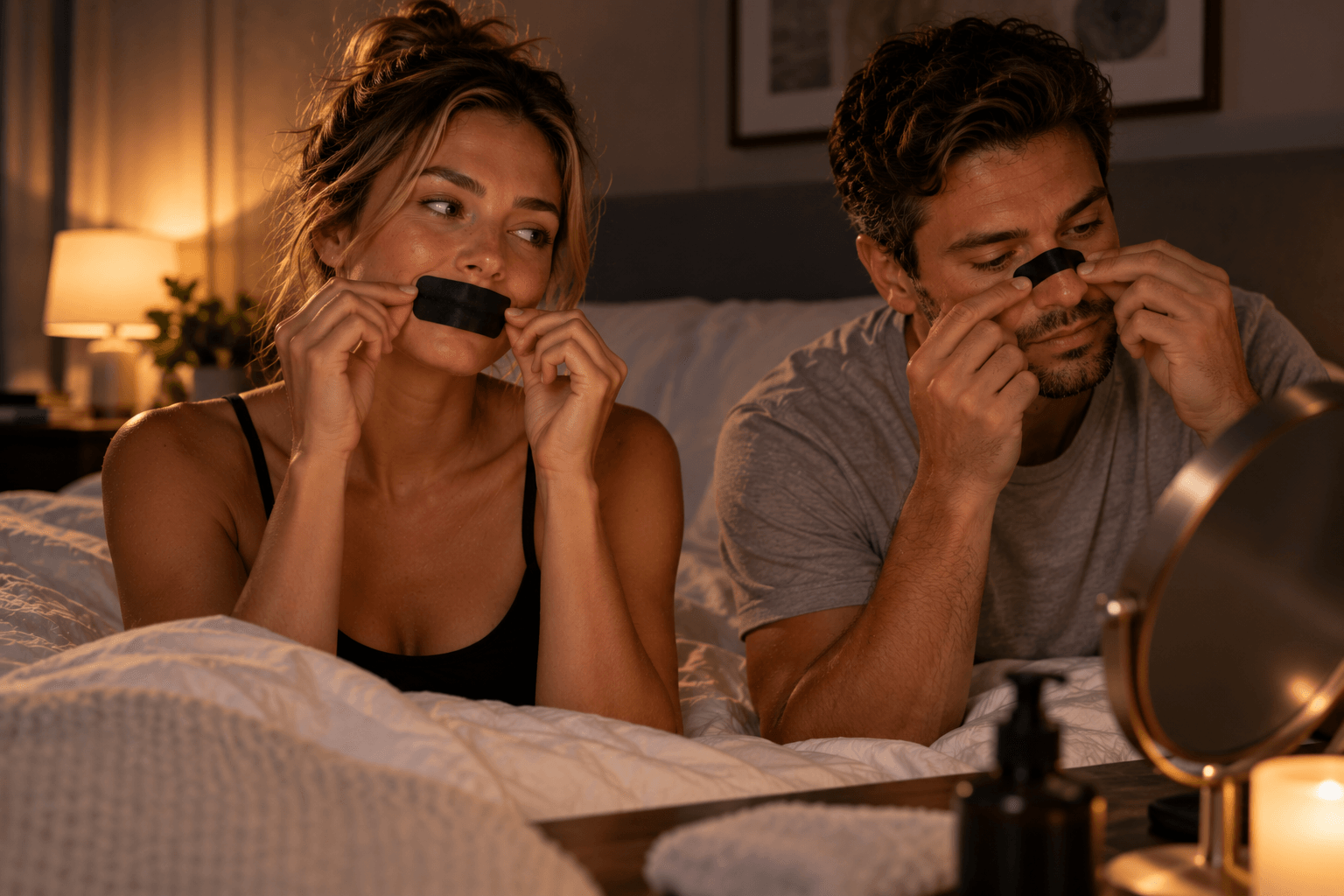
You shouldn't reuse mouth tape. Each strip is made to go on once at bedtime and come off in the morning, and after a night on your lips the adhesive has picked up skin, oil and moisture. A reused strip grips less well and is no longer clean. One fresh strip a night is the simple habit that makes mouth taping work best.
Can you reuse mouth tape?
Research: limited (what this means)Mouth tape is single use, and reusing it isn't a good idea. Once a strip has been worn and peeled off, its adhesive is coated with whatever was on your skin and lips, which weakens the grip and makes it less hygienic. 3M's guidance on medical tape says to minimize touching the adhesive, to apply tape to clean, dry skin, and to replace tape that gets soiled.
No study has tested what happens when people reuse mouth tape, so we can't give you a number for how much grip a second-night strip loses. The advice here draws on general medical guidance about skin adhesives, which consistently treats tape as something you put on once and replace.
The mouth taping research doesn't address it either. The 2022 study in Healthcare, which taped the mouths of 20 mouth breathers with mild sleep apnea for a week, describes trimming the tape to 4 cm and placing it across the lips to seal the mouth during sleep. It doesn't describe reusing strips. A 2025 review in PLOS One rated all 10 studies it found on mouth taping and similar methods as poor quality, so there are a lot of practical questions like this one that research hasn't caught up with yet.
Why does reused mouth tape lose its stick?
Reused mouth tape loses its stick because the adhesive's surface is no longer clean. When you peel tape off, it takes a thin layer of your skin with it. A 2014 trial comparing a silicone tape and a paper tape measured keratin, a protein from the outer layer of skin, on tapes after they were removed. The silicone tape took off less, but both took some.
That layer of skin, plus oil from your lips and any moisture from breathing, sweat or saliva, sits between the adhesive and your skin the second time. 3M's guidance says tape should be smoothed in place to avoid gaps and wrinkles and rubbed in place to get a good seal. A strip that has already been worn, peeled and folded has creases and a contaminated surface, which makes a good seal harder.
There's also a practical problem. A thin strip that has been peeled off can curl or fold onto itself, and getting it flat again without pulling on it is fiddly. 3M warns that tape should not be pulled or stretched when applied, because a stretched backing lifts at the ends. A lifting edge is the usual starting point for tape that falls off. Our guide to why mouth tape falls off at night goes through the other causes.
Is reusing mouth tape unhygienic?
Reusing mouth tape is less hygienic than using a fresh strip, because the adhesive side has spent a night against your lips and then been handled. 3M advises minimizing how much you touch adhesive and replacing tape that gets soiled, and a strip that has been worn overnight and peeled off is exactly that.
How clean a strip is before you use it matters too. A 2021 study collected 55 rolls of microporous medical tape from a hospital and found that exposed tape surfaces were significantly more contaminated with bacteria than unexposed ones. The unexposed surfaces from storage rooms showed very little contamination. The study was about hospital tape, not mouth tape, but the principle carries over: tape that has been out in the open, or on your skin, is no longer the clean product it was in the packet.
Sleep Foundation recommends using a porous tape intended for human skin for mouth taping. That kind of product is designed to go on clean skin once. Reusing it works against the design.
Can you reapply mouth tape in the middle of the night?
You can put tape back on in the middle of the night, but use a fresh strip rather than pressing the old one back down. If you wake up and your tape has lifted, or you took it off to drink water or use the bathroom, the old strip has lost part of its seal and has been handled. A new strip on dry lips will hold better.
Peel the old one off slowly. 3M recommends loosening an edge, supporting the skin with one finger and removing tape low and slow, close to the skin surface and in the direction of hair growth. A 2022 scoping review of skin injuries from medical adhesives gives the same advice and notes that folding an edge over to make a tab makes removal easier. Then blot your lips dry and apply the new strip flat. Our guide to how to remove mouth tape walks through it.
Keeping one spare strip on your nightstand makes this easy. It's also fine to leave the tape off for the rest of the night if you'd rather get back to sleep.
Does taping every night affect your skin?
Taping the same skin every night is generally fine with a gentle tape and good technique, and the research on repeated taping is reassuring. In a 2013 trial, two medical tapes were applied to and removed from the same patches of skin on the forearm on weekdays over 11 days. After 9 applications, both tapes kept skin barrier measurements within the range of normal skin, and the silicone tape left the skin similar to untaped skin.
That's one reason a fresh strip each night makes sense. You're putting a clean adhesive on clean skin and taking it off gently, rather than pressing a used strip down harder to make it stick. If your lips or the skin around them are red for more than 30 minutes after removal, 3M classes that as an adhesive-related skin injury. Give your skin a night or two off and see our guide to mouth tape skin irritation, or our picks for sensitive skin.
How should you store mouth tape?
Store mouth tape sealed in its original packaging until you're ready to use it, and keep the pack somewhere clean and dry. The 2021 hospital study found that unexposed tape surfaces carried very little bacteria compared with exposed ones, so leaving strips in their packet until bedtime is the simplest way to keep them clean.
A few habits help:
- Take out one strip at a time, at bedtime, rather than laying several out in advance.
- Handle the strip by its edges or backing. 3M advises minimizing contact with the adhesive.
- Follow any storage directions printed on the box.
- When you travel, bring strips in their packaging. Our guide to mouth taping when traveling has more tips.
How long does a pack of mouth tape last?
A pack of mouth tape lasts as many nights as it has strips, since you use one strip per night. A 30-night supply covers a month of nightly taping. Titan, for example, sells its mouth tape in 30, 90, 180 or 360-night supplies. If you sometimes swap in a fresh strip during the night, a pack will run out a little sooner.
Here is how single-use and reused tape compare on the points that matter.
| Fresh strip each night | Reused strip | |
|---|---|---|
| Adhesive surface | Clean, as made | Coated with skin, oil and moisture from the night before |
| Hold | Full grip when applied to clean, dry skin | Weaker, with edges more likely to lift |
| Hygiene | Comes sealed from the packet | Has been worn and handled |
| Shape | Flat and easy to apply without stretching | Often curled or creased |
| Research support | Matches medical taping guidance | No study has tested it |
If cost per night is part of your reason for wanting to reuse tape, buying a larger supply is the better route. It keeps the habit simple and each night's strip fresh. Our mouth tape buying guide covers what else to check before you buy.
What should you check before you tape?
Before you tape, make sure you can breathe comfortably through your nose with your mouth closed. Try our nose test, and skip the tape on nights when you're congested. If you snore loudly and also choke, gasp or feel very sleepy in the day, talk to a doctor first, as those are warning signs of sleep apnea. Mouth tape doesn't treat sleep apnea. We don't recommend mouth tape for children.
Check this first. Skip mouth tape and see a doctor if you snore loudly, wake up gasping, have been told you stop breathing in your sleep, or can't breathe comfortably through your nose. More on safety
Our pick: Titan Bamboo Silk Mouth Tape (paid partner)
Our pick for nightly use is Titan Bamboo Silk Mouth Tape. We haven't tested or ranked mouth tapes ourselves; this is our recommendation, based on how Titan describes its tape.
Titan sells it in 30, 90, 180 or 360-night supplies with free US shipping and a subscribe-and-save option, which suits a fresh-strip-every-night routine. The strip is bamboo silk, which Titan describes as soft, breathable and moisture-wicking, and Titan says its SilkSeal adhesive grips through stubble and full beards without tugging hair or leaving residue. It comes in one oval size, 76 by 38 mm, worn horizontally across the lips, with no printed logo or ink on the side that touches skin.
Titan says every batch is third-party tested and certified PFAS-free, and its 30-night guarantee refunds you if your sleep isn't better after 30 nights.
Read next
Common questions
Can you reuse mouth tape?
It isn't a good idea. Mouth tape is designed for one night. Once it has been on your lips, the adhesive has picked up skin, oil and moisture, so it grips less well the second time and is no longer clean. No study has tested reuse, but medical taping guidance says to replace tape that gets soiled.
Is mouth tape reusable?
Most mouth tape is single use. Each strip is meant to go on once at bedtime and come off in the morning. A 2014 trial found skin protein coming away on removed medical tape, which shows a used strip carries skin with it. A fresh strip each night is cleaner and holds better.
How many mouth tape strips do you need per night?
Usually one. The 2022 study in Healthcare used a single 4 cm strip each night. Keep a spare by the bed, though, in case your strip lifts in the night and you want to replace it rather than press the old one back down.
How long does a pack of mouth tape last?
It depends on the pack size and how often you tape. At one strip a night, a 30-night supply lasts a month. Titan sells its mouth tape in 30, 90, 180 or 360-night supplies. Spare strips for nights when tape comes loose will shorten that a little.
Can I put mouth tape back on if I take it off in the night?
Use a fresh strip instead. 3M's guidance says tape should go on clean, dry skin and that you should minimize touching the adhesive. A strip that has been on your lips and handled has lost some of its grip, and it will lift more easily the second time.
How should I store mouth tape?
Keep unused strips sealed in their original packaging until bedtime. A 2021 study of hospital tape rolls found that exposed tape surfaces carried significantly more bacteria than unexposed ones. Follow any storage directions on the box, and keep the pack somewhere clean and dry.
Sources
- Medical Adhesive Related Skin Injuries (MARSI): taping techniques
- Randomized comparison of a silicone tape and a paper tape for gentleness in healthy children
- A randomized and controlled comparison of gentleness of 2 medical adhesive tapes in healthy human subjects
- Applying unsterile microporous tape onto surgical wounds: tape contamination and clinical rationale
- Mouth taping for sleep: does it work?
- The impact of mouth-taping in mouth-breathers with mild obstructive sleep apnea: a preliminary study
- Medical adhesive-related skin injury in adult intensive care unit: scoping review
- Breaking social media fads and uncovering the safety and efficacy of mouth taping in patients with mouth breathing, sleep disordered breathing, or obstructive sleep apnea: A systematic review
- Titan Recovery Bamboo Silk Mouth Tape
About this article
- Research
- 9 published sources, listed above.
- Evidence
- Limited. How we rate it
- Last checked
- October 12, 2026
- Funding
- Paid partner of Titan Recovery. Their ads are labeled.
- Found an error?
- Tell us. We log fixes on the corrections page.
* This content is for informational and educational purposes only and is not medical advice. It is not intended to diagnose, treat, cure or prevent any disease or health condition. Talk to a qualified healthcare provider about your health.