
Mouth taping for shift workers and daytime sleepers
Mouth tape works the same whether you sleep at 2 p.m. or 2 a.m. How to fit it into a shift worker's routine, set up a daytime bedroom, and when to see a doctor.
Everything we've published on mouth taping, nasal strips, nasal breathing and sleep, newest first.
Mouth tape works the same whether you sleep at 2 p.m. or 2 a.m. How to fit it into a shift worker's routine, set up a daytime bedroom, and when to see a doctor.

Nasal strips are a drug-free way for older adults to breathe easier at night. What to know about thinner skin, medicines that block the nose and apnea signs.
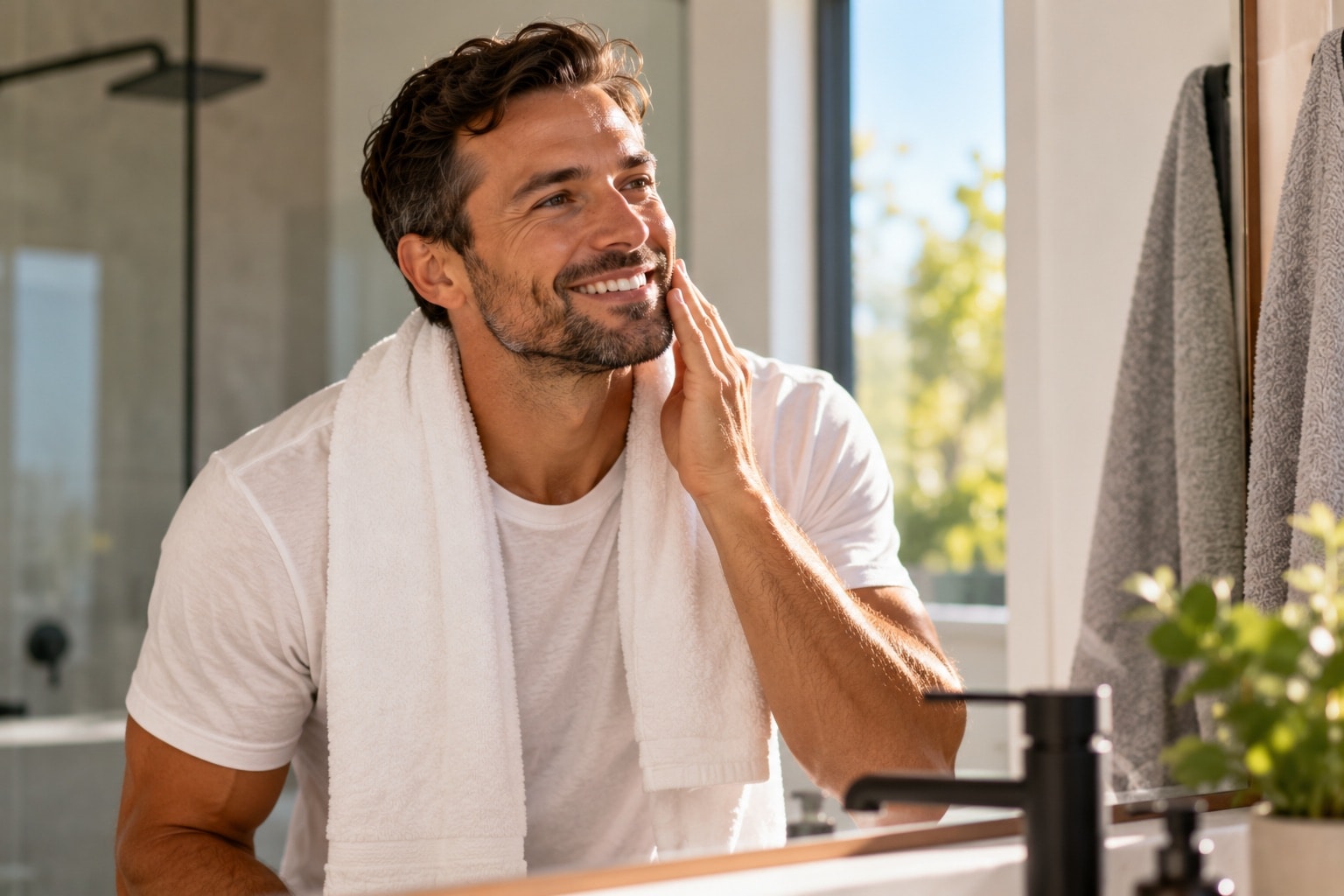
Nasal strips peel off oily skin because adhesive can't grip through oil. Eight ways to prep your nose, apply the strip and keep it in place until morning.
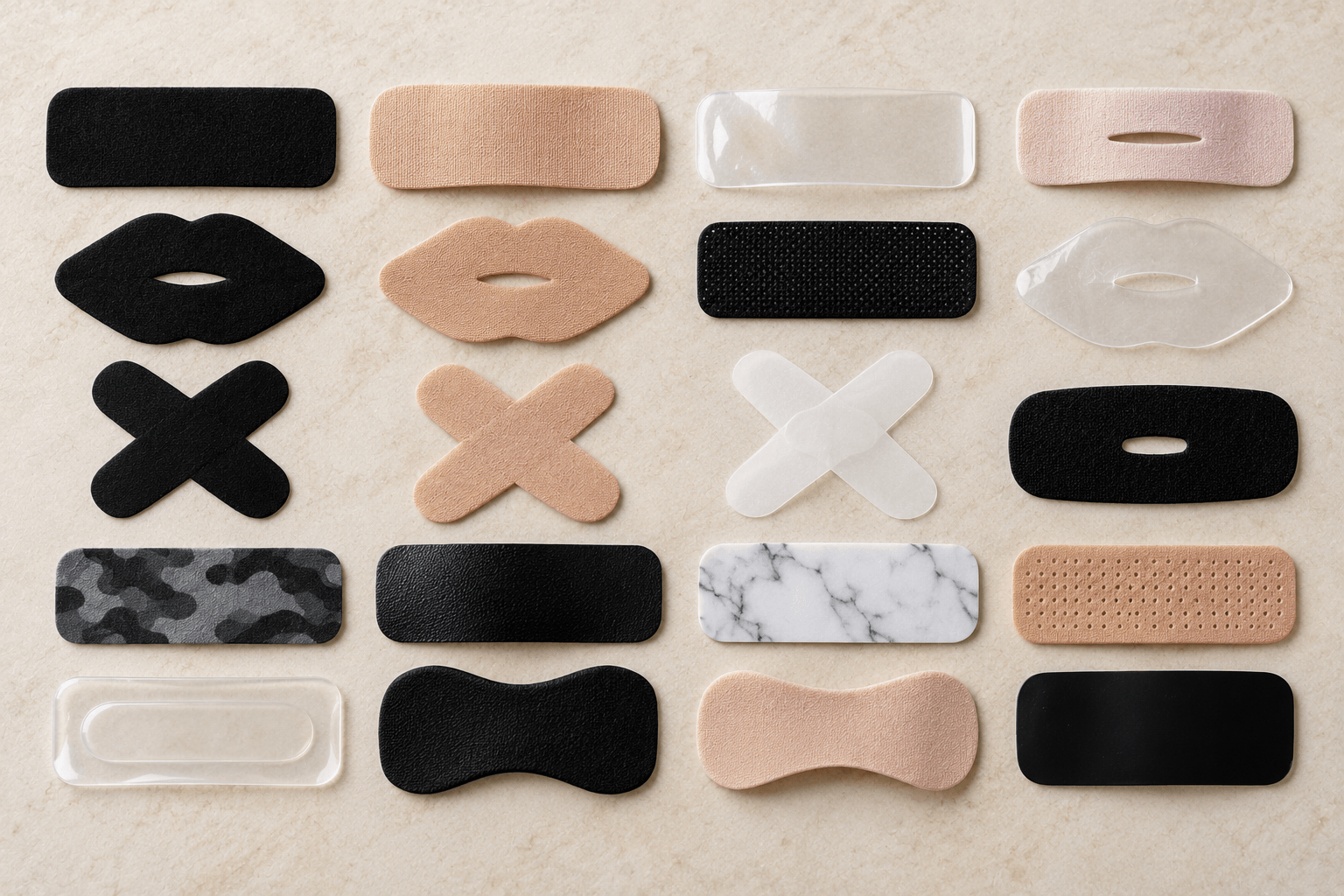
PFAS are long-lasting chemicals used in many products. What EPA, FDA and NIEHS say about them, what skin contact means, and how to read a PFAS-free claim.

Thin air makes you breathe harder and in cycles at night, so sleep suffers. What helps you sleep at altitude, and the altitude sickness signs that mean descend.
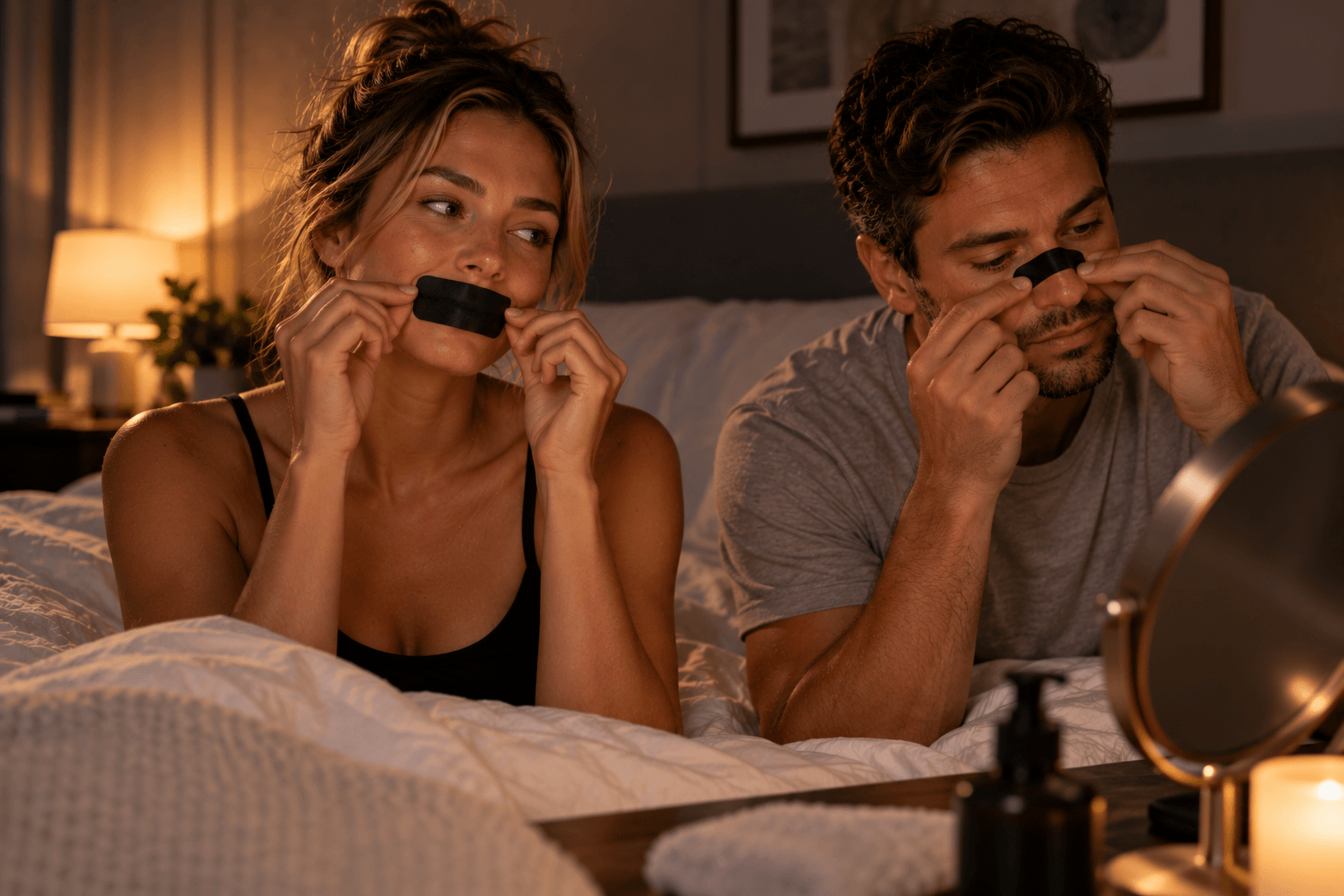
A cool, dark, quiet room, a bed kept for sleep, screens out, the right humidity and a clear nose. A 12-point bedroom checklist for better sleep and breathing.

Third-party tested means someone outside the brand ran a test. What the FTC expects behind that claim, what it can and can't tell you, and what to ask a brand.
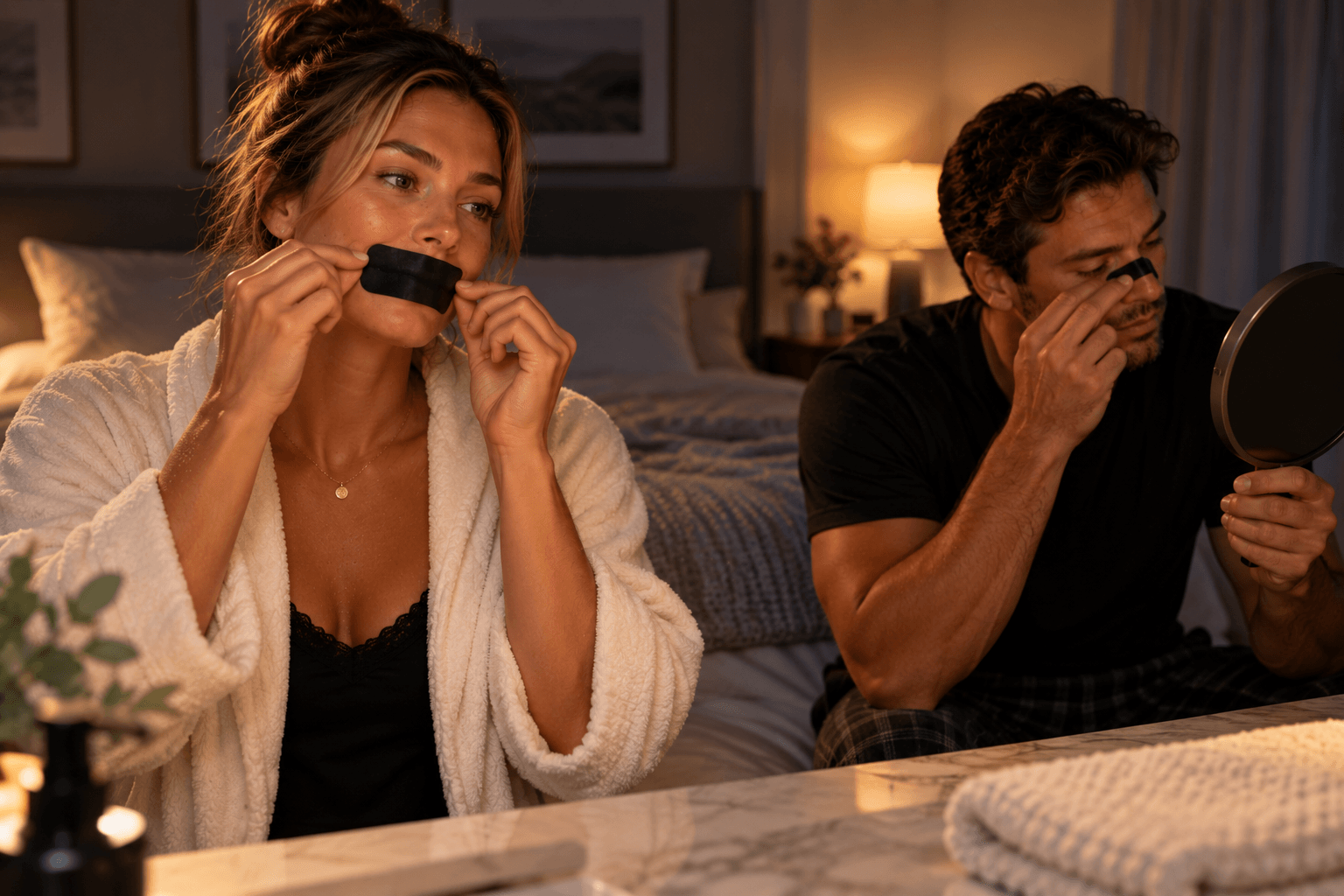
Your first night with a nasal strip: how it feels, why the edges lift, whether it stays on, what happens to snoring and how to take it off in the morning.

Your first night with mouth tape will probably feel a little odd. What it feels like, why the tape may be gone by morning, and the signs that mean take it off.
Snoring gets more common with age as throat muscles lose tone and the airway narrows. Why it happens, what helps and the sleep apnea signs to watch for.
Your mouth falls open in sleep because your jaw and throat muscles relax. A blocked nose, alcohol and age make it likelier. Why it matters and what helps.
Back sleeping, alcohol, a blocked nose and a mouth that falls open are common reasons for snoring. Ten causes and the fix that matches each one.