In short
- Expect your nose to feel more open soon after the strip goes on, with a gentle pull at the sides and edges that lift slightly.
- Noticing the strip at first is normal. In a 1998 study, 17 of 30 snorers needed some time to get used to it, after which they said they breathed easily and slept well.
- A strip that peels off overnight usually went onto skin that wasn't fully clean and dry.
- Snoring results vary. A strip helps most when your nose is the bottleneck, and it doesn't treat sleep apnea.
- Take it off slowly after wetting it with warm water, and give strips about a week before you judge them.
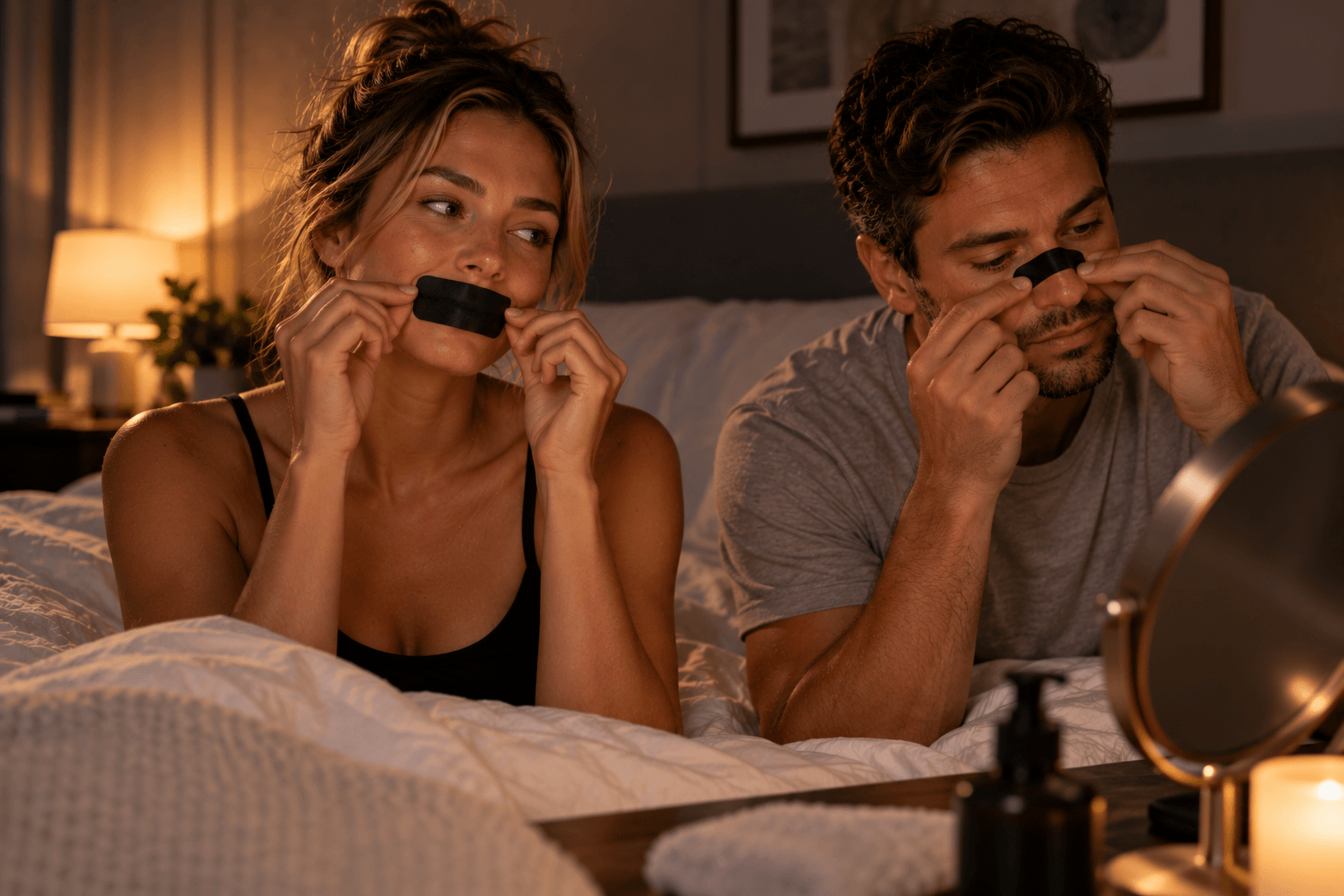
On your first night with a nasal strip, expect your nose to feel more open soon after you put it on, along with a light springy pull across the sides of your nose. Many people notice the strip for a night or two before it fades into the background. Here's what happens from bedtime to the next morning, and how to tell after a week whether strips are working for you.
What should you do before bed?
Before bed, start with a clean, dry nose. Strip makers say the adhesive won't stick properly to wet, oily or moisturized skin, so wash your nose, dry it well and leave night cream off that area until the strip is on.
Then place the strip just above the point where your nostrils flare out, press the ends down and rub gently along its length. Strips come in different sizes, and the usual advice is the large size for most adults and the small or medium size for smaller faces. Don't trim one to fit, because cutting a strip can stop it working. Our step-by-step guide to putting on a nasal strip walks through the placement in detail.
Two quick checks before the first night. Don't put a strip over sores, sunburn or irritated skin. And if you have a latex allergy, read the box, because one major strip maker says its packaging is sealed with natural rubber latex and tells people with latex allergies not to use its strips.
How will it feel when you put it on?
A nasal strip has flexible bands inside an adhesive pad. Once it's on your nose, the bands try to straighten back to their original shape, and as they do, they lift the sides of your nose and open the nostrils. That lift is the pull you feel.
The change is measurable. In a 1997 randomized, placebo-controlled study of 53 athletes, researchers measured the inside of the nose with acoustic rhinometry and found the strip significantly increased the area of the nasal valve at rest in every group they tested. How nasal strips work explains why that narrow spot matters so much for airflow.
You'll probably also see the edges lift a little. Strip makers say that's normal and is a sign the strip is opening your nose. In the 1998 sleep lab study described below, the only reaction the researchers recorded was one person who briefly felt as if they needed to sneeze after the first application.
Is it normal to notice the strip all night?
Yes, it's normal to notice a nasal strip all night at first. In that 1998 study of 30 habitual snorers, 17 needed some time to get used to the strip. After that, they reported that they could breathe easily, slept well and felt rested the next morning. The authors described the strip as safe and easily applied.
So treat the first night or two as practice. If the pull feels too strong or uneven, the strip may be sitting too high or off-center, or it may be the wrong size. A strip that sits right over the flare of the nostrils usually feels firm but not tight.
Will the strip stay on until morning?
Most nasal strips stay on until morning when the skin underneath is clean and dry. If yours is on the pillow by 3am, the cause is usually oil, sweat or cream on the nose, or a strip that didn't get pressed down at the ends. Our list of common nasal strip mistakes covers the fixes.
If it does come off, use a new one rather than sticking the old one back on. Strip makers say each strip is single use and the adhesive isn't designed to stick twice. They also say not to wear a strip for more than 12 hours a day, which fits a normal night of sleep. How long you can wear a nasal strip has more on timing.
Will it stop your snoring on the first night?
Research: moderate (what this means)For some people, a nasal strip helps with snoring quickly. In the 1998 study, peak snoring loudness dropped in 22 of the 30 snorers by the second night with the strip, and the effect was clearest in people who didn't have sleep apnea. In a small 2000 trial of people with chronic rhinitis, strips cut snoring from about 258 to 173 snores an hour compared with a placebo strip, although snoring loudness and sleep quality didn't change.
Results vary between people. A 2018 trial of 59 people with chronic nighttime congestion found strips improved some measures of sleep satisfaction compared with placebo strips after a week, while two larger 2019 trials found no difference from placebo, possibly because of a strong placebo effect. Strips tend to help most when the nose is the bottleneck, so a strip is a good first thing to try if your nose feels narrow or stuffy at night.
There's one thing a strip can't do. A 2016 meta-analysis found that nasal dilators improve nasal breathing but haven't been shown to improve obstructive sleep apnea. If your breathing stops and starts while you sleep, you make gasping, snorting or choking noises, or you feel very tired during the day, the NHS advises seeing a doctor, since those are signs of sleep apnea. Our page on sleep apnea warning signs has the full list.
How do you take it off in the morning?
Take a nasal strip off slowly in the morning. Strip makers recommend washing your face with warm water for about 10 seconds, then gently lifting each side of the strip. Taking it off in the shower works for the same reason, since warm water softens the adhesive. Pulling it off dry is the main cause of sore skin.
A little redness that fades soon after is common with any adhesive. Strip makers list redness, irritation and peeling among possible reactions at the site and say to stop using strips if you get a rash. Nasal strip skin irritation explains how to keep your skin comfortable night after night.
When can you add mouth tape?
You can add mouth tape once the strip feels normal and your nose feels open at bedtime. A quick check is to close your mouth and breathe through your nose for a minute or two with the strip on. If that's easy, tape can keep your lips closed so you stay on that route all night. The Sleep Foundation describes mouth tape as a gentle reminder that encourages nasal breathing, and says to use a porous tape made for skin. If your nose still feels blocked, leave the tape off. Our two-minute nose test walks you through the check, and using mouth tape and nasal strips together covers the routine.
Check this first. Skip mouth tape and see a doctor if you snore loudly, wake up gasping, have been told you stop breathing in your sleep, or can't breathe comfortably through your nose. More on safety
How do you know it's working after a week?
Give strips about seven nights before you judge them. Things to look for:
- Breathing through your nose feels easier when you lie down.
- Your partner says the snoring is quieter or less frequent.
- You wake with a less dry mouth. Cleveland Clinic lists dry mouth, drooling and snoring among the signs of mouth breathing, so fewer of them suggests more air is going through your nose.
If you've used strips correctly for a week and nothing has changed, the blockage may be further inside the nose, where a strip can't reach. Why nasal strips sometimes don't work goes through the usual reasons. You'll find the rest of our guides in the nasal strips topic.
Our pick (paid partner)
If you're choosing strips for your first night, our pick is TitanAir Nasal Strips. Titan says they're drug-free external nasal dilators with flexible spring-loaded bands, made to sit just above the flare of the nostrils on the soft part of the nose, and that you should loosen them with warm water and peel slowly from the ends inward. Titan says every batch is third-party tested and certified PFAS-free, and it offers a 30-night guarantee.
Read next
- 12 tips for getting more out of nasal strips
- How nasal strips work, and when they help most
- Mouth tape vs. nasal strips
Common questions
Does a nasal strip feel weird the first night?
It can. You'll feel a light springy pull across the sides of your nose, and many people notice it for the first night or two. In a 1998 sleep lab study, more than half of the snorers needed some time to get used to the strip before they felt it helped.
Is it normal for the edges of a nasal strip to lift?
Yes. Strip makers say slight lifting at the edges is normal and is a sign the bands are opening your nose. If the whole strip peels away, the skin probably had oil, moisture or cream on it.
Should a nasal strip stop snoring the first night?
Sometimes. In a 1998 study, peak snoring loudness fell in 22 of 30 snorers by the second night. Other trials found smaller or no differences from placebo strips, so it depends on whether your nose is part of the reason you snore.
What if my nasal strip falls off in the middle of the night?
Use a fresh one if you want to keep going. Strips are single use, and the adhesive isn't designed to stick a second time. Next night, wash and dry your nose well and keep moisturizer off it.
How long should I try nasal strips before deciding?
Give it about a week of nightly use. The first night or two are often an adjustment period, so a single night isn't a fair test.
Can I use mouth tape on my first night with a nasal strip?
It's easier to start with the strip alone for a few nights. Once breathing through your nose with your mouth closed feels easy at bedtime, you can add mouth tape.
Sources
- Breathe Right FAQs
- How Breathe Right nasal strips work
- Physiologic effects of an external nasal dilator
- Effect of the external nasal dilator Breathe Right on snoring
- External nasal dilation reduces snoring in chronic rhinitis patients: a randomized controlled trial
- Effects of nasal dilator strips on subjective measures of sleep in subjects with chronic nocturnal nasal congestion: a randomized, placebo-controlled trial
- Sleep Quality and Congestion with Breathe Right Nasal Strips: Two Randomized Controlled Trials
- Nasal Dilators (Breathe Right Strips and NoZovent) for Snoring and OSA: A Systematic Review and Meta-Analysis
- Sleep apnoea
- Mouth breathing: symptoms, complications and treatment
- Mouth taping for sleep: does it work?
- TitanAir Nasal Strips
About this article
- Research
- 12 published sources, listed above.
- Evidence
- Moderate. How we rate it
- Last checked
- October 6, 2026
- Funding
- Paid partner of Titan Recovery. Their ads are labeled.
- Found an error?
- Tell us. We log fixes on the corrections page.
* This content is for informational and educational purposes only and is not medical advice. It is not intended to diagnose, treat, cure or prevent any disease or health condition. Talk to a qualified healthcare provider about your health.