In short
- Most adults mouth breathe at night because air can't get through the nose easily, so opening the nose comes first.
- A nasal strip lifts the sides of the nose and lowers resistance, which makes nose breathing easier to keep up.
- Mouth tape keeps the lips closed, but only add it once breathing through your nose feels easy with the strip on.
- Sleeping on your side and with your head raised helps, because lying flat raises nasal resistance.
- Snoring with gasping, choking or daytime sleepiness is a reason to see a doctor before trying strips or tape.
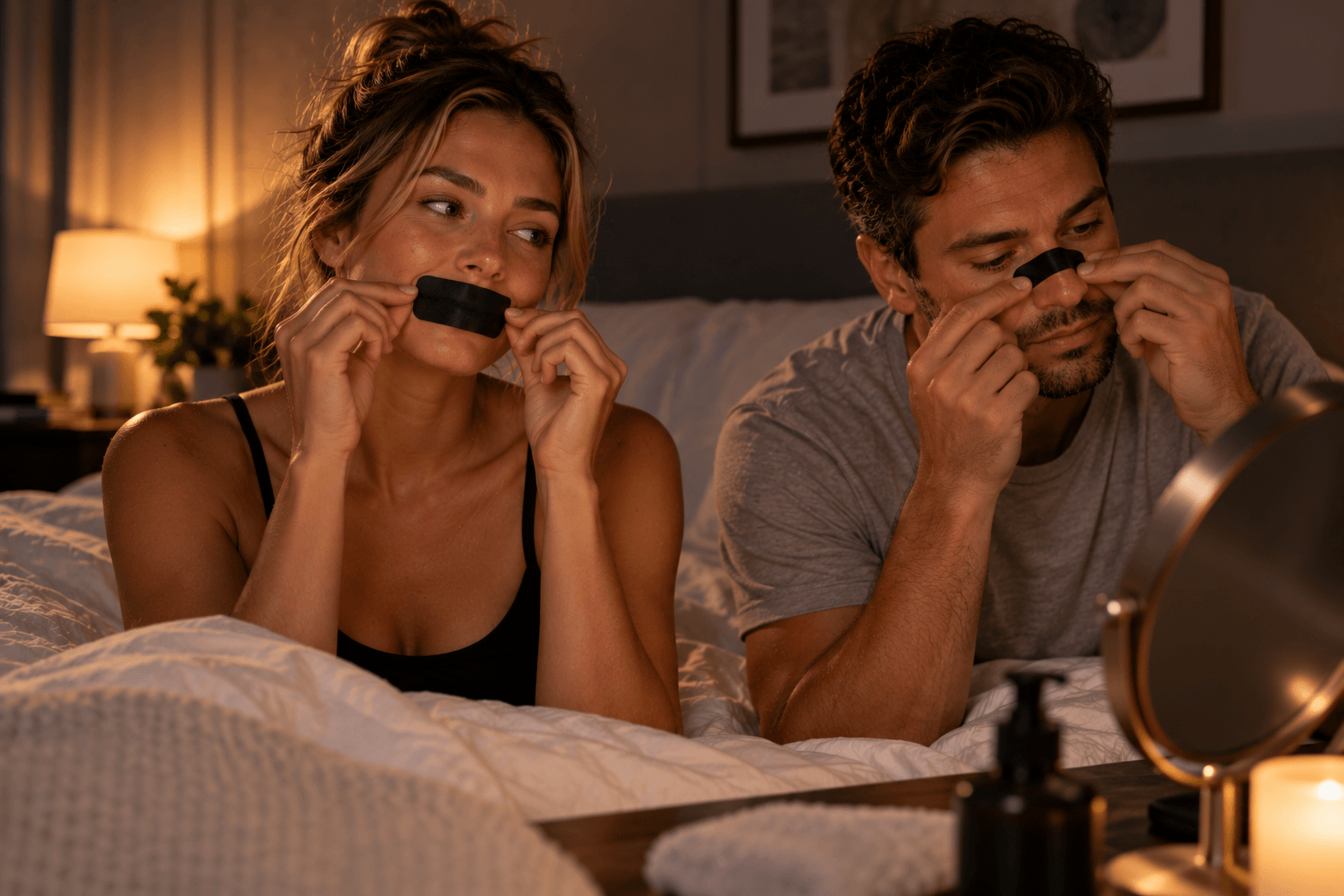
If you breathe through your mouth at night, a nasal strip is a good first step, because most mouth breathing starts with a nose that doesn't let enough air through. A strip lifts the sides of the nose and makes nose breathing easier to keep up. Once your nose feels open with the strip on, mouth tape can keep your lips closed so you actually use it.
Why does the nose matter for night breathing?
Your nose is the default route during sleep. A 2003 study of healthy adults with normal nasal resistance found only about 4% of the air they breathed in during sleep came through the mouth. A second 2003 study explains why: in healthy sleepers lying on their back, upper airway resistance was much higher when they breathed through the mouth than through the nose.
When the nose isn't working well, the mouth takes over. Cleveland Clinic says most people mouth breathe because they can't get air in through the nose, and lists dry mouth, bad breath, drooling, hoarseness, snoring and feeling tired all the time as common signs. A 2016 study found the mouth also became more acidic overnight when people were made to breathe through it during sleep, with average pH falling from 7.0 to 6.6, a change the authors noted has been proposed as a factor in dental erosion and decay. Cleveland Clinic says mouth breathing in adults isn't a serious health issue, but it can affect your sleep, and the fix starts with the nose. Signs you mouth breathe at night has more clues to look for.
How do you fix mouth breathing at night?
To fix mouth breathing at night, start with the nose and finish with the mouth. Find out what's blocking your nose, open it with a strip and clear any congestion, then add mouth tape once nose breathing feels easy. The steps below go in that order.
Research: limited (what this means)Find out what's blocking your nose
The fix depends on the cause. Cleveland Clinic lists nasal congestion from allergies, colds or sinusitis, a deviated septum, enlarged turbinates, nasal polyps and sleep apnea among the reasons adults mouth breathe. A stuffy nose from a cold passes. One side that's always blocked is worth a doctor's look. Cleveland Clinic says treatment targets the cause, from antihistamines or steroid nasal sprays for allergies to surgery such as septoplasty or turbinate reduction when the structure of the nose is the problem. A strip can help in the meantime and alongside those treatments. Why do I breathe through my mouth at night goes through each one.
Check how open your nose is
Before you buy anything, see how well your nose works with your mouth closed. Cleveland Clinic describes simple tests clinicians use, such as checking whether you can breathe with your lips sealed or hold water in your mouth while breathing through your nose. Our two-minute nose test walks you through a similar check at home.
Open the front of your nose with a strip
A nasal strip opens the front of your nose, and this is where it earns its place. Cleveland Clinic notes that a narrowed nasal valve can cause mouth breathing during the day and snoring at night, and that breathing strips can help manage the symptoms. A 1998 study found an external dilator widened the narrowest part of the nose and lowered resistance in healthy noses, congested noses and noses with a deviated septum. A 2019 study in people with chronic nighttime congestion found nasal resistance during sleep was 39.1% lower with a strip on. A Cleveland Clinic sleep specialist lists nasal strips among the safer ways to improve airflow for snoring. Place the strip just above where your nostrils flare out, on clean, dry skin, and give it a week or two of nightly use. How to apply nasal strips covers placement.
Clear congestion before bed
A strip works best on a nose that's as clear as you can get it. The Sleep Foundation suggests a saline rinse, a steamy shower before bed and a humidifier set no higher than 50%. If you rinse, the FDA says to use only distilled, sterile or previously boiled water. Cleveland Clinic adds a few bedroom habits for nighttime stuffiness: keep pets out of the bedroom, change your sheets at least weekly and shower before bed to wash off outdoor allergens. These steps help the strip do its job.
Sleep on your side with your head raised
Position changes how open your nose feels. A 2021 meta-analysis found that lying down raises nasal resistance and lowers nasal airflow. The Sleep Foundation suggests raising your head with a wedge or extra pillow, and the NHS suggests sleeping on your side to reduce snoring. A 2003 study found most snorers without sleep apnea snored less, and less loudly, on their side than on their back. The best sleep position for breathing covers the options.
Add mouth tape once your nose is clear
A strip opens the nose, but it doesn't keep your mouth shut, and the NHS lists a mouth falling open during sleep as a cause of snoring in its own right. That's where mouth tape fits. The Sleep Foundation says tape shouldn't be used by people with untreated sleep apnea, chronic nasal congestion or difficulty breathing through the nose, and a 2025 systematic review warned of a potentially serious risk of harm for people taping indiscriminately. The answer is order: strip first, check that nose breathing feels easy, then tape. Mouth tape and nasal strips together explains the routine.
Check this first. Skip mouth tape and see a doctor if you snore loudly, wake up gasping, have been told you stop breathing in your sleep, or can't breathe comfortably through your nose. More on safety
Practice during the day first
Getting used to a closed mouth is easier awake. The Sleep Foundation suggests testing the tape during the day to make sure you can breathe easily through your nose, and folding over one corner so it's easy to remove. Titan Recovery suggests 20 to 30 minutes of daytime practice before the first night. Start with a few nights of strip alone, then add tape once you're used to it. If taping feels uncomfortable or makes you anxious, take it off; the NHS lists a chin strap as another option when your mouth falls open in sleep.
Know when it's more than a habit
Mouth breathing and snoring are often harmless, but sometimes they're a sign of sleep apnea. A 2016 meta-analysis found nasal dilators improve nasal breathing but don't improve obstructive sleep apnea, and Cleveland Clinic advises against mouth taping for people who snore or may have sleep apnea without talking to a doctor first. The NHS lists breathing that stops and starts, gasping or choking noises, loud snoring and feeling very tired during the day as symptoms. If those sound familiar, see a doctor before trying strips or tape. Snoring vs sleep apnea explains the difference.
Our pick (paid partner)
Our pick for mouth breathers is the Titan Sleep System from Titan Recovery, which pairs TitanAir Nasal Strips with Titan Bamboo Silk Mouth Tape as one nightly routine. This is our recommendation, not the result of testing or ranking products ourselves.
Titan says the strips are drug-free external nasal dilators with flexible spring-loaded bands that lift the nasal passages open, placed just above the flare of the nostrils on clean, dry skin. The tape, Titan says, is a soft, breathable bamboo silk strip worn horizontally across the lips, with an adhesive made to grip through stubble and beards and no printed ink on the side that touches skin. In the morning, Titan suggests loosening both with warm water and peeling slowly.
Titan says both are third-party tested and certified PFAS-free. The system comes with a 30-night guarantee and in 30, 90, 180 or 360-night supplies, with free US shipping and a subscribe-and-save option.
Read next
- How to start mouth taping
- How nasal strips work, and when they help most
- Everything we've written on nasal strips
Common questions
Do nasal strips stop mouth breathing?
They make nose breathing easier, which removes one of the main reasons people breathe through their mouth. A strip doesn't hold your mouth closed, though, so many people pair it with mouth tape once their nose feels open.
Why do I breathe through my mouth when I sleep?
Cleveland Clinic says most people mouth breathe because they can't get enough air through the nose, from causes like congestion, allergies, a deviated septum, enlarged turbinates or nasal polyps. Sleep apnea can also be a cause.
How can I tell if I mouth breathe at night?
Common signs include a dry mouth, bad breath, drool on your pillow, hoarseness, snoring and feeling tired all the time, according to Cleveland Clinic. A partner noticing your mouth open is another clue.
Is it safe to tape my mouth if I'm a mouth breather?
It can be, if your nose is clear and you don't have signs of sleep apnea. The Sleep Foundation says mouth tape isn't for people with untreated sleep apnea, chronic nasal congestion or difficulty breathing through the nose. Practice during the day first.
What else helps besides strips and tape?
Clearing your nose before bed, sleeping on your side and raising your head all help. The NHS also lists a chin strap as an option when your mouth falls open during sleep.
Should I see a doctor about mouth breathing?
Yes, if you can't breathe comfortably through your nose most of the time, or if you snore loudly, gasp or choke in your sleep, or feel very tired during the day. A doctor can look for the cause.
What does it mean to be a mouth breather?
A mouth breather is someone who regularly breathes through their mouth instead of their nose, usually because air can't get in easily through the nose, according to Cleveland Clinic. It lists dry mouth, bad breath, drooling in sleep, hoarseness, snoring and feeling tired all the time as common signs. In adults it isn't a serious health issue, but it can affect your sleep.
Sources
- Mouth breathing: symptoms, complications and treatment
- Partitioning of inhaled ventilation between the nasal and oral routes during sleep in normal subjects
- Effect of nasal or oral breathing route on upper airway resistance during sleep
- Intraoral pH and temperature during sleep with and without mouth breathing
- Nasal valve collapse
- Role of the external nasal dilator in the management of nasal obstruction
- Objective and Subjective Effects of a Prototype Nasal Dilator Strip on Sleep in Subjects with Chronic Nocturnal Nasal Congestion
- The Recumbent Position Affects Nasal Resistance: A Systematic Review and Meta-Analysis
- Treatment for a blocked nose at night
- Is rinsing your sinuses with neti pots safe?
- Mouth taping for sleep: does it work?
- Breaking social media fads and uncovering the safety and efficacy of mouth taping in patients with mouth breathing, sleep disordered breathing, or obstructive sleep apnea: A systematic review
- Is mouth tape safe to use while sleeping?
- Snoring
- Sleep apnoea
- Nasal Dilators (Breathe Right Strips and NoZovent) for Snoring and OSA: A Systematic Review and Meta-Analysis
- Effects of body position on snoring in apneic and nonapneic snorers
- Why does my nose get stuffy at night?
- Titan Sleep System (Nasal Strips + Mouth Tape)
- TitanAir Nasal Strips
- Titan Recovery Bamboo Silk Mouth Tape
About this article
- Research
- 21 published sources, listed above.
- Evidence
- Limited. How we rate it
- Last checked
- October 10, 2026
- Funding
- Paid partner of Titan Recovery. Their ads are labeled.
- Found an error?
- Tell us. We log fixes on the corrections page.
* This content is for informational and educational purposes only and is not medical advice. It is not intended to diagnose, treat, cure or prevent any disease or health condition. Talk to a qualified healthcare provider about your health.