In short
- Mouth tape keeps the lips closed so you breathe through your nose, while a snoring mouth guard (a mandibular advancement device) holds the lower jaw forward to keep the airway open.
- The AASM and AADSM recommend that sleep physicians prescribe oral appliances, rather than no therapy, for adults who want treatment for snoring without sleep apnea, and rate that evidence as high quality.
- The AASM says you must be custom fitted for an oral appliance to work properly and does not recommend over-the-counter devices for snoring or sleep apnea.
- In a 2022 study of 20 mouth breathers with mild sleep apnea, the median snoring index fell by 47% after a week of mouth taping, and 13 of the 20 halved their snoring.
- The NHS matches a jaw-advancing device to a tongue blocking the throat, and a device that keeps the mouth closed to a mouth that falls open during sleep.
- A grinding night guard is not a snoring device, and in a 2004 pilot study of 10 people with sleep apnea, time spent snoring rose 40% with one in.
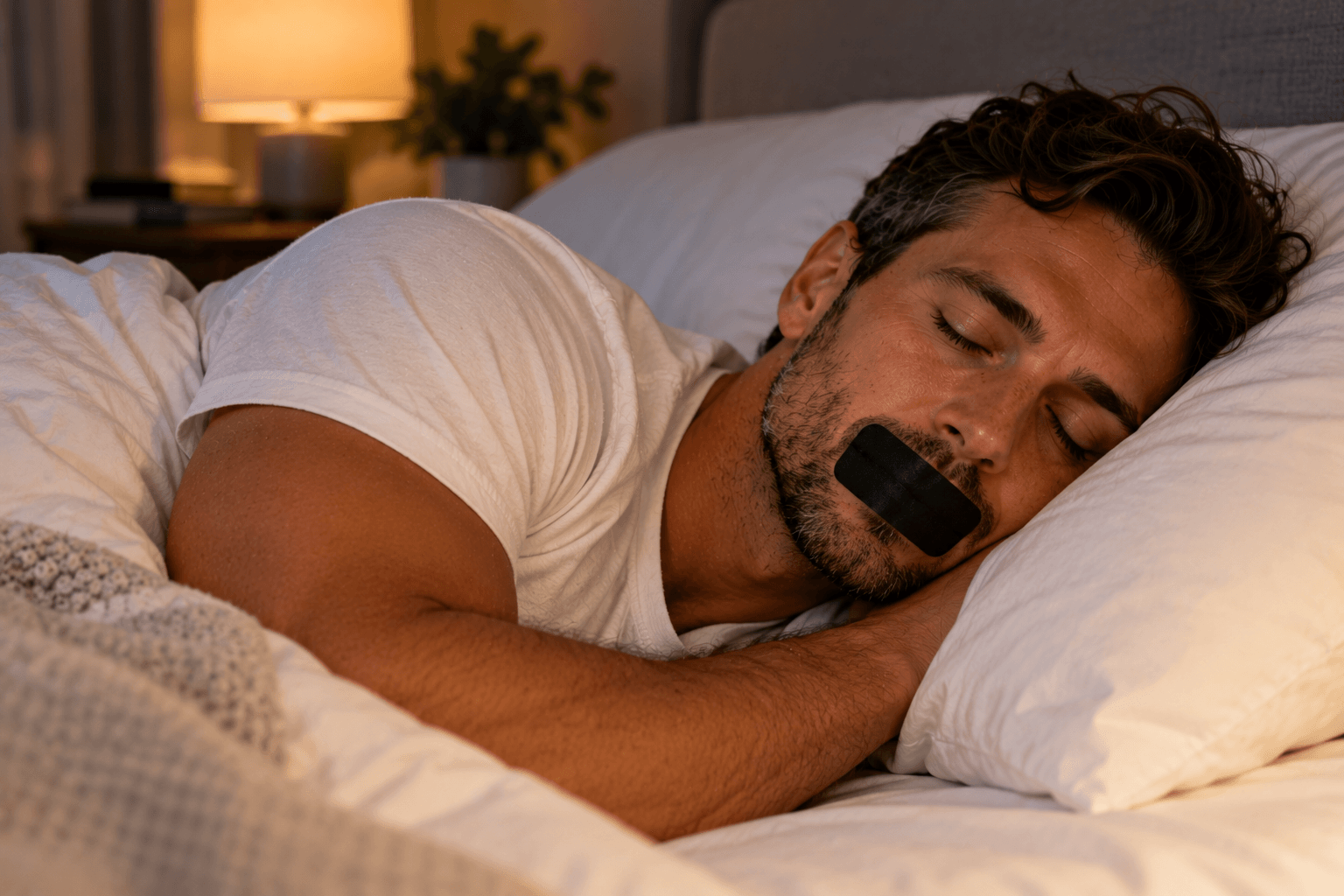
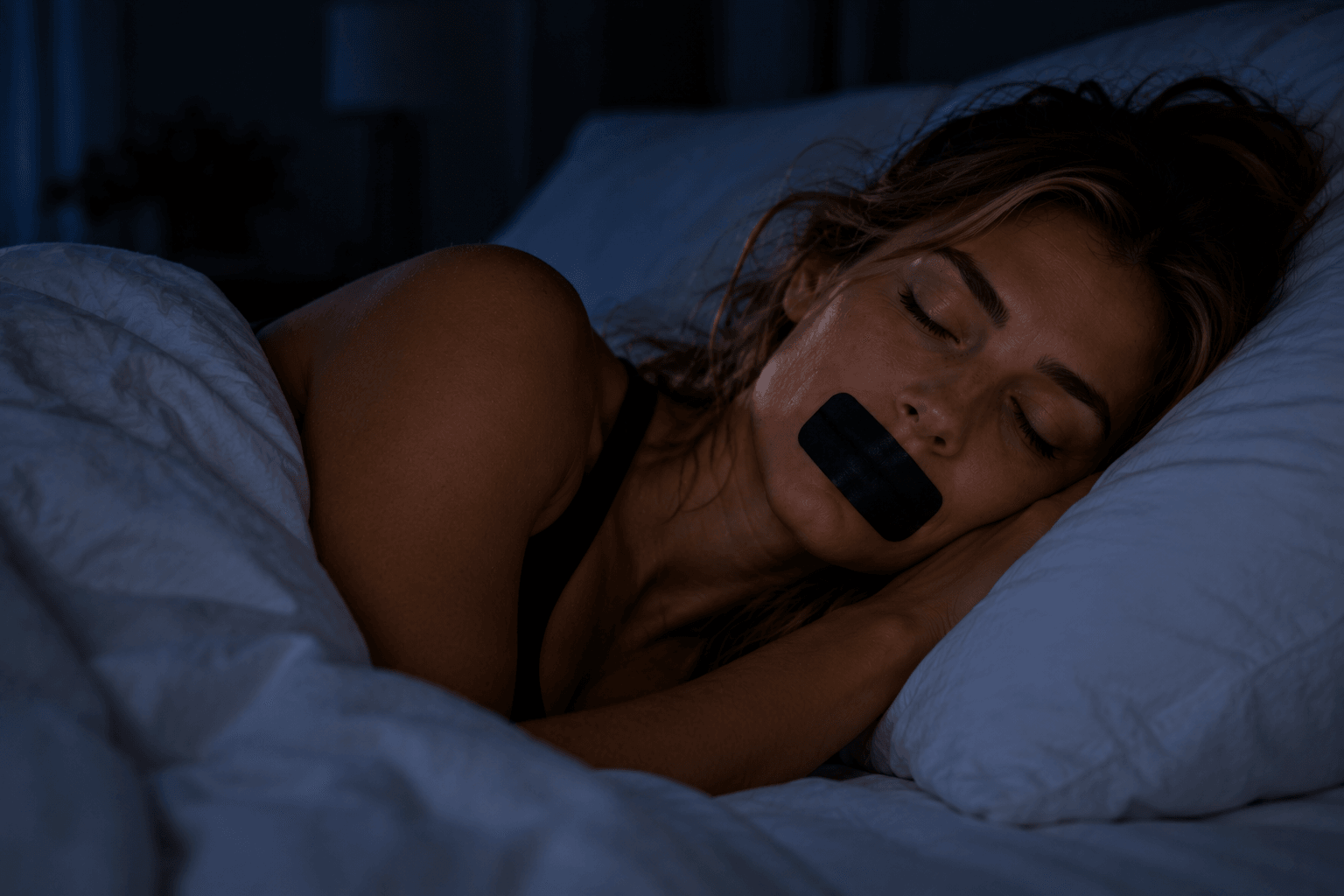
Mouth tape and a snoring mouth guard tackle snoring from different ends of the airway. Tape keeps your lips together so you breathe through your nose, which suits people whose mouth falls open at night. A mouth guard for snoring, properly called a mandibular advancement device, holds your lower jaw forward so your tongue can't sag back, which suits snoring from the throat. Mouth guards have the stronger research, and tape is the simpler, lower-cost thing to try first if you're a mouth breather with a clear nose.
What's the difference between mouth tape and a mouth guard?
Mouth tape is a small adhesive strip across the lips, and a snoring mouth guard is a device worn over the teeth that moves the jaw. They're often compared because both are worn at night to quiet snoring, but they work on different parts of the airway.
Tape keeps the mouth closed. Sleep Foundation explains that snoring often happens when someone breathes through their mouth, which can make the soft tissues in the throat vibrate, and that gently encouraging nasal breathing may help keep the airway more stable. It describes tape as a gentle reminder to breathe through the nose.
A snoring mouth guard changes the shape of the airway itself. The 2015 clinical practice guideline from the American Academy of Sleep Medicine (AASM) and the American Academy of Dental Sleep Medicine (AADSM) defines oral appliances as devices that push the lower jaw forward and hold it steady to keep the airway open during sleep. The AASM's patient site says most are mandibular repositioning devices, and a smaller group, tongue retaining devices, hold the tongue in place instead. Cleveland Clinic describes them as mouthguard-style devices that hold your lower jaw forward while you sleep.
Then there's the boil-and-bite version: a ready-made plastic device you soften in hot water and bite into to shape. It aims to do the same job as a custom appliance without a dentist.
Which one has better evidence?
Research: moderate (what this means)Mouth guards for snoring have the better evidence. The AASM and AADSM guideline recommends that sleep physicians prescribe oral appliances, rather than no therapy, for adults who ask for treatment of snoring without sleep apnea. It rates the quality of evidence as high and says oral appliances reduce how often and how loudly people snore and improve sleep quality for both snorers and their bed partners.
A 2019 German guideline on snoring in adults summarizes randomized trials where a real device cut snoring and a sham device that didn't move the jaw did not. In one, the median snoring index fell from 398 to 17 with the real device and didn't fall with the sham.
Mouth tape's evidence is younger and smaller, but it points in a good direction for mouth breathers. In a 2022 study in Healthcare, 20 mouth breathers with mild sleep apnea wore silicone tape for a week, and their median snoring index fell by 47%. Thirteen of the 20 cut their snoring by at least half. A 2025 systematic review in PLOS One found 10 mouth taping studies with 213 patients in total, rated them all as poor quality, and called for more research. So tape is promising for the right person, not proven in the way oral appliances are. Our article on whether mouth tape helps snoring goes through the tape studies in more detail.
Are boil-and-bite mouth guards as good as custom ones?
Custom mouth guards have the edge over boil-and-bite ones in the evidence and in expert advice. The AASM's patient site says you must be custom fitted for an oral appliance to work properly and that over-the-counter devices are not recommended as a treatment for snoring or sleep apnea.
The German guideline is a little more open. It says thermoplastic (boil-and-bite) splints are viewed critically for how long they last and how well they work, but that one randomized trial did find a partly adjustable thermoplastic splint effective, and that solid long-term data on ready-made splints wasn't available. Cleveland Clinic's sleep specialist suggests working with a dentist or oral surgeon to get a device customized, warning that a badly fitting appliance can strain the jaw.
How do they compare on cost, comfort and setup?
The biggest practical difference is setup. Mouth tape is something you can try tonight. A custom oral appliance involves a doctor and a dentist. The AASM guideline says snoring should be diagnosed by a sleep physician rather than a dentist, because snoring often comes with sleep apnea, and it recommends dental follow-up to check for side effects and bite changes.
| Mouth tape | Custom mouth guard (oral appliance) | Boil-and-bite mouth guard | |
|---|---|---|---|
| How it works | Keeps lips closed to encourage nose breathing | Holds the lower jaw forward to keep the airway open | Same idea as custom, shaped at home |
| Best match | Mouth falls open at night, nose is clear | Snoring from the tongue and throat | Same as custom, with less evidence |
| Evidence for snoring | Small, early studies in mouth breathers | Rated high quality by the AASM and AADSM | Mixed; not recommended by the AASM |
| Setup | Apply at bedtime; practice in the day first | Sleep physician diagnosis, then dentist fitting and follow-up | Mold at home |
| Cost | Disposable strips, no appointments | Device plus sleep physician and dentist visits | Device only, no appointments |
| Common downsides | Skin irritation, anxiety, not for a blocked nose | Sore teeth or jaw, extra saliva, dry mouth, bite changes | Fit and durability concerns |
| Getting used to it | Practice during the day first | AASM says most people need a few weeks | Varies |
On comfort, each has its trade-offs. The AASM guideline lists sore teeth, gum problems, sore jaw muscles, excess saliva, difficulty chewing in the morning, dry mouth and changes in how the teeth meet as side effects of oral appliances. The AASM's patient site adds that these are frequent but minor, and that most people take a few weeks to adjust. With tape, Sleep Foundation lists skin irritation, discomfort and anxiety as possible side effects, and suggests testing tape during the day first and folding over one corner so it's easy to remove.
Who does each one suit?
Mouth tape suits adults who breathe through their mouth at night and can breathe comfortably through their nose. The NHS lists a mouth that falls open during sleep as its own cause of snoring, with a device that keeps the mouth closed as the matching fix. If you wake with a dry mouth or a partner says your mouth hangs open, tape is a sensible first step. Our guide to signs you mouth breathe at night helps you check, and if you'd like to try tape, our pick is Titan Bamboo Silk Mouth Tape.
A mouth guard suits snoring that comes from the throat. The NHS matches a tongue partly blocking the back of the throat to a mandibular advancement device. The German guideline adds that you need enough healthy, stable teeth, the ability to open your mouth normally and healthy jaw function. The AASM guideline frames oral appliances as the next step for snorers who've already tried conservative measures such as weight loss, changing sleep position and avoiding alcohol. Our guide to oral appliances for snoring covers who qualifies.
If your nose is blocked, neither may be the right starting point. The NHS points a blocked or narrow nose toward nasal strips, dilators or sprays. See nasal strips vs. a mouth guard for that comparison.
Is a night guard for grinding the same as a snoring mouth guard?
A night guard for grinding is not the same as a snoring mouth guard, and mixing them up can backfire. A grinding guard covers the teeth to protect them, while a snoring device moves the jaw. In a 2004 pilot study of 10 people with sleep apnea, time spent snoring rose by 40% on the night they wore a standard grinding splint, and the authors suggested clinicians ask about snoring before recommending one. If you already wear a grinding guard and want to add tape, read mouth tape with a night guard.
Can you use mouth tape and a mouth guard together?
You may be able to, but no study has tested mouth tape with a snoring mouth guard. Whether your lips close comfortably over the device depends on its design and how far it moves your jaw, so ask the dentist who fitted it. If they agree, put the appliance in, close your lips, and breathe through your nose for a few minutes before adding tape. If it feels at all hard to breathe, skip the tape.
When should you see a doctor first?
See a doctor before choosing either one if your snoring comes with warning signs of sleep apnea. The AASM says snoring is likely to be a sign of sleep apnea when it's followed by silent breathing pauses and choking or gasping sounds, and lists daytime sleepiness, unrefreshing sleep and morning headaches among its symptoms. Mouth tape doesn't treat sleep apnea, and Sleep Foundation says people with sleep apnea who aren't using CPAP shouldn't use it. Oral appliances can be a sleep apnea treatment, but only after a sleep doctor diagnoses it. Our guide to snoring vs. sleep apnea explains the difference.
Sleep Foundation also says people with a blocked nose, asthma or COPD (unless a doctor advises otherwise), anxiety or panic disorders, or a risk of vomiting during sleep should skip mouth tape. We don't recommend mouth tape for children.
Check this first. Skip mouth tape and see a doctor if you snore loudly, wake up gasping, have been told you stop breathing in your sleep, or can't breathe comfortably through your nose. More on safety
Our pick (paid partner): Titan Bamboo Silk Mouth Tape
If your snoring fits the mouth-breathing pattern and your nose is clear, our pick for trying tape is Titan Bamboo Silk Mouth Tape. Titan says the strip is bamboo silk rather than kinesiology tape, and describes it as soft, breathable and moisture-wicking. It comes in one oval size, 76 by 38 mm, worn horizontally across the lips, and has no printed logo or ink on the side that touches skin.
Titan suggests 20 to 30 minutes of daytime practice before the first night. It says every batch is third-party tested and certified PFAS-free, and its 30-night guarantee refunds you if your sleep isn't better after 30 nights.
Read next
- Anti-snoring mouthpieces and oral appliances
- Mouth tape vs. chin strap
- How to start mouth taping: your first week
Common questions
Is mouth tape or a mouth guard better for snoring?
It depends on why you snore. The NHS links a jaw-advancing mouth guard to snoring caused by the tongue blocking the back of the throat, and a mouth-closing device to snoring from a mouth that falls open. Mouth guards have stronger evidence overall, while mouth tape is a simpler, cheaper first try for mouth breathers with a clear nose.
What's the difference between sleep tape and a mouth guard?
Sleep tape is a small adhesive strip over the lips that encourages nose breathing. A snoring mouth guard is a device worn over the teeth that holds the lower jaw forward so the tongue and soft tissue don't narrow the airway. They work on different parts of the airway.
Do boil-and-bite mouth guards work for snoring?
Some may, but the evidence favors custom devices. The AASM says over-the-counter devices are not recommended for snoring or sleep apnea, and a 2019 German guideline says thermoplastic splints are viewed critically for durability and effectiveness, though one trial found a partly adjustable version effective.
Can you use mouth tape and a mouth guard together?
No study has tested the two together. Some people with a custom appliance can still close their lips comfortably over it, and others can't. Ask the dentist who fitted your appliance before adding tape, and make sure you can breathe easily through your nose with the device in.
Is a night guard for grinding the same as a snoring mouth guard?
No. A grinding guard covers the teeth to protect them, while a snoring guard moves the lower jaw forward. In a 2004 pilot study of 10 people with sleep apnea, time spent snoring rose by 40% on the night they wore a standard grinding splint.
What are the side effects of a snoring mouth guard?
The 2015 AASM and AADSM guideline says most are dental: sore teeth, gum problems, sore jaw muscles, excess saliva, difficulty chewing in the morning, dry mouth and changes in how the teeth meet. It recommends follow-up with a qualified dentist to catch problems early.
Sources
- Clinical practice guideline for the treatment of obstructive sleep apnea and snoring with oral appliance therapy: an update for 2015
- Oral appliance therapy
- The diagnosis and treatment of snoring in adults
- Snoring
- Snoring? Try these 12 remedies so you can sleep peacefully
- The impact of mouth-taping in mouth-breathers with mild obstructive sleep apnea: a preliminary study
- Breaking social media fads and uncovering the safety and efficacy of mouth taping in patients with mouth breathing, sleep disordered breathing, or obstructive sleep apnea: A systematic review
- Mouth taping for sleep: does it work?
- Aggravation of respiratory disturbances by the use of an occlusal splint in apneic patients: a pilot study
- Obstructive sleep apnea
About this article
- Research
- 10 published sources, listed above.
- Evidence
- Moderate. How we rate it
- Last checked
- October 12, 2026
- Funding
- Paid partner of Titan Recovery. Their ads are labeled.
- Found an error?
- Tell us. We log fixes on the corrections page.
* This content is for informational and educational purposes only and is not medical advice. It is not intended to diagnose, treat, cure or prevent any disease or health condition. Talk to a qualified healthcare provider about your health.