In short
- Mouth tape works by holding the lips together, so that when the jaw relaxes in sleep, air keeps flowing through the nose instead of the mouth.
- In a 1996 sleep study of six healthy adults, opening the mouth made the upper airway more collapsible and raised total breathing resistance.
- A 2003 sleep lab study of 12 healthy adults found upper airway resistance during sleep was more than twice as high breathing through the mouth as through the nose.
- In a 2022 study of 20 mouth breathers with mild sleep apnea, a week of mouth taping cut the median snoring index from 303.8 to 121.1 events an hour.
- A 2015 pilot found that 30 people wearing a porous mouth patch all slept with their mouths closed, and their median snoring index fell from 146.7 to 40.0 an hour.
- A 2025 systematic review rated all 10 studies on mouth closure as poor quality, so the strongest evidence is for snoring in mouth breathers, not for wider health claims.
Mouth taping works by holding your lips together while the muscles of your jaw relax in sleep, so air keeps flowing through your nose instead of your open mouth. Sleep lab studies show the airway is narrower, floppier and harder to breathe through when the mouth hangs open. Keeping it closed helps the airway stay steadier, and small trials in mouth breathers found snoring dropped by about half or more.
That's the short version. Below is what happens inside your mouth and throat with and without tape, which parts of the explanation are backed by research, and which are still guesses.
What does mouth tape actually do?
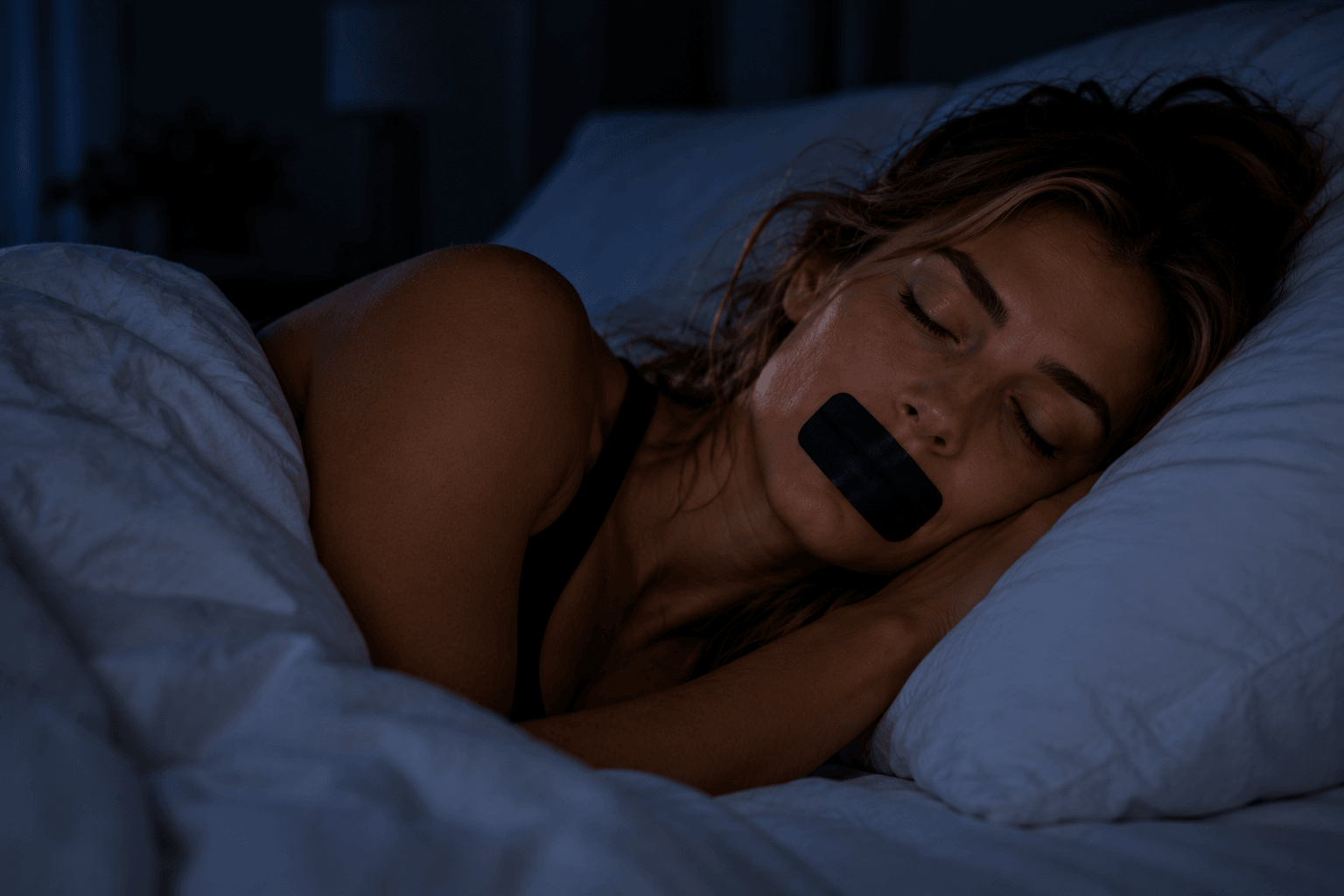
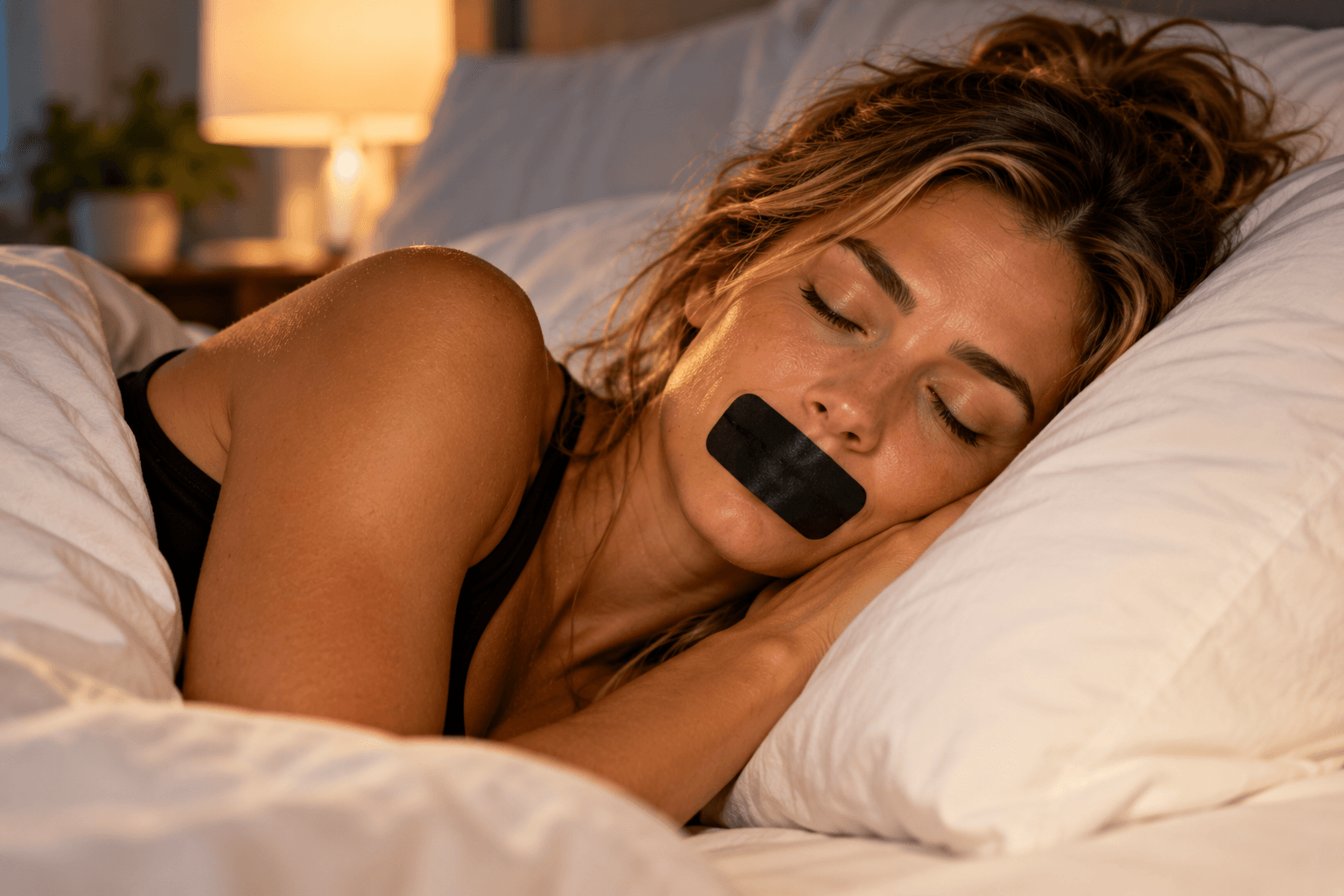
Mouth tape does one simple, mechanical job: it keeps your lips closed while you sleep. It doesn't open your nose, change your lungs or add anything to the air. Everything people credit mouth tape with flows from that single change in breathing route, from the mouth back to the nose.
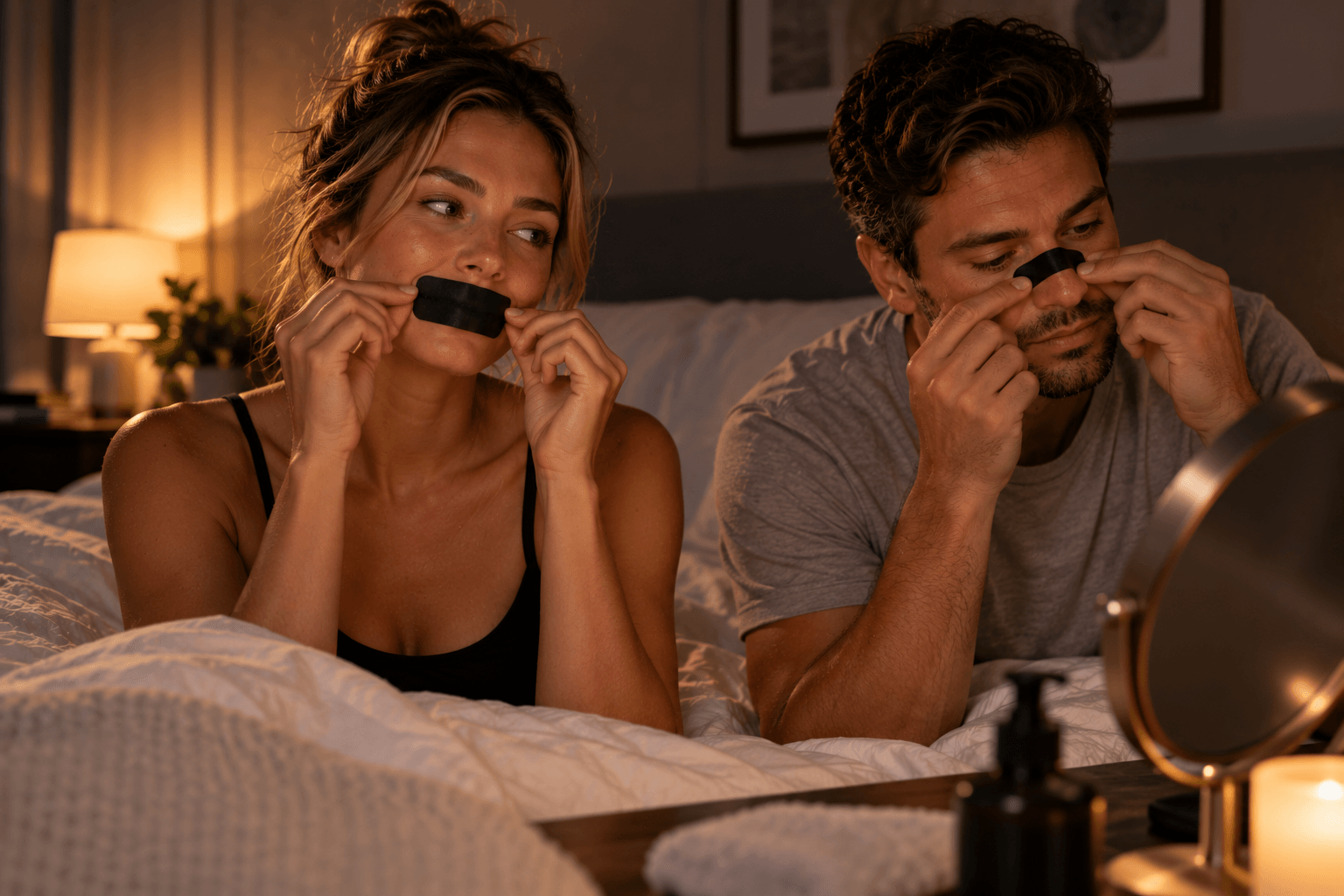
The Sleep Foundation describes it as placing a piece of porous tape over the lips before bed to encourage nasal breathing during sleep. The word "encourage" matters. Good mouth tape doesn't seal you in. It holds your lips together lightly, so the nose becomes the easiest path for air, and you can still open your mouth or peel the tape off if you need to.
Why does your mouth fall open in the first place?
Your mouth falls open in sleep because the muscles that hold your jaw up and your lips together relax. The NHS explains that snoring happens because the tongue, mouth, throat and airways in the nose relax and narrow when you're asleep. Once the jaw drops, air can take the open route through the mouth, and for many people it stays that way all night.
Not everyone does this. A 2003 sleep lab study noted that healthy adults with normal nasal resistance breathe almost exclusively through the nose during sleep. So mouth breathing at night usually has a push behind it, such as a stuffy nose, alcohol, sleeping on your back or simply a jaw that drops easily. Our article on why your mouth falls open when you sleep goes through those causes in detail.
How does an open mouth change your airway?
Research: limited (what this means)An open mouth changes the shape of your airway, and that's the core of why mouth tape works. When the jaw drops, it moves down and the soft palate shifts back. The space behind them gets smaller and the airway becomes easier to collapse and harder to breathe through.
Three sleep studies measured this directly.
- In a 1996 study, researchers had six healthy volunteers sleep with their mouths closed and then open. With the mouth open, the upper airway collapsed more easily and total breathing resistance went up. Head measurements taken while awake in the same two positions showed a bigger gap between the teeth and a shorter distance between the jaw and the hyoid bone, the small bone that anchors the tongue.
- In the 2003 study, 12 healthy adults slept through both breathing routes in random order. Awake, there was little difference. Asleep and on their backs, upper airway resistance was more than twice as high breathing through the mouth as through the nose, and breathing pauses and shallow breaths were far more frequent on the mouth route.
- The authors of a 2022 study in Healthcare summed up earlier research: breathing through the mouth in sleep shrinks the space behind the soft palate and the tongue, because the soft palate moves back and the jaw moves down.
So the nose isn't just a different door for air. During sleep, it's the route that keeps the airway in better shape.
What happens with and without mouth tape?
Here's how a night with your lips taped compares with a night where your mouth drifts open, based on the studies above. The last column says how firmly each point is supported.
| What changes | Mouth falls open (no tape) | Lips held closed (with tape) | How well supported |
|---|---|---|---|
| Jaw position | Drops down and back as muscles relax | Held higher, closer to its daytime position | Measured in small sleep studies |
| Breathing route | Mouth, or a mix of mouth and nose | Mostly nose | Measured in tape and patch studies |
| Airway shape | Narrower behind the soft palate and tongue | More open behind the palate and tongue | One 2015 pilot measured this |
| Airway resistance | Higher, more than double in one study | Lower | Measured in healthy sleepers, not with tape |
| Snoring | More likely in mouth breathers | Roughly halved or better in two small studies | Early evidence |
| Air reaching your throat | Less filtered, warmed and moistened | Passes through the nose first | Known nasal function, not tested with tape |
| Energy, focus, jawline | No change shown | No change shown | Untested |
Why does mouth tape reduce snoring?
Mouth tape reduces snoring in mouth breathers because a closed mouth keeps the airway wider and steadier, so there's less floppy tissue vibrating as air passes. This is the one benefit that has been measured in people wearing tape or a mouth patch at night.
In the 2022 Healthcare study, 20 mouth breathers with mild sleep apnea wore a 4 cm strip of silicone tape from the groove under the nose down across both lips for a week. Their median snoring index fell from 303.8 to 121.1 events an hour, and 13 of the 20 cut their snoring by at least half.
A 2015 pilot used a purpose-made porous patch in 30 mouth breathers with mild sleep apnea. All of them slept with their mouths closed while wearing it. Their median snoring index fell from 146.7 to 40.0 an hour, and scans showed more space behind the palate and the tongue while they wore the patch. That's the mechanism and the result showing up in the same people.
Neither study had a control group, so the results are a strong hint rather than proof. Our article on whether mouth tape helps snoring covers who's most likely to notice a difference. Mouth tape is not a treatment for sleep apnea.
What's proven, what's plausible and what's untested?
The research on mouth taping is young, and the claims around it run well ahead of the studies. Sorting them into three groups gives an honest picture that still leaves a lot to like.
Proven, at least in small studies
Holding the lips closed keeps people breathing through the nose, and snoring drops in mouth breathers. Both tape studies above showed this, and a 2025 scoping review said some research indicates mouth taping may be advantageous for snoring. The 1996 and 2003 studies explain why: an open mouth makes the sleeping airway more collapsible and harder to breathe through.
Plausible, but not tested with tape
Nasal breathing has known jobs. A 2009 trial in Respiratory Medicine summed them up: breathing through the nose means the air you take in is warm, filtered and moist. It's reasonable to think that keeping the nasal route open all night would mean a less dry mouth and throat in the morning, and many people report exactly that. But no study has measured dry mouth in ordinary mouth breathers using tape at home. Our guide to nasal vs. mouth breathing explains what the nose does.
Untested, or tested and not supported
Social media credits mouth tape with more energy, better immunity, a sharper jawline and better dental health. The 2025 scoping review found that few of these TikTok claims have been studied, and the Sleep Foundation says the purported benefits are mostly anecdotal. The one randomized trial on a wider health claim, the 2009 asthma study, found that taping at night had no effect on asthma control in 50 people who completed it. Our article on mouth tape marketing claims goes through each one.
Why doesn't mouth tape work for everyone?
Mouth tape doesn't work for everyone because not all snoring starts with an open mouth. If your snoring comes from the tongue falling back or from a narrow nose, holding your lips closed won't fix the source. The NHS matches different causes of snoring to different fixes, from nasal strips for a narrow nose to a mouth device that brings the tongue forward.
A 2025 systematic review in PLOS One adds another reason. Some people with taped lips keep trying to push air out through the mouth, puffing their cheeks, which researchers call mouth puffing. The review suggested that people whose airway narrows at the soft palate may not benefit from mouth taping.
The same review rated all 10 studies on mouth closure as poor quality and concluded the evidence doesn't support it as a clinical treatment for the general population with sleep-disordered breathing. That's a fair caution. It also fits the picture above: the benefit shows up in a specific group, mouth breathers who snore, rather than in everyone. For a full list of studies, see our mouth taping research roundup.
Who is mouth taping most likely to work for?
Mouth taping is most likely to work for adults who breathe through their mouths at night, snore, and can breathe comfortably through their noses with their lips closed. That's the group the positive studies looked at. Signs you fit include a dry mouth or sore throat in the morning, a damp pillow, or a partner who notices you sleep with your mouth open.
The nose part is not optional. The PLOS One review found that 4 of its 10 studies explicitly raised a serious risk of asphyxiation if the mouth is closed while the nose is blocked. The Sleep Foundation lists who should skip it: people with sleep apnea who aren't using CPAP, anyone with a blocked nose, people with asthma or COPD unless a doctor says otherwise, people with anxiety or panic disorders and anyone at risk of vomiting in their sleep. We don't recommend mouth tape for children.
If you snore loudly and someone notices you stop breathing, gasp or choke, or you're very sleepy during the day, the NHS says you may have sleep apnea and should see a doctor. Our page on snoring vs. sleep apnea explains the difference.
Check this first. Skip mouth tape and see a doctor if you snore loudly, wake up gasping, have been told you stop breathing in your sleep, or can't breathe comfortably through your nose. More on safety
How do you give mouth tape a fair chance to work?
A fair trial matches the conditions of the studies that found a benefit. Clear your nose first, practice during the day, use a porous tape made for skin, and judge the results after about a week rather than one night.
- Check your nose. Close your mouth and breathe gently through your nose for a couple of minutes, or try our nose test.
- Practice while awake. The Sleep Foundation suggests testing the tape during the day to make sure you can breathe easily through your nose.
- Keep it small and easy to remove. The 2022 study used a 4 cm strip, and the Sleep Foundation suggests folding over one corner so you can peel it off quickly.
- Give it a week. Both tape studies measured results after days of use, not a single night. Ask a partner about your snoring before you start and again after seven nights.
Our first-week guide to mouth taping walks through each step.
Our pick (paid partner): Titan Bamboo Silk Mouth Tape
If your nose is clear and your mouth tends to drop open, our pick is Titan Bamboo Silk Mouth Tape. We haven't tested or ranked mouth tapes ourselves; this is our recommendation.
Titan says the strip is bamboo silk, which it describes as soft, breathable and moisture-wicking, worn horizontally across the lips in one oval size of 76 by 38 mm. Titan says its SilkSeal adhesive is made to grip through stubble and beards without tugging hair or leaving residue, and that there's no ink on the side that touches your skin. It suggests 20 to 30 minutes of daytime practice before your first night, says every batch is third-party tested and certified PFAS-free, and offers a 30-night guarantee.
Read next
Common questions
Why does mouth taping work?
Mouth taping works by keeping your lips sealed while your jaw muscles relax in sleep, so air takes the nasal route. Sleep lab studies show the airway is more collapsible and has higher resistance when the mouth is open, and small trials in mouth breathers found snoring dropped by about half or more with the lips held closed.
How does mouth tape help you sleep?
The best evidence is for less snoring in people who breathe through their mouths at night. In a 2022 study, 13 of 20 mouth breathers with mild sleep apnea cut their snoring index by at least half after a week of taping. Claims about deeper sleep or more energy haven't been tested in good studies yet.
Does mouth tape force you to breathe through your nose?
It encourages it rather than forces it. The tape keeps your lips together, so the easiest path for air is the nose. It shouldn't stop you from opening your mouth, which is why you should only use it if your nose is clear and the tape is easy to remove.
Why does mouth tape stop snoring?
When the mouth falls open in sleep, the jaw drops and the soft palate shifts back, narrowing the airway. Holding the lips closed keeps the jaw higher and the airway wider. A 2015 study measured more space behind the palate and tongue while people wore a mouth patch.
Why doesn't mouth tape work for everyone?
Some people's snoring doesn't come from the mouth, and some keep pushing air out through taped lips, which researchers call mouth puffing. A 2025 review suggested people with a narrow airway at the soft palate may not benefit. If your nose is blocked, tape isn't safe to use.
Is there scientific proof that mouth taping works?
There's early evidence for snoring in mouth breathers, from small studies without control groups. A 2025 systematic review rated all 10 studies it found as poor quality, and a larger snoring trial is still under way. For most other claims, no study has tested them.
Sources
- The impact of mouth-taping in mouth-breathers with mild obstructive sleep apnea: a preliminary study
- Novel porous oral patches for patients with mild obstructive sleep apnea and mouth breathing: a pilot study
- Effects of mouth opening on upper airway collapsibility in normal sleeping subjects
- Effect of nasal or oral breathing route on upper airway resistance during sleep
- Breaking social media fads and uncovering the safety and efficacy of mouth taping in patients with mouth breathing, sleep disordered breathing, or obstructive sleep apnea: A systematic review
- Nocturnal mouth-taping and social media: a scoping review of the evidence
- Effect of mouth taping at night on asthma control: a randomised single-blind crossover study
- Snoring
- Mouth taping for sleep: does it work?
- Titan Bamboo Silk Mouth Tape
About this article
- Research
- 10 published sources, listed above.
- Evidence
- Limited. How we rate it
- Last checked
- October 18, 2026
- Funding
- Paid partner of Titan Recovery. Their ads are labeled.
- Found an error?
- Tell us. We log fixes on the corrections page.
* This content is for informational and educational purposes only and is not medical advice. It is not intended to diagnose, treat, cure or prevent any disease or health condition. Talk to a qualified healthcare provider about your health.