In short
- Cleveland Clinic suggests propping up the head of your bed, or sleeping on your side, to help keep the airway open and the tongue from blocking the throat.
- In an in-home study of 25 self-reported snorers, sleeping at a 12-degree incline on an adjustable bed cut snoring duration by 7% compared with sleeping flat.
- In 45 people with sleep apnea, raising the head and trunk to 30 degrees lowered the apnea-hypopnea index from about 24 to 18 events an hour.
- Even a mild 7.5-degree head-of-bed elevation lowered sleep apnea events in a study of 52 patients, without changing their sleep structure.
- A 2024 systematic review says elevation reduces how easily the upper airway collapses, but notes some people can't tolerate steep angles for long.
- Elevation isn't a substitute for CPAP. In a small trial, an elevation pillow worked fully for 4 of 14 people with sleep apnea, versus 12 of 14 on CPAP.
Sleeping with your head and upper body raised can reduce snoring for some people. Small studies show less snoring at a gentle incline and fewer breathing events in people with sleep apnea when the head of the bed is raised. The research raised the whole upper body, so a wedge or an adjustable bed is closer to what was tested than a stack of pillows.
Why do people snore less sitting up?
People tend to snore less sitting up because gravity pulls less on the soft parts of the airway. Snoring happens when the airway is partly blocked and the tissue around it vibrates. Cleveland Clinic says propping up the head of your bed, or sleeping on your side, can help keep your airway open and stop your tongue from blocking the back of your throat.
A 2024 systematic review in the Journal of Personalized Medicine describes what changes when you raise the head and trunk. Elevation increases the cross-sectional area of the airway behind the palate and the tongue, and lowers the pressure at which the airway closes. In plain terms, the airway is wider and harder to collapse.
A 2024 study in the Journal of Clinical Sleep Medicine saw this directly. Surgeons looked at the airways of 61 sedated people with sleep apnea, first with the bed flat and then with the head raised to 30 degrees. At all four sites they examined, the airway needed significantly less pressure to stay open when the head was raised.
Does sleeping elevated help snoring?
Research: limited (what this means)Sleeping elevated does seem to help snoring, though only a few studies have measured snoring itself, and the effects are modest.
The closest study to everyday life was done at home. In 2022, researchers followed 25 people who reported snoring for eight weeks. They slept flat for four weeks, then on an adjustable bed base set to a 12-degree incline for four weeks, while consumer sleep trackers recorded their nights. Across more than 1,000 nights of data, snoring duration fell by 7% in relative terms on the incline. Participants also had 4% fewer awakenings and spent a 5% larger share of the night in deep sleep, and their own reports of snoring and sleep improved. The authors worked for a sleep-tracking company, which is worth knowing.
A lab study gives a clearer number. In 2022, Italian researchers studied 45 people with sleep apnea, sleeping flat and then with the head and trunk raised to 30 degrees. The 2024 review reports that the share of the night spent snoring fell from about 17% to 12.5%.
The 2024 review, which also covered positioning pillows, concluded that both positional therapy and head-of-bed elevation can reduce snoring, and that studies comparing devices head to head are still needed.
What does the research show for sleep apnea?
For sleep apnea, the evidence for elevation is stronger, with several small studies showing fewer breathing events. These studies were done in people with diagnosed sleep apnea and don't replace treatment, but they show how much position matters.
| Study | Who | Angle | What changed |
|---|---|---|---|
| Iannella, 2022 | 45 people with sleep apnea | 30°, head and trunk | Apnea-hypopnea index (AHI) fell from about 24 to 18 events an hour |
| Souza, 2017 | 52 people with sleep apnea | 7.5°, head of bed | Median AHI fell from 15.7 to 10.7; sleep structure unchanged |
| Lee, 2025 | 23 people with sleep complaints, randomized to flat or raised | 7.5°, adjustable bed | AHI improved more than in the flat group; no more side effects |
| Skinner, 2004 | 14 people with mild to moderate sleep apnea | Shoulder-head elevation pillow | AHI fell from 27 to 21; full success in 4 of 14, versus 12 of 14 on CPAP |
The 2017 Brazilian study is a useful reminder that small angles count. A head-of-bed rise of just 7.5 degrees cut sleep apnea events and raised the lowest oxygen level of the night, and sleep efficiency improved slightly. In the seven people who slept a third night flat, their results went back to where they started.
The 2004 New Zealand trial is the reality check. A shoulder-head elevation pillow helped some people a lot and others not at all, and the researchers couldn't predict who would respond. They described elevation as a second-line option for sleep apnea, behind CPAP.
Which setup should you try: wedge, adjustable bed or recliner?
The best setup is one that raises your head and upper body together and that you can sleep on all night. Here's how the common options compare with what was studied.
Adjustable bed base
An adjustable base is the closest match to the research. The 12-degree home study and the 2025 Korean pilot trial both used one. In that pilot, a mild 7.5-degree incline didn't cause more side effects or discomfort than a flat bed, and it didn't lower people's sleep satisfaction. It's the most expensive option, though.
Wedge pillow
A foam wedge raises your head and shoulders and costs much less. The NHS suggests a bed wedge as one way to help keep you on your side if you snore on your back. Choose one long enough to support your upper back, not just your head. For more on wedges and shaped pillows, see our guide to anti-snoring pillows.
Raising the head of the bed
Raising the legs at the head end of the bed with sturdy risers or blocks gives you a gentle, even slope. The 2017 and 2025 studies both used 7.5 degrees, which is a modest tilt.
Recliner
No study has tested recliners for snoring. A recliner does put you in a semi-upright position, which the 2024 review calls Fowler's position and describes as an incline of 30 to 60 degrees. It may reduce snoring for the same reasons, but the review notes that some people can't tolerate an excessive elevation of the head and trunk for long. A recliner works better for the odd night than as a permanent bed.
How do you sleep elevated without neck strain?
To avoid neck strain, raise your whole upper body rather than bending your neck forward on a pile of pillows. The studies above raised the head and trunk together, or the head of the whole bed. The 2024 review explains that good positioning pillows keep the head and neck aligned to hold the airway open. Propping your head alone does the opposite, pushing your chin toward your chest.
Cleveland Clinic offers a few tips for back sleepers that apply here. A supportive pillow under your neck can help, a pillow under your knees can take strain off your back, and keeping both arms in the same position helps avoid straining one side of your body. Cleveland Clinic also notes that sleeping on an incline can help with congestion from allergies or colds, and with acid reflux at night. If a blocked nose is part of your snoring, see how to sleep with a stuffy nose.
Start low. If 7.5 degrees feels fine after a week, you can try more. If you wake up stiff, lower the angle before you give up on the idea.
What else can you combine with elevation?
Elevation pairs well with other simple fixes, because it works on position while they work on the nose and mouth. Side sleeping is the obvious partner, and Cleveland Clinic suggests it alongside raising the head of the bed. Our guide to sleep position and snoring has tips on staying off your back.
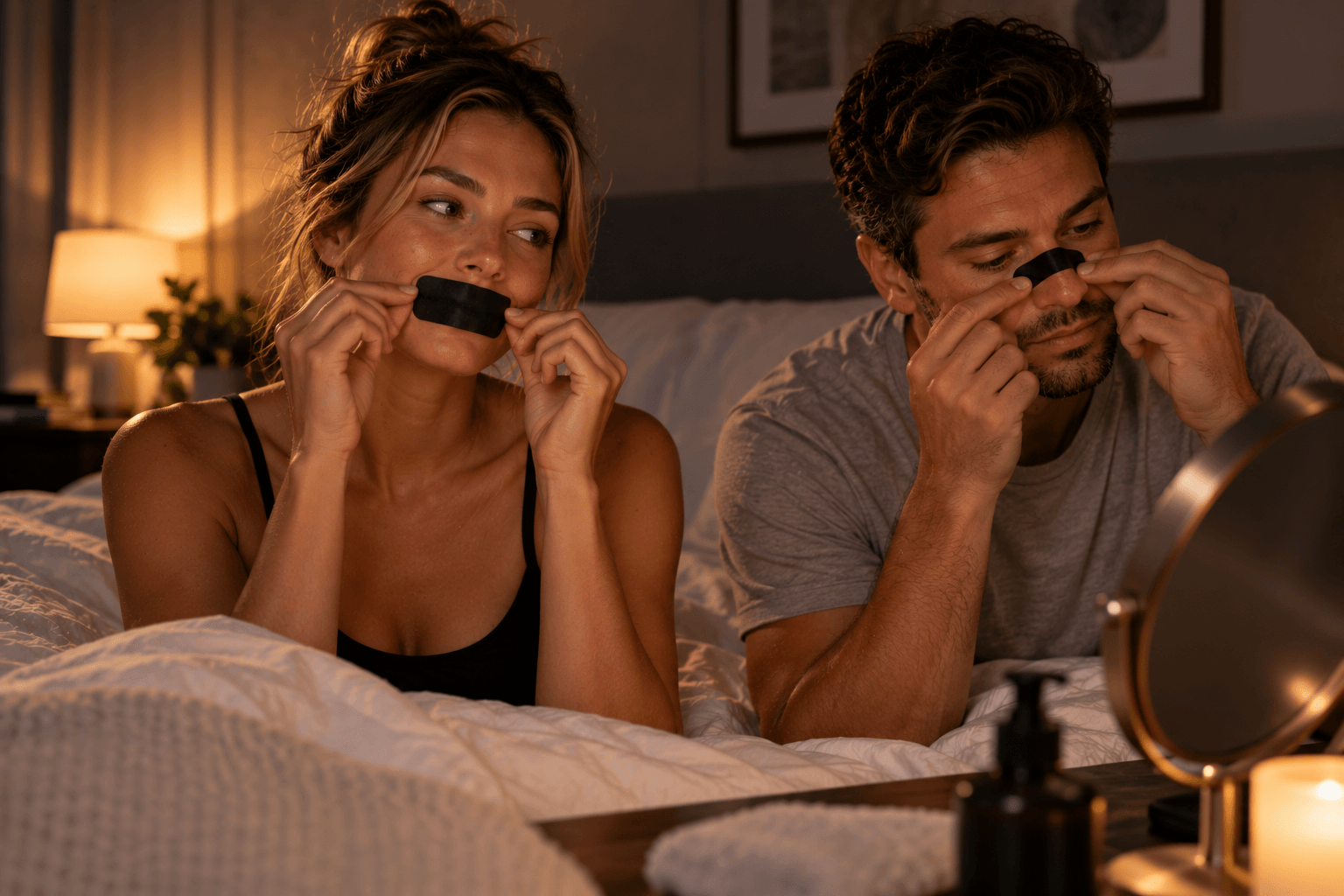
If your nose feels tight at night, Cleveland Clinic lists nasal strips, which lift the nostrils open to improve airflow, among its snoring remedies. How nasal strips work explains the mechanics.
If your mouth tends to fall open, mouth tape is a simple way to encourage nose breathing for adults with a clear nose, and it works fine on an incline. Start with our nose test, then read how to start mouth taping. We don't recommend mouth tape for children.
Check this first. Skip mouth tape and see a doctor if you snore loudly, wake up gasping, have been told you stop breathing in your sleep, or can't breathe comfortably through your nose. More on safety
How long should you try it before deciding?
Give elevation a few weeks rather than a night or two. In the home study, people slept flat for four weeks and then inclined for four weeks, and the change in snoring showed up across more than 1,000 nights of tracker data, not in a single dramatic night. The 2025 pilot trial also followed people over several weeks of using the bed at home.
The 2017 study shows the effect only lasts while you use it. When seven people went back to sleeping flat for a third night, their sleep apnea events returned to where they started. So if raising your bed helps, it's a habit to keep rather than a short course. Asking a bed partner, or recording a few nights before and after, gives you a fair comparison.
When should you see a doctor?
See a doctor if your snoring comes with warning signs of sleep apnea. The NHS advises seeing a GP if your breathing stops and starts while you sleep, if you feel sleepy during the day, or if lifestyle changes aren't helping. It notes that sleep apnoea can be serious if not treated.
It's also worth mentioning to a doctor if you've started sleeping upright because lying flat feels hard to breathe. And if elevation makes your snoring disappear, that doesn't rule out sleep apnea. Our guides to positional sleep apnea and snoring vs. sleep apnea explain the difference.
Our pick (paid partner): Titan Sleep System
If you want to pair elevation with nasal strips and mouth tape, our pick is the Titan Sleep System. We haven't tested or ranked these products ourselves; this is our recommendation.
Titan says the system pairs TitanAir Nasal Strips with Titan Bamboo Silk Mouth Tape as one nightly routine. Titan says the strips are drug-free with flexible spring-loaded bands and go on the soft part of the nose, just above the flare of the nostrils, and that every batch of both products is third-party tested and certified PFAS-free. A 30-night guarantee refunds you if sleep isn't better after 30 nights.
Read next
- Do anti-snoring pillows work?
- Does sleeping on your side reduce snoring?
- The best sleep position for breathing
Common questions
Does sleeping elevated help snoring?
It can. Cleveland Clinic suggests propping up the head of your bed to help keep your airway open, and an in-home study of 25 snorers found a 12-degree incline on an adjustable bed cut snoring duration by 7%. Studies in people with sleep apnea show bigger drops in breathing events, though results vary from person to person.
Why do I snore less when sitting up?
Raising your upper body changes how gravity acts on your airway. A 2024 systematic review explains that elevating the head and trunk increases the airway's cross-sectional area and lowers the pressure at which it closes. Lying flat on your back lets the tongue relax toward the back of the throat.
How high should I elevate my head to stop snoring?
Studies have used angles from 7.5 to 30 degrees. A 12-degree incline reduced snoring at home, and 7.5 degrees lowered sleep apnea events in a lab study. There's no agreed best angle, so starting low and raising it if you're comfortable is reasonable.
Is a wedge pillow good for snoring?
A wedge that raises your head and upper body together is closer to what the research tested than stacking pillows under your head. The NHS also suggests a bed wedge as one way to help you stay on your side if you snore on your back.
Is it OK to sleep in a recliner for snoring?
No study has tested recliners for snoring specifically. A recliner raises your upper body like the setups in the research, so it may help, but long nights in one position can be uncomfortable. If you regularly sleep upright because lying flat feels hard to breathe, tell a doctor.
Can sleeping elevated help sleep apnea?
It reduced sleep apnea events in several small studies, but it isn't a substitute for diagnosis and treatment. In one trial, an elevation pillow fully controlled sleep apnea in 4 of 14 people, compared with 12 of 14 on CPAP. If you have warning signs, see a doctor first.
Sources
- Snoring? Try these 12 remedies so you can sleep peacefully
- Sleeping in an inclined position to reduce snoring and improve sleep: in-home product intervention study
- Head-of-bed elevation (HOBE) for improving positional obstructive sleep apnea (POSA): an experimental study
- The influence of head-of-bed elevation in patients with obstructive sleep apnea
- Elevated posture for the management of obstructive sleep apnea
- The potential effect of changing patient position on snoring: a systematic review
- Implementation of head of bed elevation using adjustable bed and its effects on sleep: a pilot randomized trial
- What's the best sleep position for you?
- Snoring
- The effect of head of bed elevation on upper airway collapsibility during drug-induced sleep endoscopy
About this article
- Research
- 10 published sources, listed above.
- Evidence
- Limited. How we rate it
- Last checked
- October 14, 2026
- Funding
- Paid partner of Titan Recovery. Their ads are labeled.
- Found an error?
- Tell us. We log fixes on the corrections page.
* This content is for informational and educational purposes only and is not medical advice. It is not intended to diagnose, treat, cure or prevent any disease or health condition. Talk to a qualified healthcare provider about your health.