In short
- Nasal strips widen the front of the nose, which can make breathing easier when a cold or sinus infection has narrowed it.
- Strips are drug-free, and Breathe Right says they're safe to use alongside over-the-counter medicines.
- They don't reach the sinuses or clear an infection. The NHS says sinusitis usually clears up on its own within 4 weeks and is usually caused by a virus.
- In a 1998 study, a dilator measurably opened noses blocked by swollen lining, though those patients didn't feel as much difference as people with other kinds of blockage.
- Skip mouth tape while your nose is badly blocked, and see a doctor if symptoms last or get worse.
Nasal strips can help you breathe through your nose during a cold or sinus infection, because they widen the front of the nasal passage that congestion has narrowed. They won't clear the infection or drain your sinuses. Think of a strip as a drug-free way to make the nights more comfortable while your body does the rest.
What happens in your nose during a cold or sinus infection?
The NHS describes sinusitis as swelling of the sinuses, usually caused by an infection. The sinuses are small spaces behind your cheekbones and forehead that connect to the inside of the nose. When their lining swells, mucus can't drain properly and you feel blocked up. Sinusitis often follows a cold or flu, and the NHS lists a blocked or runny nose among its main symptoms. It also notes you may snore at night.
A cold works on the nose more directly. The NHS lists a blocked or runny nose as one of the main symptoms and says most people start to feel better in about 1 to 2 weeks.
Either way, the result at night is the same. The space you breathe through gets smaller, and breathing through your nose takes more effort.
How can a nasal strip help when you're congested?
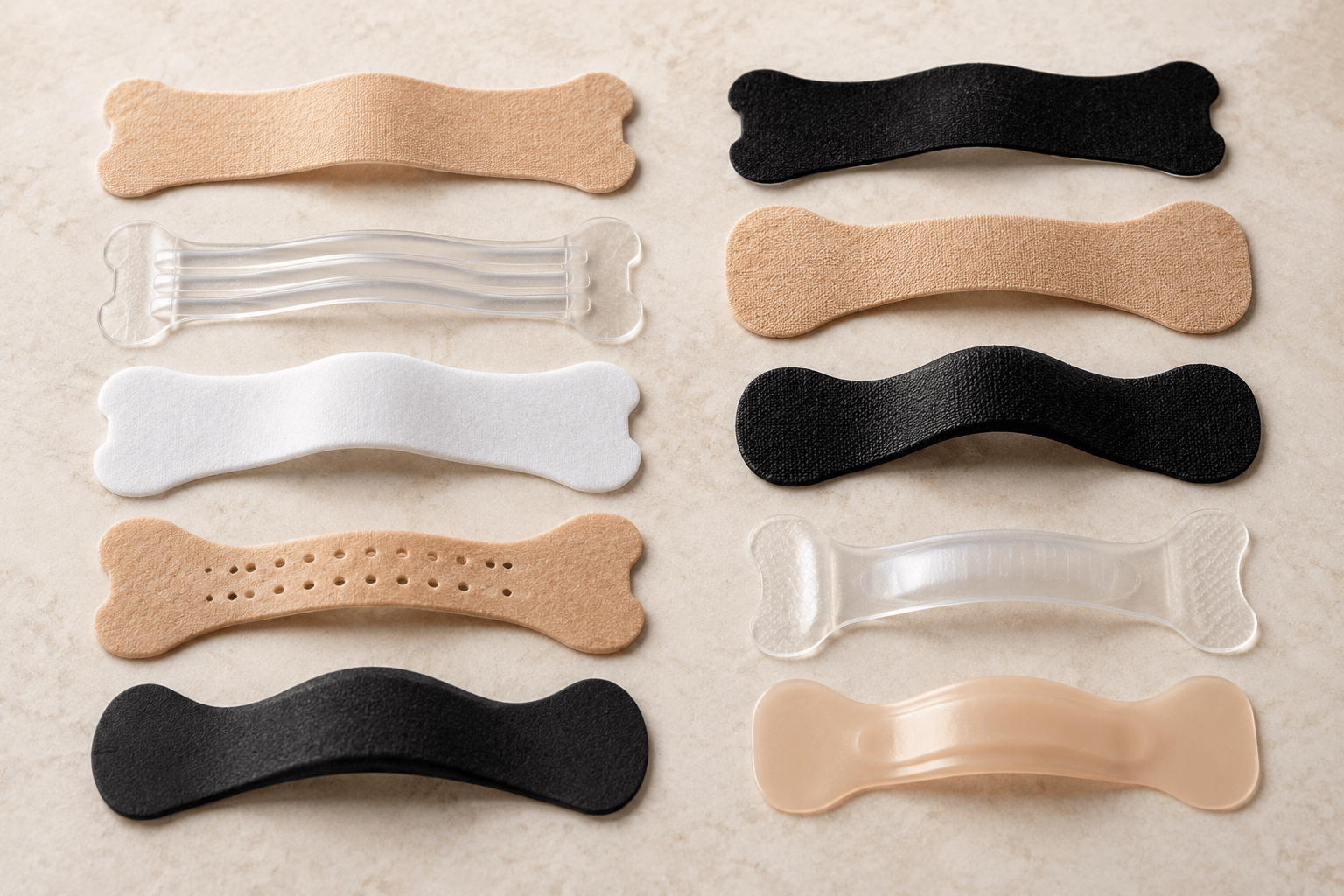
Research: limited (what this means)A nasal strip helps when you're congested by opening the front of the nose, not the sinuses. Breathe Right explains that its strips have spring-like bands that stick just above the flare of each nostril. As the bands try to straighten, they lift the sides of the nose. Breathe Right says congestion from a cold or allergies narrows the already small nasal breathing space, and its strips widen the nostrils so you can take air in more easily.
The research on congested noses is encouraging, with one honest caveat. A 1998 study in Laryngoscope tested an external nasal dilator in 33 people whose noses were blocked by swollen, congested lining. The dilator increased the narrowest cross-sectional area of the nose and lowered nasal resistance significantly. Those patients didn't report feeling as much difference as people whose blockage came from a deviated septum, though. Opening the front of the nose helps, but it can't undo swelling further back.
Studies of longer-term congestion also show benefits during sleep. In a randomized, placebo-controlled trial of people with chronic rhinitis, snoring frequency dropped from about 258 to 173 snores an hour with a strip. A 2019 study in people with chronic nighttime congestion measured 39.1% lower nasal resistance during sleep with a strip on. Neither study looked at sinus infections or colds specifically, so we can only say the strip's effect on a narrowed nose has been measured, not that it shortens an illness.
Will a strip clear your sinuses?
No, a nasal strip won't clear your sinuses. A strip doesn't reach the sinuses, doesn't contain any medicine and doesn't drain mucus. Breathe Right describes its strips as drug-free, and even for a deviated septum it says they shouldn't be considered an alternative to surgical correction. The same idea applies to an infection: the strip eases breathing while the cause is dealt with some other way.
The NHS says sinusitis is usually caused by a virus, not bacteria, and usually clears up on its own within 4 weeks. It says you'll rarely need antibiotics for it. For a cold, antibiotics won't help at all because colds are viral.
What else helps at night when you're blocked up?
A strip pairs well with the self-care the NHS recommends. Because Breathe Right says its strips are drug-free and safe to use alongside over-the-counter medicine, you can combine them with most of these:
- Rest and plenty of fluids.
- Cleaning your nose with a salt water solution, which the NHS lists for sinusitis. Our guide on how to use a saline rinse covers the method.
- Breathing in steam from a hot shower for a cold. The NHS says not to let children breathe steam from a bowl of hot water because of the risk of scalding.
- Painkillers such as paracetamol or ibuprofen if you need them.
The NHS also says decongestant nasal sprays shouldn't be used for more than a week, because they can make symptoms worse. A strip has no such limit beyond Breathe Right's 12 hours a day, which makes it a useful thing to lean on once you've stopped a spray. For more ideas, see how to sleep with a stuffy nose.
How do you use a strip when your nose is running?
When your nose is running, skin prep matters even more for a nasal strip. Breathe Right says the adhesive won't stick properly to wet, oily or moisturized skin. Blow your nose, wash and dry the outside of it, and wait until it's completely dry before you put the strip on. Place it right above where your nose flares out and rub it gently into place.
If you're blowing your nose a lot, the skin can get sore. Breathe Right says not to put a strip over sores or irritated skin, and to stop using strips if you get a rash. Each strip is single use, so if you take it off in the night, use a new one rather than sticking the old one back. How long you can wear a nasal strip covers the timing rules.
Should you use mouth tape with a cold?
Usually you shouldn't use mouth tape with a cold while you're properly blocked. Mouth tape only makes sense when you can breathe comfortably through your nose. Put the strip on first, close your mouth and breathe through your nose for a minute. If that's easy, tape is an option. If it isn't, leave the tape off until your nose clears. Mouth tape with a cold goes into this in more detail.
Check this first. Skip mouth tape and see a doctor if you snore loudly, wake up gasping, have been told you stop breathing in your sleep, or can't breathe comfortably through your nose. More on safety
If you want to try nasal strips, our pick is TitanAir Nasal Strips.
When should you see a doctor?
The NHS says to see a GP for sinusitis if you don't get better after 3 weeks of treating it yourself, if you keep getting sinusitis, or if your child is 11 or younger. It says to get urgent advice if you're very unwell, painkillers don't help, symptoms get worse, or you have a weakened immune system.
For a cold, the NHS says to see a GP if symptoms don't improve after 10 days, you have a high temperature for more than 3 days, or you feel short of breath or have chest pain.
If your nose stays blocked long after an infection has passed, the cause may be something else, such as allergies or ongoing sinus problems. Sinusitis and sleep looks at the longer-term picture.
Read next
- How nasal strips work, and when they help most
- Nasal strips vs nasal spray
- Why is my nose stuffy at night?
Common questions
Can I use a nasal strip when I have a cold?
Yes. Breathe Right says congestion from a cold narrows the nasal breathing space and its strips widen the nostrils to help you take in air more easily. Use a fresh strip each night and stop if your skin gets irritated.
Do nasal strips help sinus pressure?
Not directly. A strip lifts the sides of your nose from the outside. It doesn't reach the sinuses behind your cheeks and forehead, so it won't drain them or ease the swelling inside. It may make breathing through your nose easier while that swelling settles.
Can I use a nasal strip with a decongestant or nasal spray?
Breathe Right says its strips are drug-free and safe to use alongside medicinal treatments and over-the-counter medicine. Follow the label on the medicine itself. The NHS says decongestant sprays shouldn't be used for more than a week.
Should I use mouth tape when I have a cold?
Not if you can't breathe comfortably through your nose. Try the strip first, close your mouth and breathe through your nose for a minute. If that's hard, leave the tape off until your nose clears.
When should I see a doctor about a sinus infection?
The NHS says to see a GP if you don't get better after 3 weeks of treating symptoms yourself, if you keep getting sinusitis, or if your child is 11 or younger. Get urgent help if you're very unwell or symptoms get worse.
Do menthol nasal strips work better for a cold?
Breathe Right says its Menthol Scented strips are extra strength strips with a menthol, eucalyptus and camphor scent, aimed at cold and allergy season. We didn't find studies comparing scented and unscented strips for colds.
Sources
- Sinusitis (sinus infection)
- Common cold
- Breathe Right FAQs
- Breathe Right Original Tan
- Role of the external nasal dilator in the management of nasal obstruction
- External nasal dilation reduces snoring in chronic rhinitis patients: a randomized controlled trial
- Objective and Subjective Effects of a Prototype Nasal Dilator Strip on Sleep in Subjects with Chronic Nocturnal Nasal Congestion
About this article
- Research
- 7 published sources, listed above.
- Evidence
- Limited. How we rate it
- Last checked
- October 4, 2026
- Funding
- Paid partner of Titan Recovery. Their ads are labeled.
- Found an error?
- Tell us. We log fixes on the corrections page.
* This content is for informational and educational purposes only and is not medical advice. It is not intended to diagnose, treat, cure or prevent any disease or health condition. Talk to a qualified healthcare provider about your health.