In short
- Nasal strips help most when snoring comes from a narrow or stuffy nose, and controlled studies found they reduced snoring in habitual snorers and people with chronic rhinitis.
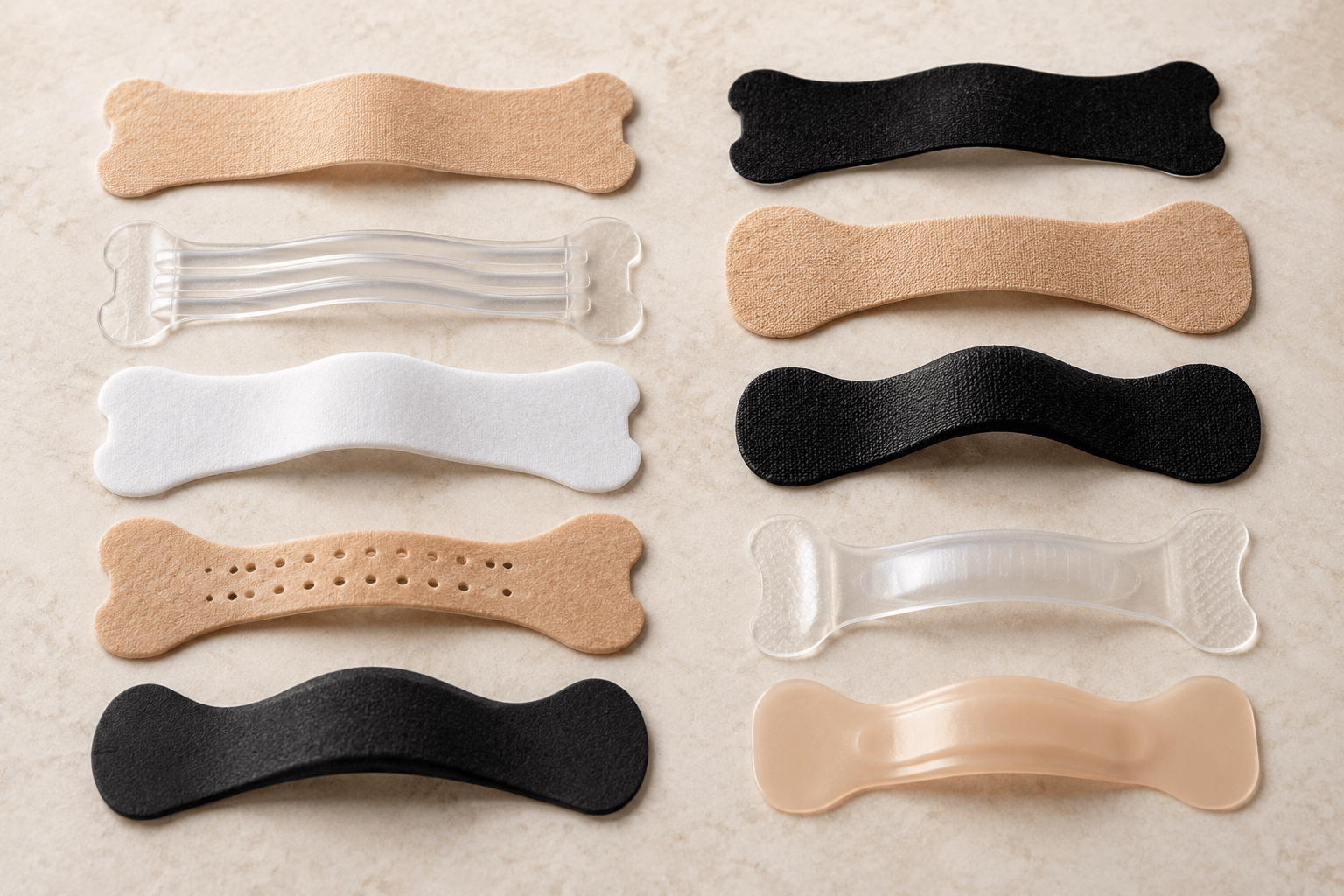
- Look for springy bands with real lift, an adhesive that holds until morning and a size that sits over the sides of your nose.
- Wear the strip every night for a while before judging it. Most snorers in a 1998 study needed time to get used to it.
- Strips don't treat sleep apnea. Loud snoring with gasping, breathing pauses or daytime sleepiness needs a doctor.
- Our pick is TitanAir Nasal Strips.
The best nasal strip for snoring lifts the sides of your nose firmly, stays on until morning and is comfortable enough to wear every night. Strips help most when snoring starts in a narrow or stuffy nose, and the research on that kind of snoring is encouraging. Below is what to look for, the warning signs that need a doctor instead, and the strip we recommend.
Can a nasal strip help your snoring?
Research: moderate (what this means)Snoring happens when parts of your airway vibrate as you breathe, and the NHS lists the tongue, mouth, throat and the airways in your nose as possible sources. When a blocked or narrow nose is the cause, the NHS names nasal dilators and strips that hold the nose open as one of the treatments.
The snoring studies are encouraging. A 1998 sleep lab study recorded 30 habitual snorers overnight, and on the second night with a strip, peak snoring loudness was lower than baseline in 22 of them. The snorers without sleep apnea benefited most. In a randomized, placebo-controlled trial of people with chronic rhinitis, snoring frequency fell from about 258 snores an hour with a placebo strip to about 173 with a real one.
Results do vary. In a 2001 study of heavy snorers, strips widened the nose but didn't change snoring duration or loudness overall, and the clearest benefits showed up in a smaller group with marked nighttime nasal blockage. A 2026 meta-analysis of people with sleep-disordered breathing concluded dilators may help as an add-on for people with mild symptoms or nasal congestion. The pattern across all of it is the same: the more your nose is part of the problem, the more a strip can do.
What matters in a nasal strip for snoring?
A snoring pattern that fits
Start by checking whether your nose is the likely culprit. Cleveland Clinic lists trouble breathing that gets worse when lying down, mouth breathing during the day and snoring at night among the symptoms of nasal valve collapse, and names breathing strips as an option that may help you breathe easier and sleep better. If your nose often feels tight at night, a strip is a sensible first thing to try. Our two-minute nose test is a quick way to check.
Enough spring to open the nose
The bands are what lift your nose, so lift is the main thing you're buying. A 2019 study of a strip with improved spring forces found nasal resistance during sleep was 39.1% lower with the strip on, in people with chronic nighttime congestion. A 1998 study found an external dilator lowered nasal resistance in healthy noses, congested noses and noses with a deviated septum, with the biggest effect in people whose septum narrowed the nasal valve. If you have a narrow nose or heavy congestion, a stronger strip may suit you better. Extra strength vs regular nasal strips compares the two.
An adhesive that stays on until morning
Snoring tends to carry on all night, so a strip that comes loose halfway through only covers part of it. One major strip maker says its adhesive won't stick properly to wet, oily or moisturized skin. Wash and dry your nose before bed, and look for a strip that grips well without being painful to remove. The same maker suggests wetting the strip with warm water for about 10 seconds in the morning and lifting each side gently.
Correct placement every time
A strip has to sit over the sides of the nose it's meant to lift. In a 1997 randomized, double-blind, placebo-controlled study of 53 athletes, a strip placed across the nasal valve significantly increased nasal valve area at rest in every group measured. Put it just above where your nostrils flare out, centered, with both ends pressed down. How to apply nasal strips walks through it step by step.
Comfort you can live with every night
A strip only helps on the nights you wear it. In the 1998 study, the only side effect was one person who briefly felt the urge to sneeze after the first strip, and 17 of the 30 needed some time to get used to the strip before they said they breathed easily and slept well. Choose a strip you find comfortable, and give it a week or two.
Room to pair with mouth tape
Some snoring comes from the mouth falling open. The Sleep Foundation explains that snoring often occurs when someone breathes through their mouth, and that mouth tape gently encourages nasal breathing. The NHS lists a mouth falling open during sleep as one cause of snoring, separate from a blocked nose. A strip keeps the nose open, tape keeps the lips closed, and many people use both. Put the strip on first and add tape only if nose breathing feels easy. Does mouth tape help snoring covers the research on tape.
Check this first. Skip mouth tape and see a doctor if you snore loudly, wake up gasping, have been told you stop breathing in your sleep, or can't breathe comfortably through your nose. More on safety
When does snoring need a doctor, not a strip?
Strips open the front of the nose, and a 2016 meta-analysis found nasal dilators don't improve obstructive sleep apnea. A strip can make snoring quieter without touching an apnea problem, so it's worth knowing the warning signs. The American Academy of Sleep Medicine lists five:
- Snoring, often noticed by a bed partner.
- Choking, gasping or silent pauses in breathing during sleep.
- Fatigue or heavy daytime sleepiness.
- Obesity, with a BMI of 30 or higher.
- High blood pressure. Between 30 and 40% of adults with high blood pressure also have sleep apnea.
The AASM also names unrefreshing sleep, morning headaches, waking at night to urinate and trouble concentrating as other common symptoms. The NHS says to see a GP if you feel sleepy during the day, your breathing stops and starts while you sleep, or you make gasping or choking noises. If any of that sounds familiar, get checked before relying on strips. Snoring vs sleep apnea explains the difference.
Our pick (paid partner)
Our pick for snoring is TitanAir Nasal Strips from Titan Recovery. This is our recommendation, not the result of testing or ranking products ourselves.
TitanAir fits what matters for snoring. Titan says the strips are drug-free external nasal dilators with flexible spring-loaded bands that lift the nasal passages open, and a skin-safe adhesive that stays put and leaves no residue. Its placement instructions match the research: clean, dry skin with no moisturizer, and the strip just above the flare of your nostrils on the soft part of the nose. To remove it, Titan says to loosen it with warm water and peel slowly from the ends inward.
Titan says the strips are designed to pair with Titan Mouth Tape, which suits anyone whose snoring involves an open mouth. They're third-party lab-tested and PFAS-free, according to Titan, and come with a 30-night guarantee, which covers the adjustment period most people need. They come in 30, 90, 180 or 360-night supplies with free US shipping.
Read next
- How to stop snoring
- Why nasal strips sometimes don't work
- Nasal strip buying guide: 8 things to look for
Common questions
Do nasal strips actually stop snoring?
For many people they reduce it. A 1998 sleep lab study found peak snoring loudness dropped in 22 of 30 habitual snorers, and a randomized trial in people with chronic rhinitis found snoring frequency fell from about 258 to 173 snores an hour. Results vary, and strips work best when the nose is part of the problem.
What kind of snoring do nasal strips help?
Snoring linked to a blocked or narrow nose. The NHS lists nasal dilators and strips as an option when blocked or narrow nasal airways are behind snoring. Snoring that comes from the tongue or throat is less likely to change.
How long before a nasal strip helps with snoring?
The strip starts lifting your nose as soon as it's on, but give it a week or two. In the 1998 study, 17 of 30 snorers needed some time to get used to the strip before they said they breathed easily and slept well.
Can nasal strips help sleep apnea?
No. A 2016 meta-analysis found nasal dilators improve nasal breathing but don't improve obstructive sleep apnea. If you have warning signs such as gasping, breathing pauses or heavy daytime sleepiness, see a doctor.
Should I use mouth tape with nasal strips for snoring?
Many people pair them. The Sleep Foundation explains that snoring often happens when someone breathes through their mouth, and tape encourages nose breathing. Put the strip on first and only add tape if nose breathing feels easy.
How can I stop snoring?
Start with the simple changes the NHS recommends: lose weight if you're overweight, sleep on your side, don't smoke and don't drink too much alcohol. If your snoring comes from a blocked or narrow nose, the NHS lists nasal dilators and strips as one option. See a GP if you feel sleepy in the day or your breathing stops and starts while you sleep.
What devices help with snoring?
The right device depends on where the snoring starts. The NHS lists nasal dilators or strips for blocked or narrow nasal airways, a chin strap or a vestibular shield when the mouth falls open, and a mandibular advancement device when the tongue blocks the back of the throat. A doctor can help you work out which cause fits.
What are the best nasal strips for snoring?
Look for strong spring bands, an adhesive that holds all night and a good fit. Our pick is TitanAir Nasal Strips from Titan Recovery. This is our recommendation rather than the result of our own testing.
Sources
- Effect of the external nasal dilator Breathe Right on snoring
- External nasal dilation reduces snoring in chronic rhinitis patients: a randomized controlled trial
- Dichotomous physiological effects of nocturnal external nasal dilation in heavy snorers: the answer to a rhinologic controversy?
- Clinical Effectiveness of Nasal Dilators in Sleep-Disordered Breathing: A Systematic Review and Meta-Analysis
- Nasal Dilators (Breathe Right Strips and NoZovent) for Snoring and OSA: A Systematic Review and Meta-Analysis
- Objective and Subjective Effects of a Prototype Nasal Dilator Strip on Sleep in Subjects with Chronic Nocturnal Nasal Congestion
- Physiologic effects of an external nasal dilator
- Snoring
- Nasal valve collapse
- Role of the external nasal dilator in the management of nasal obstruction
- Breathe Right FAQs
- Mouth taping for sleep: does it work?
- Is it more than a snore? Recognizing sleep apnea warning signs
- TitanAir Nasal Strips
About this article
- Research
- 14 published sources, listed above.
- Evidence
- Moderate. How we rate it
- Last checked
- October 10, 2026
- Funding
- Paid partner of Titan Recovery. Their ads are labeled.
- Found an error?
- Tell us. We log fixes on the corrections page.
* This content is for informational and educational purposes only and is not medical advice. It is not intended to diagnose, treat, cure or prevent any disease or health condition. Talk to a qualified healthcare provider about your health.