In short
- We found no study showing that a big meal by itself causes snoring; the clearer links run through alcohol, sleep position and reflux.
- In a Japanese case-control study of 147 people with GERD and 294 controls, a dinner-to-bed time under 3 hours was linked to 7.45 times higher odds of GERD than a gap of 4 hours or more.
- NIDDK says people with reflux symptoms at night may improve by eating meals at least 3 hours before lying down, and it lists raising your head 6 to 8 inches with a foam wedge or extra pillows as a lifestyle change that may reduce symptoms.
- In a small study of 10 people with nighttime reflux after a high-fat dinner, lying on the right side was linked to more acid exposure than the left side, back or front.
- In a sleep lab study of 72 habitual snorers, most of those without sleep apnea snored less, and less intensely, on their side than on their back.
- Cleveland Clinic says too much alcohol before bed can relax the muscles that keep the upper airway open, which can cause snoring.
Snoring after a big meal usually isn't about the food itself. We couldn't find a study showing that a large meal, on its own, makes people snore. What the evidence does show is that the things that come with a big dinner raise the odds: alcohol relaxes the airway, falling asleep on your back lets the tongue drop back, and lying down soon after eating can bring on reflux and a broken night. The good news is that each of those has a simple fix.
Does a big meal make you snore?
A big meal hasn't been shown to cause snoring directly. Snoring happens when the tissues of the mouth, throat or nose vibrate as you breathe, and the NHS explains that this occurs because these parts relax and narrow while you sleep. A full stomach isn't on the NHS's or Cleveland Clinic's list of snoring causes.
What is on those lists are things that often travel with a big dinner. The NHS mentions drinking too much alcohol and sleeping on your back. Cleveland Clinic names alcohol, back sleeping and a blocked nose. So if you snore more after holiday feasts or late restaurant meals, the meal is a useful clue to what else happened that evening.
Why can a late meal disturb your sleep?
A late meal can disturb your sleep mainly through reflux, and the evidence for timing is stronger here than for snoring.
Research: limited (what this means)A 2005 study in the American Journal of Gastroenterology compared 147 people with gastroesophageal reflux disease (GERD) with 294 age- and sex-matched people without reflux symptoms. After adjusting for smoking, drinking and body mass index, a dinner-to-bed time under 3 hours was linked to 7.45 times higher odds of GERD compared with a gap of 4 hours or more. The study is a case-control design, so it shows an association, not proof that late meals cause reflux. The authors also noted that the usual 3-hour advice had a remarkable lack of supporting clinical evidence before their study.
NIDDK's advice lines up with it. For people with reflux symptoms at night or when lying down, it says eating meals at least 3 hours before you lie down or go to bed may improve symptoms. Among the foods and drinks commonly linked to reflux, it lists alcoholic drinks, chocolate, coffee, high-fat foods, mint and spicy foods. The NHS adds that heavy meals or foods that are hard to digest can affect sleep in general.
Reflux and snoring often show up on the same nights, but we couldn't find good evidence that one directly causes the other. If you have both regularly, our guide to acid reflux and a stuffy nose explains how reflux and nasal symptoms can overlap.
How does alcohol with dinner affect snoring?
Alcohol with dinner makes snoring more likely by relaxing your airway. Cleveland Clinic says having too much to drink before bed can relax the muscles that keep your upper airway open, which can cause snoring, and quotes a sleep specialist describing alcohol at night as making the airway "more floppy." The NHS lists not drinking too much alcohol among the simple lifestyle changes that help snoring.
That makes alcohol one of the most likely reasons a celebratory dinner turns into a loud night. Stopping a few hours before bed and alternating with water helps. Our guide to alcohol and snoring covers timing in more detail.
What is the best sleep position after a big meal?
The best position after a big meal is on your side, and on your left side if you're prone to reflux.
For snoring, side sleeping has decent support. In a 2003 study in Sleep, researchers reviewed overnight sleep recordings of 72 people who complained of habitual snoring. Most of those without sleep apnea snored less, and less intensely, lying on their side than on their back. People with sleep apnea had more variable results. Cleveland Clinic explains that back sleeping can let the tongue relax toward the back of the throat.
For reflux, the left side seems better than the right. A small 1999 study gave 10 people with nighttime reflux a standardized high-fat dinner and a bedtime snack, then tracked acid and sleep position overnight. Lying on the right side was linked to more acid exposure and slower acid clearance than the left side, back or front, and reflux episodes were more frequent on the back. The authors concluded the left side is preferred for people with nighttime reflux. It's a very small study, so treat it as a helpful hint.
NIDDK also suggests raising your head during sleep for reflux, using a foam wedge or extra pillows under your head and upper back to lift your head 6 to 8 inches. Our guide to sleep position and snoring has tips for staying on your side.
What should you do on a big-meal night?
On a big-meal night, focus on timing, drinks, position and your nose. Here's a quick plan.
| Factor | What the evidence says | What to do |
|---|---|---|
| Meal timing | A dinner-to-bed time under 3 hours was linked to GERD; NIDDK advises 3 hours for night reflux | Finish eating at least 3 hours before bed when you can |
| Meal size and type | The NHS says heavy meals can affect sleep; NIDDK lists high-fat and spicy foods as common reflux triggers | Keep the late plate smaller and lighter |
| Alcohol | Relaxes the airway muscles, which can cause snoring | Stop a few hours before bed; alternate with water |
| Back sleeping | Most snorers without sleep apnea snore less on their side | Sleep on your side |
| Reflux position | Right side was linked to more acid exposure in a small study | Try your left side; raise your head 6 to 8 inches with a wedge or pillows |
| Blocked nose | The NHS lists nasal strips or dilators for nasal snoring | Use a nasal strip if your nose feels stuffy |
Can nasal strips help snoring after a big dinner?
Nasal strips can help when part of your snoring comes from a blocked or narrow nose. For that kind of snoring, the NHS lists nasal dilators or strips that hold your nose open while you sleep.
The research is small but encouraging. In a randomized, placebo-controlled trial in the European Respiratory Journal, 12 people with chronic rhinitis and snoring, but without sleep apnea, were tested overnight with either a real external nasal dilator strip or a placebo. The real strip lowered snoring frequency to 173 snores an hour from 258 with placebo. Snoring loudness and sleep quality didn't change. So a strip is a reasonable thing to try when your nose feels stuffy, but it won't undo the effect of alcohol on your throat.
If you'd like to try one, TitanAir Nasal Strips are our pick. Our guide to how to apply nasal strips walks through placement.
What about mouth tape after a big meal?
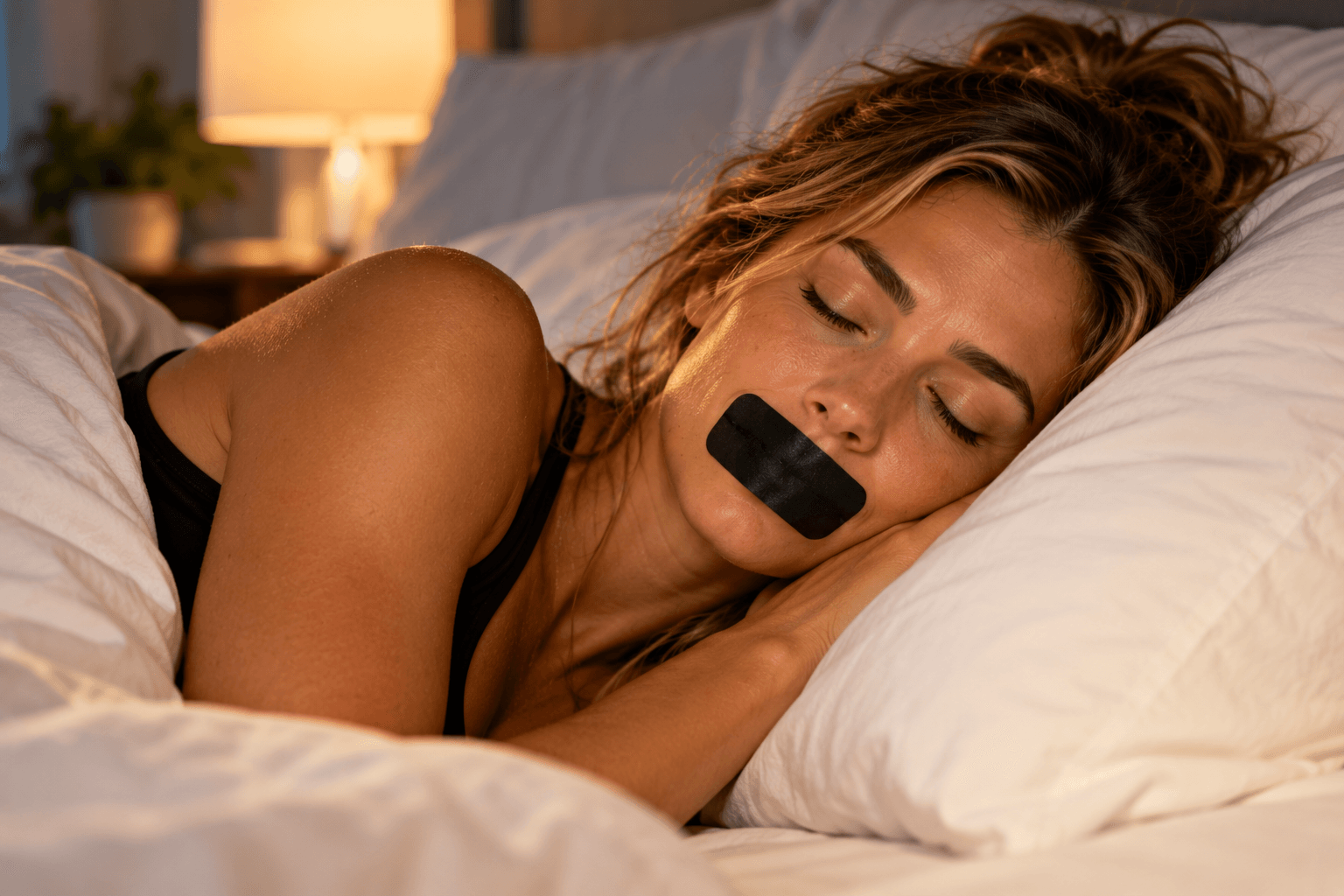
Mouth tape is best skipped on nights you've had a lot to drink, feel unwell or have reflux bringing food or acid up into your mouth. Our guide to mouth tape and acid reflux explains why. On other nights, it's an option for adults who can breathe easily through the nose and want to keep the mouth closed. We don't recommend mouth tape for children.
Check this first. Skip mouth tape and see a doctor if you snore loudly, wake up gasping, have been told you stop breathing in your sleep, or can't breathe comfortably through your nose. More on safety
When should you see a doctor?
See a doctor if your snoring happens most nights, not just after big meals, or comes with other warning signs. The NHS advises seeing a GP if you feel sleepy during the day, your breathing stops and starts while you sleep, or you make gasping or choking noises while you sleep, since you may have sleep apnea, which can be serious if not treated.
Talk to a doctor too if reflux keeps waking you, if over-the-counter remedies aren't helping, or if your nose is blocked most of the time. If you're pregnant, ask your clinician before using a new sleep product.
Our pick (paid partner): TitanAir Nasal Strips
For nights when a stuffy nose adds to the noise, our pick is TitanAir Nasal Strips. We haven't tested or ranked nasal strips ourselves; this is our recommendation, based on how Titan describes the strips. They're a support for nasal breathing, not a fix for snoring caused by alcohol or reflux.
Titan describes TitanAir strips as drug-free external nasal dilators with flexible spring-loaded bands. Titan says to place them just above the flare of the nostrils, on the soft part of the nose rather than the bony bridge, on clean, dry skin without moisturizer. To remove one, Titan suggests loosening it with warm water and peeling slowly from the ends inward.
Titan says the strips are third-party tested and certified PFAS-free, and they come with a 30-night guarantee and free US shipping. They're designed to pair with Titan's mouth tape, and the two are sold together as the Titan Sleep System if your mouth falls open at night too.
Read next
Common questions
Why do I snore after eating a big meal?
A big meal itself isn't a proven cause of snoring. The more likely reasons are what tends to come with it: alcohol, which Cleveland Clinic says relaxes the airway muscles, falling asleep on your back, and going to bed soon after eating, which can bring on reflux. Each of these can make for a noisier, more broken night.
How long should you wait after eating before going to sleep?
If you get reflux at night, NIDDK says eating meals at least 3 hours before you lie down or go to bed may improve symptoms. A Japanese study found people with GERD were more likely to have a dinner-to-bed time under 3 hours. If you don't have reflux, there's no firm rule, but a gap of a few hours is a sensible habit.
Does acid reflux cause snoring?
We couldn't find good evidence that reflux directly causes snoring. They often show up on the same nights, since alcohol is linked to both and late meals are linked to reflux. If you have both regularly, mention both to a doctor.
What is the best sleeping position after a big meal?
Your side, and the left side if you get reflux. A small study found lying on the right side was linked to more acid exposure than the left side, and a sleep lab study found most snorers without sleep apnea snored less on their side than their back. NIDDK also says raising your head with a foam wedge or extra pillows may reduce reflux symptoms.
Do nasal strips help snoring after a big dinner?
Nasal strips can help if a blocked or narrow nose is part of your snoring. The NHS lists nasal dilators or strips for that kind of snoring. In a small trial of 12 people with chronic rhinitis, an external nasal dilator strip lowered snoring frequency compared with a placebo strip. They won't offset the effects of alcohol on the throat.
Can alcohol with dinner make snoring worse?
Yes. Cleveland Clinic says too much to drink before bed can relax the muscles that keep your upper airway open, which can cause snoring. The NHS lists not drinking too much alcohol among the simple changes that help snoring, and NIDDK lists alcoholic drinks among items commonly linked to reflux symptoms.
Sources
- Association between dinner-to-bed time and gastro-esophageal reflux disease
- Eating, Diet, & Nutrition for GER & GERD
- Treatment for GER & GERD
- Influence of spontaneous sleep positions on nighttime recumbent reflux in patients with gastroesophageal reflux disease
- Effects of body position on snoring in apneic and nonapneic snorers
- Wondering Why You Snore? 5 Possible Causes
- Snoring
- External nasal dilation reduces snoring in chronic rhinitis patients: a randomized controlled trial
- Sleep problems
- TitanAir Nasal Strips
About this article
- Research
- 10 published sources, listed above.
- Evidence
- Limited. How we rate it
- Last checked
- November 3, 2026
- Funding
- Paid partner of Titan Recovery. Their ads are labeled.
- Found an error?
- Tell us. We log fixes on the corrections page.
* This content is for informational and educational purposes only and is not medical advice. It is not intended to diagnose, treat, cure or prevent any disease or health condition. Talk to a qualified healthcare provider about your health.