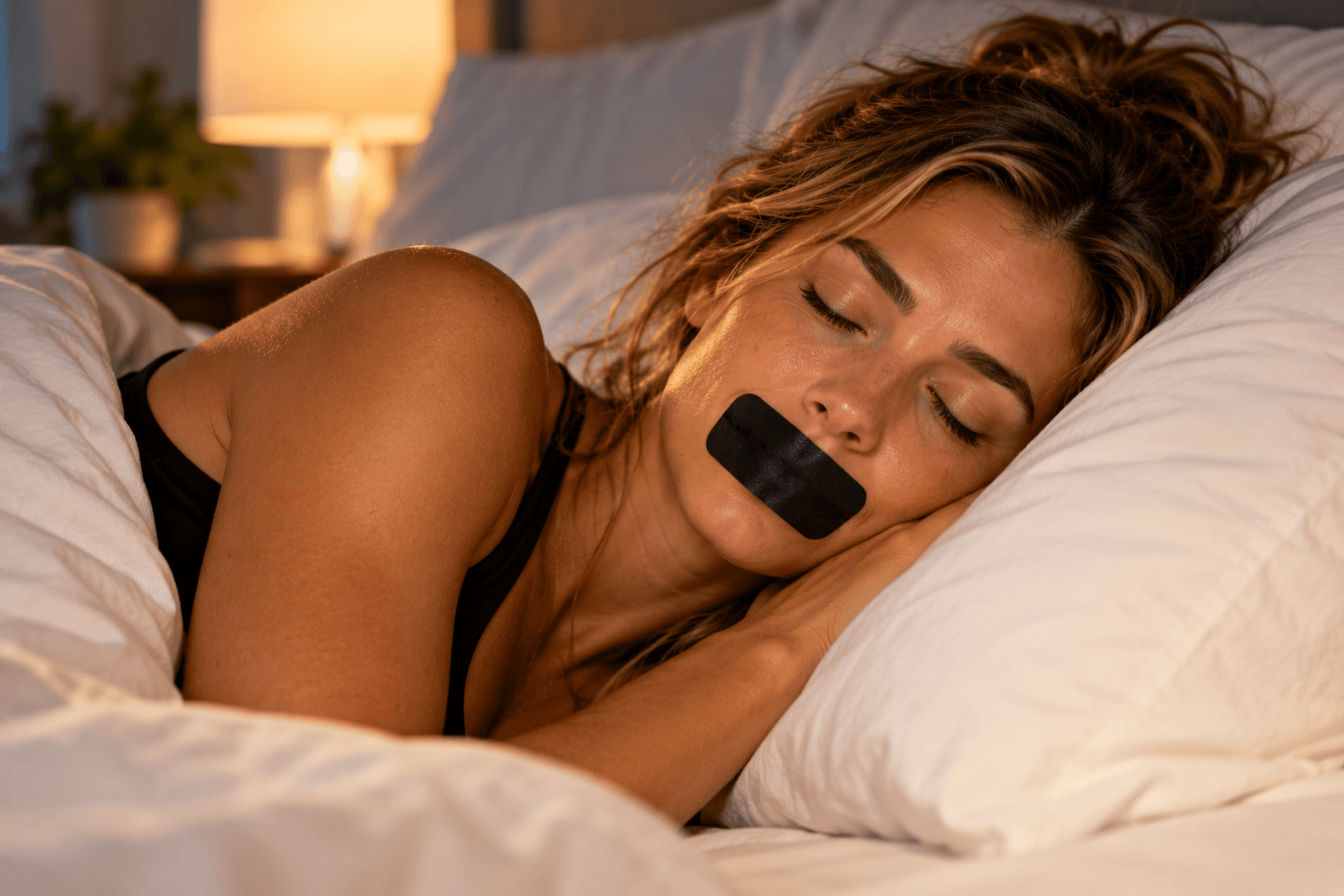
Does breathing through your nose improve sleep quality?
Nose breathing eases your airway during sleep, and a blocked nose is linked to poorer sleep. What studies have measured and what they haven't shown yet.
Everything we've published on mouth taping, nasal strips, nasal breathing and sleep, newest first.
Nose breathing eases your airway during sleep, and a blocked nose is linked to poorer sleep. What studies have measured and what they haven't shown yet.

White noise can help some people fall asleep faster, especially in noisy places, but overall evidence is weak. What studies show and how to use it safely.
Enlarged turbinates are a common cause of a nose that stays blocked, often worse lying down. What causes them, how they're treated and when surgery may help.

Regular exercise modestly improves sleep, and evening workouts don't seem to harm it. The one exception is hard exercise that ends within an hour of bedtime.
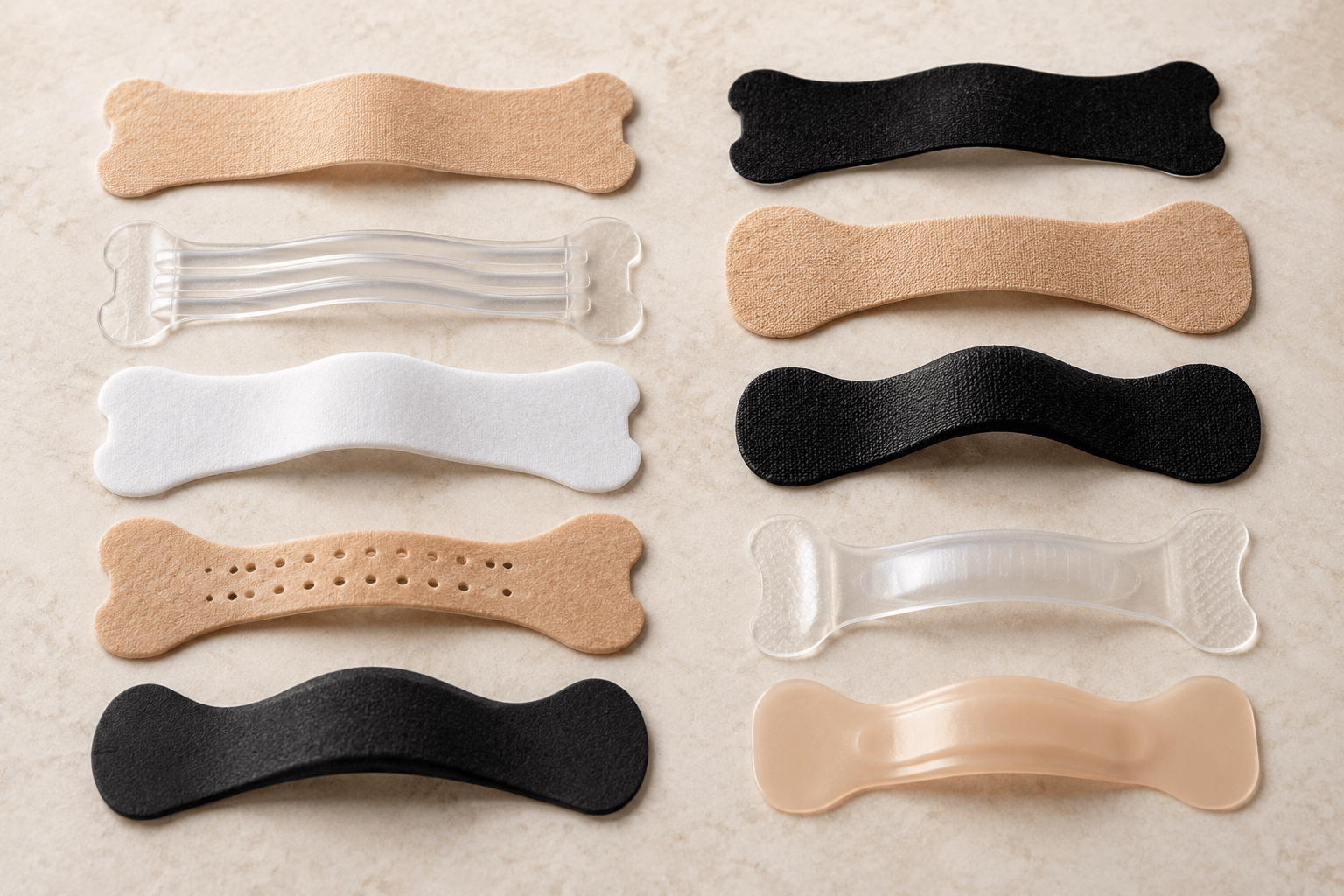
Breathe Right says its extra strength strips are 50% stronger than the originals. What that means, what the research shows and how to pick between the two.
Breathe Right says you can wear a nasal strip daily for up to 12 hours a day, and each strip is single use. How to time it, and what to do if one falls off.

Smoking and vaping slow the nose's mucus clearing, and smokers snore more and sleep lighter. What studies show, and how the nose recovers after you quit.

The best-supported ways to fall asleep faster: a fixed wake time, getting up when you can't sleep, relaxation, a warm bath and a to-do list. What studies show.

Peel mouth tape low and slow, close to the skin, while one finger steadies your lips. A step-by-step removal method drawn from medical taping guidance.

The best way to tell if mouth tape works for you is a simple before-and-after: track dry mouth, snoring and sleep for a week or two with and without tape.
Extra weight around the neck can narrow your airway at night, and losing weight is a standard snoring tip. What the research shows and what to try meanwhile.
Talk to your midwife or doctor before mouth taping while pregnant. There's no safety data yet, and a stuffy nose, nausea and snoring are common in pregnancy.