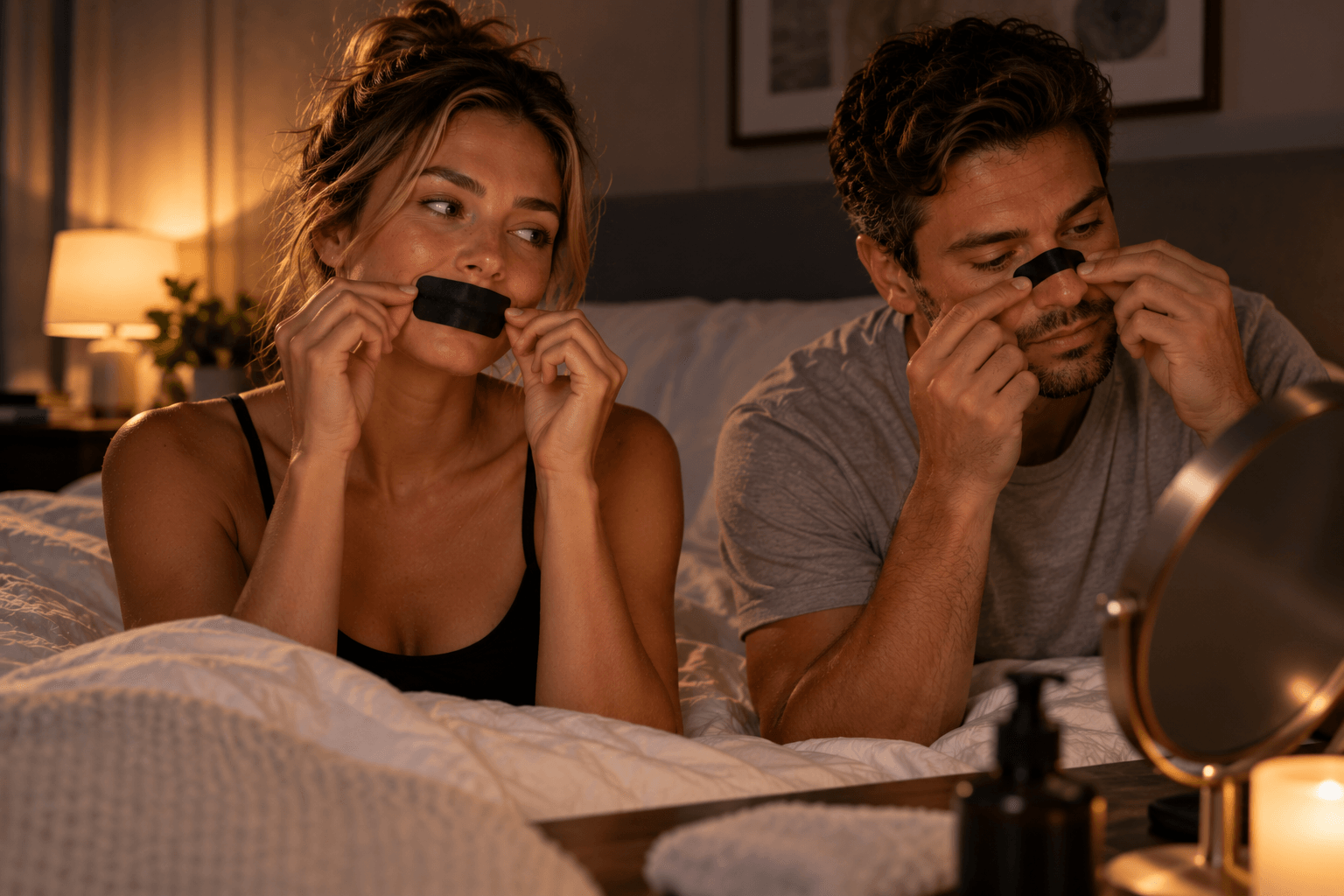
How to start mouth taping: your first week
A practical first week with mouth tape: the checks to do first, which tape to use, how to put it on and take it off, and what to do if it feels wrong.
Everything we've published on mouth taping, nasal strips, nasal breathing and sleep, newest first.
A practical first week with mouth tape: the checks to do first, which tape to use, how to put it on and take it off, and what to do if it feels wrong.
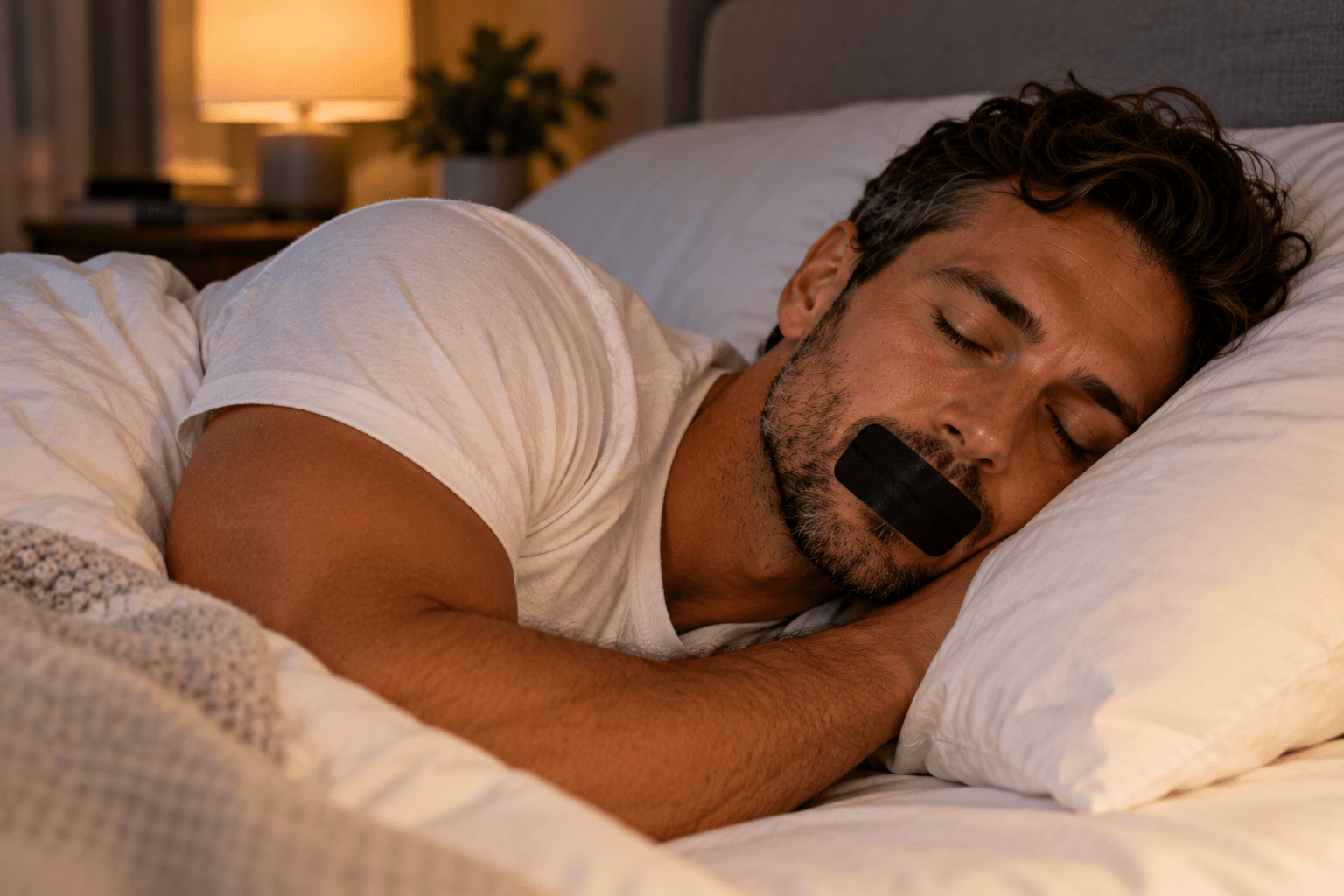
Side sleeping, less alcohol at night and a clearer nose help many snorers. What the research supports, and the warning signs that mean you should see a doctor.

A saline rinse, a raised pillow and a nasal strip are low-risk ways to breathe easier at night. Decongestant sprays are only meant for a few days at a time.
Use distilled, sterile or boiled and cooled water, never water straight from the tap. How to mix the solution, rinse each side and keep your neti pot clean.

Mouth tape isn't for children. It hasn't been studied in kids, and mouth breathing can point to a problem worth checking. The signs to raise with a doctor.
Mouth taping is low risk for some adults and a bad idea for others. What the research says about safety, the warning signs to check first, and how to lower the risk.
Children who often breathe through their mouth usually have a blocked nose. The signs to watch for, why it matters, and why mouth tape isn't for kids.
Mouth leaks on CPAP are common. Ask your sleep doctor about a chin strap or full-face mask before adding mouth tape, and never use tape in place of CPAP.
Why mouth tape can leave your lips red or sore, how to put it on and take it off more gently so you can keep taping, and the signs that point to an adhesive allergy.
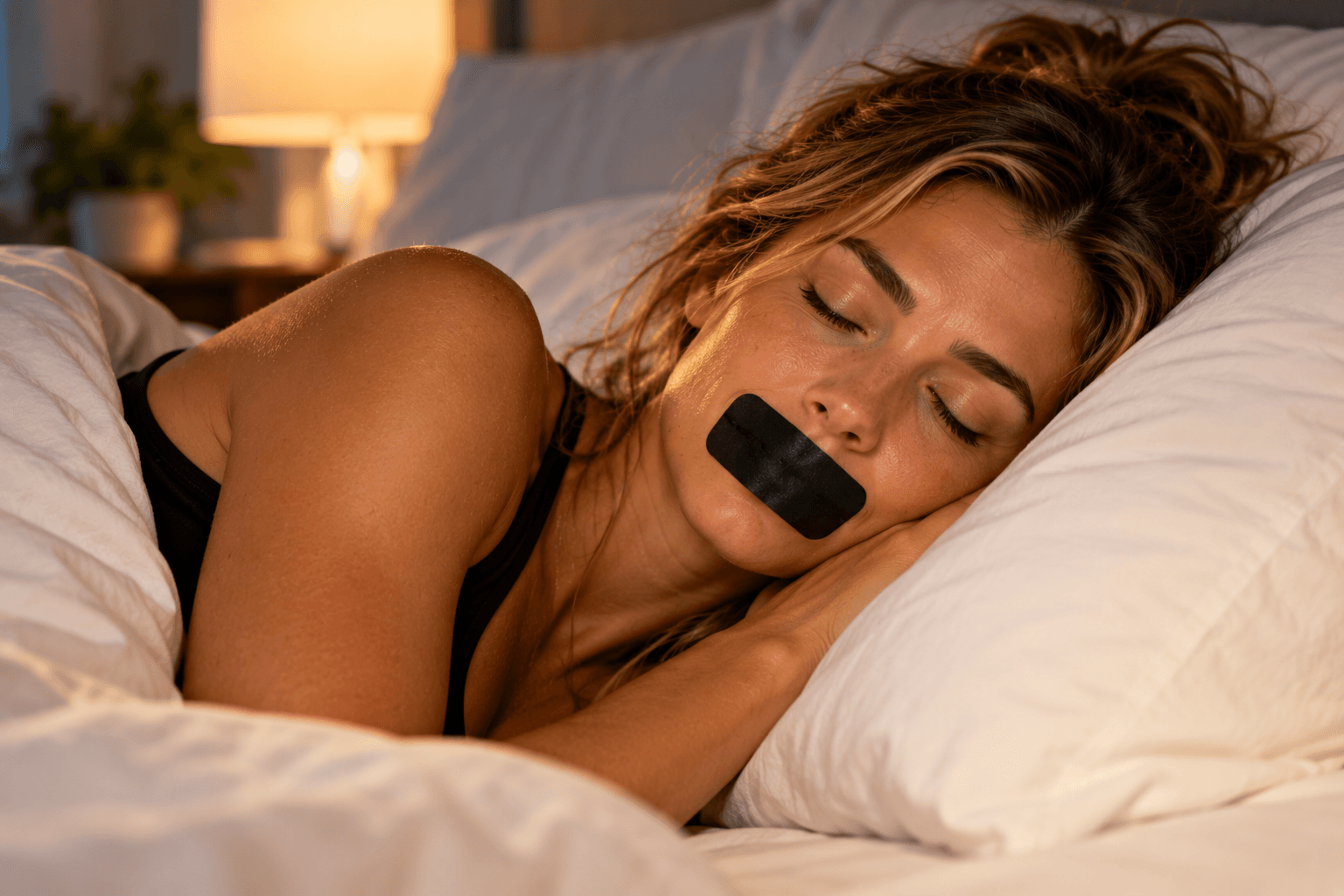
Both try to keep your mouth closed at night, in different ways. What the studies found for each, how they compare for snoring and CPAP, and how to choose.
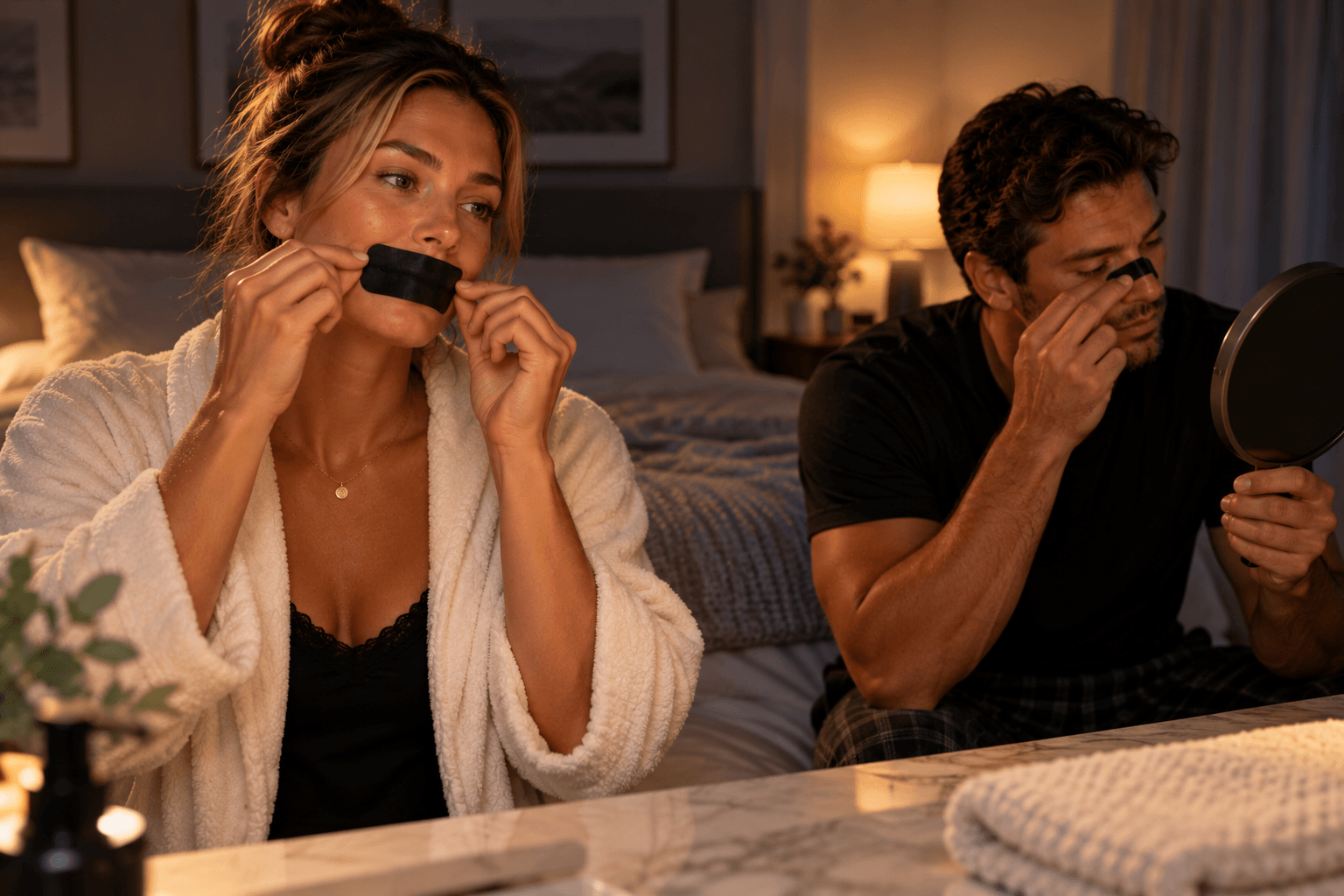
Nasal strips open the nose and mouth tape keeps the lips closed. How they differ, what the research found for each, and how to pick or combine them.

Less snoring, better sleep, more nitric oxide, a sharper jawline. We checked common social media claims about mouth taping against what the studies actually show.