In short
- A deviated septum is common. Cleveland Clinic says about 8 out of 10 people have a septum that's a little off-center.
- In a 1998 study, an external nasal dilator widened the nose and lowered nasal resistance in people whose septal deviation narrowed the nasal valve area, and the effect was larger in that group than in the others tested.
- In a 2018 placebo-controlled trial where more than a third of participants had a structural cause listed for their congestion, real strips beat a placebo strip on satisfaction with sleep.
- Strips work on the front of the nose. They don't change the shape of the septum, and Cleveland Clinic says the only way to fix a deviated septum is septoplasty.
- Nasal dilators haven't been shown to improve obstructive sleep apnea, so loud snoring with gasping or pauses still needs a doctor.
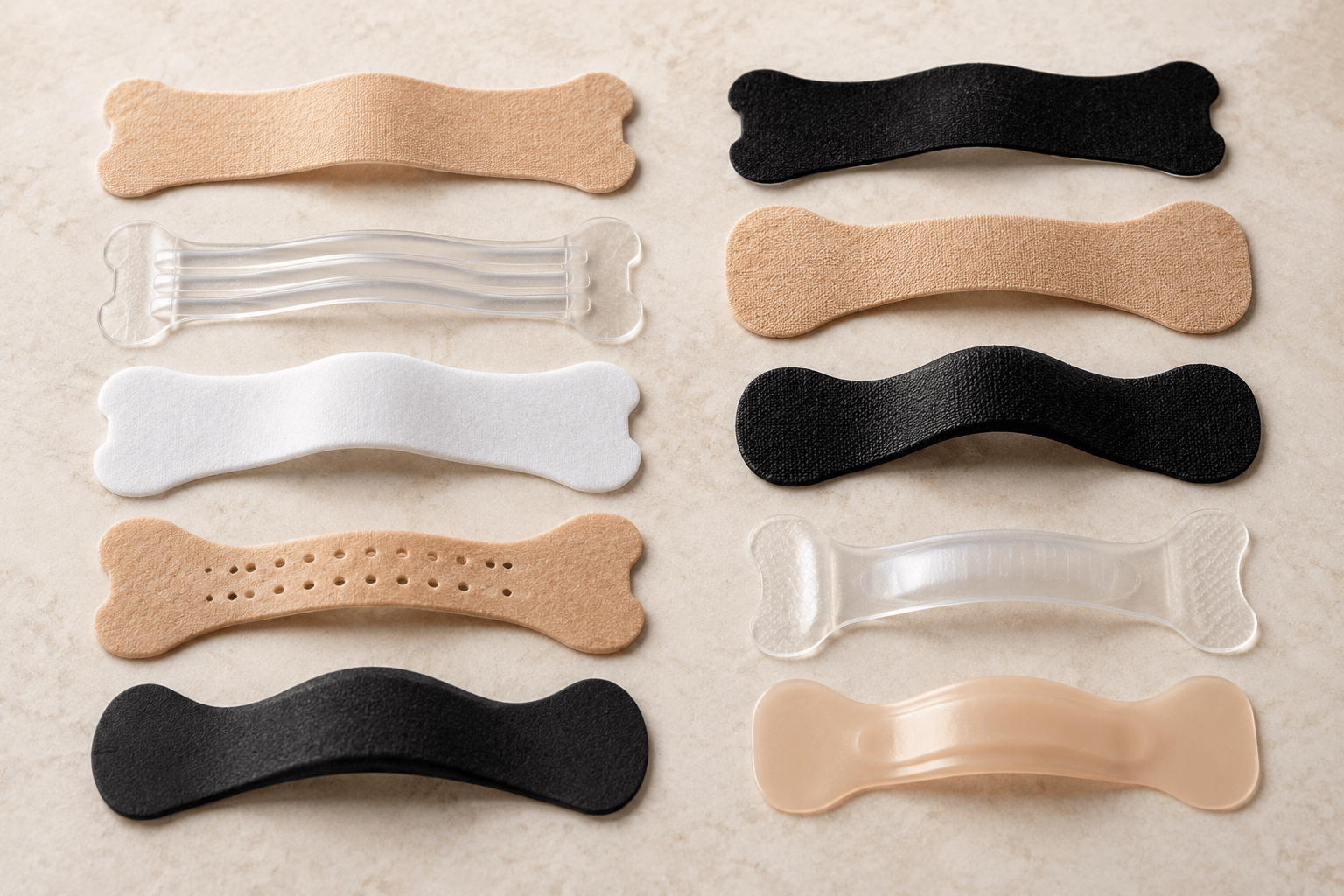
Nasal strips can make breathing easier for many people with a deviated septum, especially when the deviation narrows the front of the nose. The one study that tested this found the effect was larger in people with septal deviation than in anyone else it measured. A strip doesn't straighten the septum and works only while it's on, but it's a simple, drug-free option well worth trying.
What is a deviated septum?
The septum is the wall of bone and cartilage that divides the inside of your nose into two sides. Cleveland Clinic describes a deviated septum as one that's off-center, and says about 8 out of 10 people have a septum that's a little off-center. You can be born with one, or it can come from an injury such as a broken nose.
Most of the time it causes no trouble. When it does, Cleveland Clinic lists symptoms including difficulty breathing through the nostrils, nasal congestion, noisy breathing and snoring. If you're not sure whether yours is the problem, our guide to deviated septum symptoms goes through them.
Can nasal strips help with a deviated septum?
Research: limited (what this means)Nasal strips can help with a deviated septum. In the one study that tested this directly, an external nasal dilator widened the nose and lowered nasal resistance in every group, and the effect was largest in people whose septal deviation narrowed the nasal valve area.
The most useful study is from 1998, published in Laryngoscope. Researchers tested an external nasal dilator, the category nasal strips belong to, in three groups. There were 28 people whose septal deviation narrowed the nasal valve area, 33 people whose blockage came from congested nasal lining, and 51 people with healthy noses.
They measured the inside of the nose with and without the dilator. It increased the narrowest cross-sectional area and lowered nasal resistance significantly in all three groups, and the effect was larger in the people with septal deviation. When people rated their own breathing, everyone except the congested-lining group reported feeling more open. The authors concluded that the external nasal dilator offers an effective, nonsurgical approach for septal deviation that obstructs the nasal valve area.
That's a useful result. It's one small study that measured people during testing rather than over weeks of use, which is why we rate the evidence as limited.
Sleep research adds a little more. A 2018 double-blind trial gave 59 people with chronic nighttime congestion a Breathe Right clear strip, a prototype strip or a placebo strip without springs for two weeks. Congestion was attributed at least partly to a structural abnormality in 23 of the 61 people enrolled, though people with a severe deviated septum were excluded. Both real strips beat the placebo strip on satisfaction with sleep at day 7, and all the strips were well tolerated. The trial didn't report results separately for people with structural causes, so it supports strips for nighttime congestion in general rather than for a deviated septum specifically.
How can you tell if a deviated septum is the problem?
Cleveland Clinic describes a self-check you can do at home. Hold one nostril closed with your finger and breathe in, paying attention to how easy or hard it is. Then switch sides. If you have trouble breathing through one or both nostrils, you could have a deviated septum. It also suggests taking a photo of the underside of your nose, since nostrils that are uneven or different sizes can be a sign.
Cleveland Clinic says breathing difficulty from a deviated septum is usually worse on one side, and that a slightly deviated septum can become more off-center with age. It's clear, though, that the only sure way to know is a diagnosis from a healthcare provider, who will look inside your nose with a small instrument and may order imaging or an endoscopy.
For narrowing at the nasal valve, a provider may also use the Cottle maneuver. Cleveland Clinic describes it as gently pulling the cheek to the side to widen the nasal valve, which helps show where a collapse is. A nasal strip also widens that area, working from the outside of the nose.
Why does the location of the deviation matter?
A nasal strip works by lifting the sides of your nose from the outside, which opens the front of the nasal passage. Cleveland Clinic describes the nasal valve as a passageway that runs from the middle of your nose to the bottom, near the nostrils.
The 1998 study only included people whose deviation affected that nasal valve area. If your septum bends further back inside the nose, a strip on the outside has less to work with, and the study doesn't tell us whether it would help. A doctor can look inside your nose and tell you where the narrowing is.
There's also a related condition worth knowing about. Cleveland Clinic says most people with nasal valve collapse also have a deviated septum, and lists breathing strips among the nonsurgical options for valve collapse. If your nostrils seem to pinch in when you breathe in hard, read our guide to nasal valve collapse.
How do you get the most from a strip with a deviated septum?
To get the most from a strip with a deviated septum, pay extra attention to placement, which matters more than usual when one side is narrow. Breathe Right's instructions are to wash and dry your nose, place the strip right above where your nose flares out, then rub it gently into place. Center it so each end sits evenly on its side of the nose, so both nostrils get lifted.
Size matters too. Breathe Right recommends the large size for adults and the small/medium size for smaller faces, and it says not to cut a strip to fit, because that can stop it working. It also makes extra strength versions. No study has compared strengths for a deviated septum, so if a standard strip helps a little, trying a stronger one is a reasonable next step.
Wear it for a few nights before deciding. Breathe Right says strips can be used daily for up to 12 hours at a time, with a fresh strip each night. Our guide on how to apply nasal strips has the full routine.
If you'd like to add mouth tape, put the strip on first and check that you can breathe comfortably through your nose with your mouth closed. Our two-minute nose test is a simple way to do that. With a deviated septum, some nights will be easier than others, so skip the tape on nights when your nose feels blocked.
What does the strip maker say?
Breathe Right's own FAQ says its strips should not be considered an alternative to surgical correction of a deviated septum, though it says they can help improve nasal airflow. That's a fair summary of the evidence too.
What else helps a deviated septum?
Cleveland Clinic lists over-the-counter options for mild symptoms, including antihistamines, nasal steroid sprays and nasal decongestants. It also warns not to use decongestant sprays for more than three days in a row, because they can cause rebound congestion.
None of these change the shape of the septum. Cleveland Clinic says the only way to fix a deviated septum is with septoplasty, a surgery that reshapes the septum. Cleveland Clinic suggests talking to a provider if your symptoms interfere with breathing, disrupt your sleep or affect other parts of your life.
If you want to compare strips with dilators that sit inside the nostrils, see nasal strips vs nasal dilators. For the basics, how nasal strips work covers placement and what the snoring studies found, and our nasal strips topic collects the rest.
When is a strip not enough?
A 2016 meta-analysis found that nasal dilators improve nasal breathing but haven't been shown to improve obstructive sleep apnea. Cleveland Clinic lists snoring among the symptoms of a deviated septum, but if your snoring is loud and someone has noticed you gasp, choke or stop breathing in your sleep, a strip isn't the answer. See a doctor.
If you want to try nasal strips, our pick is TitanAir Nasal Strips.
Common questions
Can a nasal strip fix a deviated septum?
No. A strip lifts the sides of your nose while you wear it, but it doesn't move the septum. Cleveland Clinic says the only way to fix a deviated septum is with septoplasty.
Will a nasal strip help if only one side of my nose is blocked?
It may help some. A 1998 study found an external nasal dilator improved airflow measurements in people whose septal deviation narrowed the nasal valve area. If the narrowing is further back in the nose, there isn't good evidence either way.
How do I know if I have a deviated septum?
Cleveland Clinic suggests a simple self-check: hold one nostril closed and breathe in, then switch sides. Trouble breathing through one or both sides can be a sign. Uneven nostrils in a photo of the underside of your nose can be another. Only a healthcare provider can confirm it.
Should I use a stronger strip for a deviated septum?
There's no research comparing strip strengths for a deviated septum. Start with the right size, placed right above where your nose flares out, and see how it feels over a few nights. Breathe Right makes extra strength versions if you want to compare.
Can I use mouth tape if I have a deviated septum?
Only if you can breathe comfortably through your nose with your mouth closed. Many people find a strip makes that easier. Try the strip first, and add tape only once nasal breathing feels easy.
When should I see a doctor about a deviated septum?
Cleveland Clinic advises talking to a provider if your symptoms interfere with breathing, disrupt your sleep or affect other parts of your life. See a doctor too if you snore loudly and someone has noticed you gasp or stop breathing in your sleep.
Sources
- Deviated septum
- Nasal valve collapse
- Role of the external nasal dilator in the management of nasal obstruction
- Breathe Right FAQs
- Effects of nasal dilator strips on subjective measures of sleep in subjects with chronic nocturnal nasal congestion: a randomized, placebo-controlled trial
- Nasal Dilators (Breathe Right Strips and NoZovent) for Snoring and OSA: A Systematic Review and Meta-Analysis
About this article
- Research
- 6 published sources, listed above.
- Evidence
- Limited. How we rate it
- Last checked
- October 10, 2026
- Funding
- Paid partner of Titan Recovery. Their ads are labeled.
- Found an error?
- Tell us. We log fixes on the corrections page.
* This content is for informational and educational purposes only and is not medical advice. It is not intended to diagnose, treat, cure or prevent any disease or health condition. Talk to a qualified healthcare provider about your health.