In short
- In a 2026 sleep-lab study of 25 healthy adults, foam earplugs reduced noise-related arousals and awakenings more than pink noise did.
- A 2021 systematic review rated the evidence that continuous white noise improves sleep as very low quality, and noted it may affect sleep and hearing.
- The NHS matches snoring causes to fixes: a mouth that falls open with a chin strap or vestibular shield, and a blocked nose with nasal strips, dilators or decongestants.
- In a small 2000 randomized trial of people with chronic rhinitis, people snored 173 times an hour on a night with nasal strips, compared with 258 times an hour with a placebo strip.
- In a 2022 study of 20 mouth breathers with mild sleep apnea, the median snoring index fell by 47% on a night with mouth tape compared with a baseline night a week earlier.
- The NHS says to see a GP if snoring comes with daytime sleepiness, breathing that stops and starts, or gasping or choking noises, which can be signs of sleep apnoea.
To sleep with a snoring roommate, protect your own sleep first with well-fitted foam earplugs, then talk to them kindly about it, because most snoring has simple fixes on their side. Whether it's a dorm, a shared flat, a sibling or a friend on a trip, the steps are the same. This guide covers what works on your side of the room, how to bring it up, what to offer, and the signs that mean the snoring deserves a doctor's look.
Why is a snoring roommate so hard to sleep through?
Snoring is hard to sleep through because it's irregular. A steady sound fades into the background, but snoring starts, stops, changes pitch and sometimes ends in a snort, which is the kind of noise that pulls you out of sleep. The NHS says snoring is very common and not usually caused by anything serious, but that doesn't make it easier to share a room with.
A roommate situation adds its own problems. You may not know each other well, you can't easily move to another room, and it can feel awkward to raise. If you've been lying awake resenting them for weeks, that's normal, and it's fixable.
Do earplugs work for a snoring roommate?
Research: limited (what this means)Earplugs are the best-supported thing you can do on your own side. In a 2026 sleep-lab study in Sleep Health, 25 healthy adults slept through intermittent recorded noise while researchers tried pink noise, foam earplugs and both together. Pink noise reduced arousals and awakenings from aircraft noise, but earplugs did better. Snoring wasn't one of the sounds tested, but like it, the sounds were intermittent.
The NHS also suggests earplugs to snorers, advising them to consider asking a partner to use them if their snoring affects the other person's sleep. Fit matters as much as the type. Our guide to the best earplugs for snoring covers types, noise ratings and how to wear them safely every night.
Does white noise help with snoring?
White noise may help some people, but the evidence is weak. A 2021 systematic review in Sleep Medicine Reviews looked at 38 articles on continuous white noise or similar broadband noise and sleep. Findings ranged from improving sleep to disrupting it, and the reviewers rated the evidence that continuous noise improves sleep as very low quality. They also noted it may negatively affect sleep and hearing.
That doesn't mean a fan is useless. Many people like the steady sound, and pairing it with earplugs is a common setup. If you try a white noise app or machine, keep the volume moderate and place it on your side of the room. White noise for sleep goes through the studies.
Other small changes on your side:
- Go to sleep first if you can, so you're already asleep when the snoring starts.
- Move your bed or head position so the snorer's head isn't right next to yours.
- Keep your own sleep habits steady, so you're tired enough to sleep through some noise.
How do you tell a roommate they snore without making it awkward?
Bring it up in the daytime, calmly, and treat it as a shared problem. Many snorers don't know they snore, or don't realize how loud it is, so the first conversation is often news to them.
A few things make it go better:
- Pick a relaxed moment, not right after a bad night when you're both tired.
- Keep it light and factual: "I've been having trouble sleeping, and I think it's partly the snoring."
- Say what you've tried, like earplugs, so it doesn't sound like you're putting it all on them.
- Offer to help find a fix, rather than asking them to just stop.
- A short phone recording can help, since hearing it is often more convincing than being told.
Avoid making it about their weight or habits, even if those play a part. It's their body, and people respond better to "here's something we could try" than to a list of what they're doing wrong. If you've noticed gasping, choking or pauses in their breathing, mention it gently and separately; see the doctor section below.
In a dorm, a resident advisor can sometimes help mediate, or arrange a room swap if nothing works. On a shared trip, splitting into separate rooms for even one night can reset everyone's patience.
What fixes can you offer a snoring roommate?
The most useful fix depends on what's causing the snoring. The NHS matches causes to treatments this way:
| Possible cause | What the NHS suggests |
|---|---|
| Blocked or narrow airways in the nose | Nasal dilators or strips, or decongestants or nasal sprays |
| Mouth falling open during sleep | A chin strap, or a mouth device (vestibular shield) that makes you breathe through your nose |
| Tongue partly blocking the back of the throat | A mouth device that brings the tongue forward |
| Sleeping on the back | Sleeping on the side |
| Smoking or drinking too much alcohol | Not smoking, and not drinking too much |
The NHS also suggests losing weight if overweight and not taking sleeping pills, which can sometimes cause snoring.
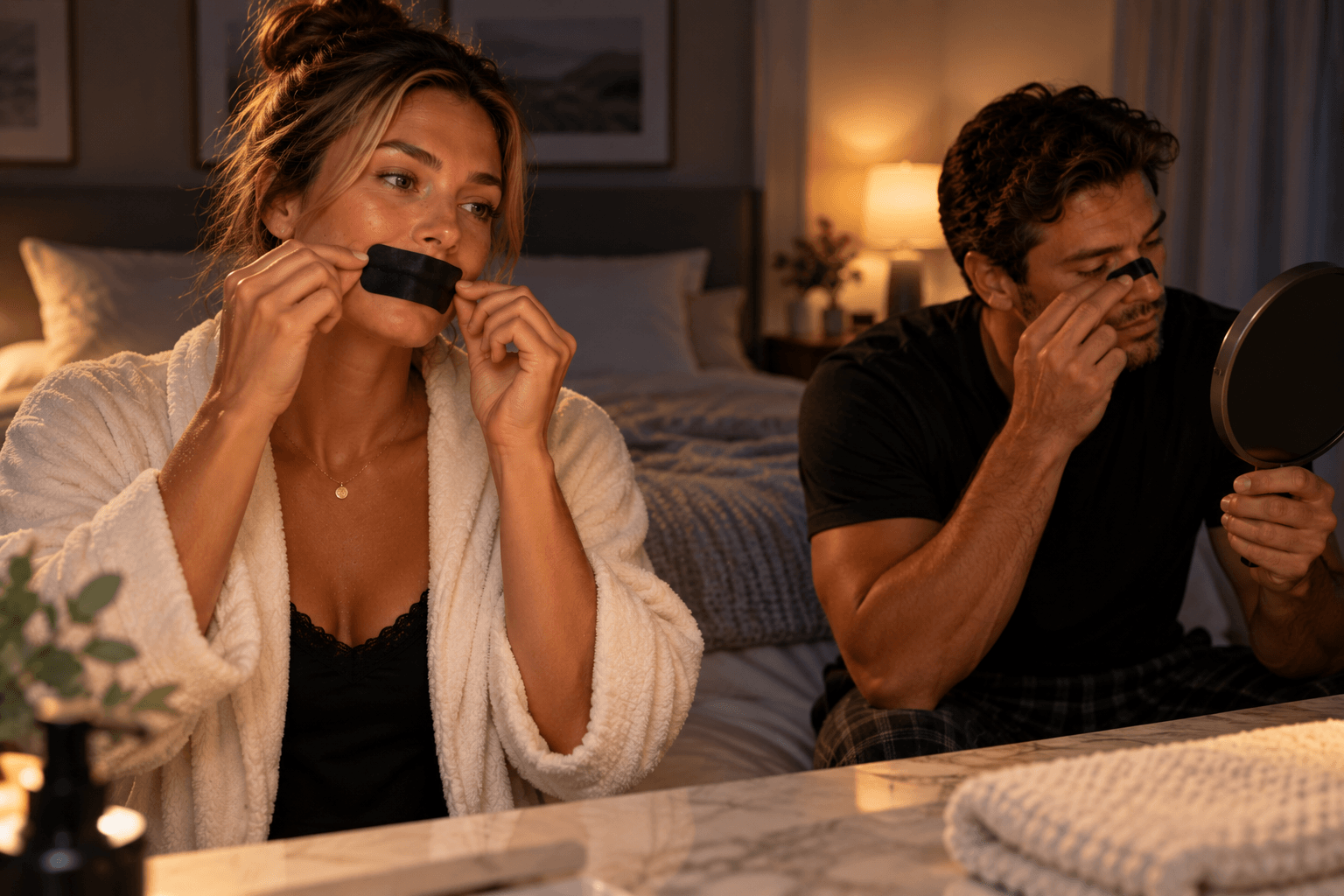
For a roommate, the easiest things to offer are the cheap, no-fuss ones: nasal strips and, for open-mouth snorers, mouth tape. The research is small but encouraging. In a 2000 randomized trial in the European Respiratory Journal, 12 people with chronic rhinitis who snored but didn't have sleep apnea slept with a nasal strip or a placebo strip. Snoring averaged 173 snores an hour with the real strip, compared with 258 with the placebo, though the strip didn't change snoring loudness. In a 2022 study in Healthcare, 20 mouth breathers with mild sleep apnea had a baseline home sleep test, then a second test a week later on a night with their mouths taped. Their median snoring index fell by 47%.
A kit that covers both is a thoughtful thing to offer. The Titan Sleep System pairs nasal strips with mouth tape, so your roommate can try the strip alone first and add the tape if their mouth tends to fall open. Our guide to the best sleep kit for snoring explains how to tell which kind of snoring someone has.
What should a roommate know before trying mouth tape?
Mouth tape is only for people who can breathe comfortably through their nose. Cleveland Clinic says never to use it with nasal obstruction, nasal congestion, chronic allergies, sinus infections, enlarged tonsils, a deviated septum or heart issues. Sleep Foundation advises testing it during the day first, avoiding it when the nose is blocked, and folding over one corner so it's easy to remove.
It's their decision, not yours. Offer it as an option, not a condition of sharing the room. Our nose test is a quick check, and how to start mouth taping walks through the first week. We don't recommend mouth tape for children, so for younger siblings who snore, talk to a doctor instead.
Check this first. Skip mouth tape and see a doctor if you snore loudly, wake up gasping, have been told you stop breathing in your sleep, or can't breathe comfortably through your nose. More on safety
When is a roommate's snoring a health sign?
Snoring is a health sign when it comes with other symptoms. The NHS says to see a GP if lifestyle changes aren't helping, if snoring has a big impact on someone's life, or if they feel sleepy during the day, their breathing stops and starts while they sleep, or they make gasping or choking noises, because they may have sleep apnoea, which can be serious if not treated.
You may be the first to notice. The NHLBI says people with sleep apnea may not know about symptoms like breathing that starts and stops, frequent loud snoring and gasping for air until someone tells them. It also lists daytime sleepiness, dry mouth, headaches and waking often to urinate. The NHS adds that it can help to bring someone who has seen the symptoms to the appointment, so offering to describe what you've heard is a kind thing to do.
Strips and tape aren't treatments for sleep apnea. If you've noticed pauses or gasping, encourage your roommate to see a doctor before trying them. If your roommate is pregnant and has started snoring, they should mention it to their midwife or doctor. Our pages on sleep apnea warning signs and snoring vs sleep apnea explain the difference.
Our pick (paid partner): Titan Sleep System
If you want to offer your roommate something practical, our pick is the Titan Sleep System. It's our recommendation rather than something we've tested against other products, and it fits the two causes on the NHS list that a simple device can target: a blocked nose and a mouth that falls open.
Titan describes it as TitanAir Nasal Strips and Titan Mouth Tape together as one nightly system. Titan says the strips are drug-free external nasal dilators with flexible spring-loaded bands, placed just above the flare of the nostrils on the soft part of the nose. The tape is bamboo silk, which Titan describes as soft, breathable and moisture-wicking, in one oval size of 76 by 38 mm worn horizontally across the lips.
Titan suggests 20 to 30 minutes of daytime practice with the tape before the first night. It says every batch is third-party tested and certified PFAS-free, and its 30-night guarantee refunds you if your sleep isn't better after 30 nights. Supply options are on the Titan Sleep System page.
Read next
Common questions
How can I sleep with a roommate who snores?
Start with foam earplugs, which beat pink noise at reducing noise-related awakenings in a 2026 sleep-lab study. Add a fan or white noise if you like it, though the evidence for it is weak. Then talk to your roommate kindly. Many snorers don't know, and simple changes on their side often help.
Are earplugs or white noise better for snoring?
Earplugs have the stronger evidence. In a 2026 study of 25 healthy adults, foam earplugs outperformed pink noise at reducing arousals and awakenings from intermittent noise. A 2021 systematic review rated the evidence that continuous white noise improves sleep as very low quality. Some people still like both together.
How do I tell my roommate they snore?
Pick a calm moment in the day, not 3am. Keep it factual and friendly, say how it affects your sleep, and frame it as something you can solve together. A short phone recording can help, since most snorers don't hear themselves. If you've noticed gasping or pauses, mention that gently too.
What can a snorer do to stop snoring?
The NHS suggests losing weight if overweight, sleeping on your side, not smoking, not drinking too much alcohol and avoiding sleeping pills. The right device depends on the cause: nasal strips or dilators for a blocked nose, and a chin strap or mouth device if the mouth falls open.
When is snoring a sign of something serious?
When it comes with other signs. The NHS says to see a GP if someone snores and feels sleepy in the day, their breathing stops and starts while they sleep, or they make gasping or choking noises, as these can be signs of sleep apnoea. A roommate is often the first to notice.
Should I wake up a roommate who is snoring?
A gentle nudge to roll onto their side is reasonable if you've agreed on it in advance. The NHS lists sleeping on your side among the changes that can reduce snoring. Agreeing on a signal ahead of time keeps it friendly rather than annoying.
Sources
- Snoring
- The efficacy of pink noise and earplugs for mitigating sleep disruption induced by different environmental noise sources
- Noise as a sleep aid: a systematic review
- External nasal dilation reduces snoring in chronic rhinitis patients: a randomized controlled trial
- The impact of mouth-taping in mouth-breathers with mild obstructive sleep apnea: a preliminary study
- Mouth Taping for Sleep: Does It Work?
- Mouth taping: is it safe to use?
- Sleep apnoea
- Sleep Apnea - Symptoms
- Titan Sleep System: Mouth Tape + Nasal Strips
About this article
- Research
- 10 published sources, listed above.
- Evidence
- Limited. How we rate it
- Last checked
- November 3, 2026
- Funding
- Paid partner of Titan Recovery. Their ads are labeled.
- Found an error?
- Tell us. We log fixes on the corrections page.
* This content is for informational and educational purposes only and is not medical advice. It is not intended to diagnose, treat, cure or prevent any disease or health condition. Talk to a qualified healthcare provider about your health.