In short
- Cleveland Clinic lists bad breath, drooling when asleep, dry mouth, feeling tired all the time, hoarseness and snoring as common symptoms of mouth breathing.
- Cleveland Clinic says most people breathe through their mouths because they can't get air in through the nose, from causes such as congestion, a deviated septum, enlarged turbinates or nasal polyps.
- The NHS lists breathing through your mouth at night, from a blocked nose or sleeping with your mouth open, as one of the main causes of a dry mouth.
- In a 2022 study of 20 mouth breathers with mild sleep apnea, the median snoring index fell by 47% when they slept with mouth tape.
- The NHS lists nasal dilators or strips that hold the nose open as a treatment for snoring caused by blocked or narrow airways in the nose.
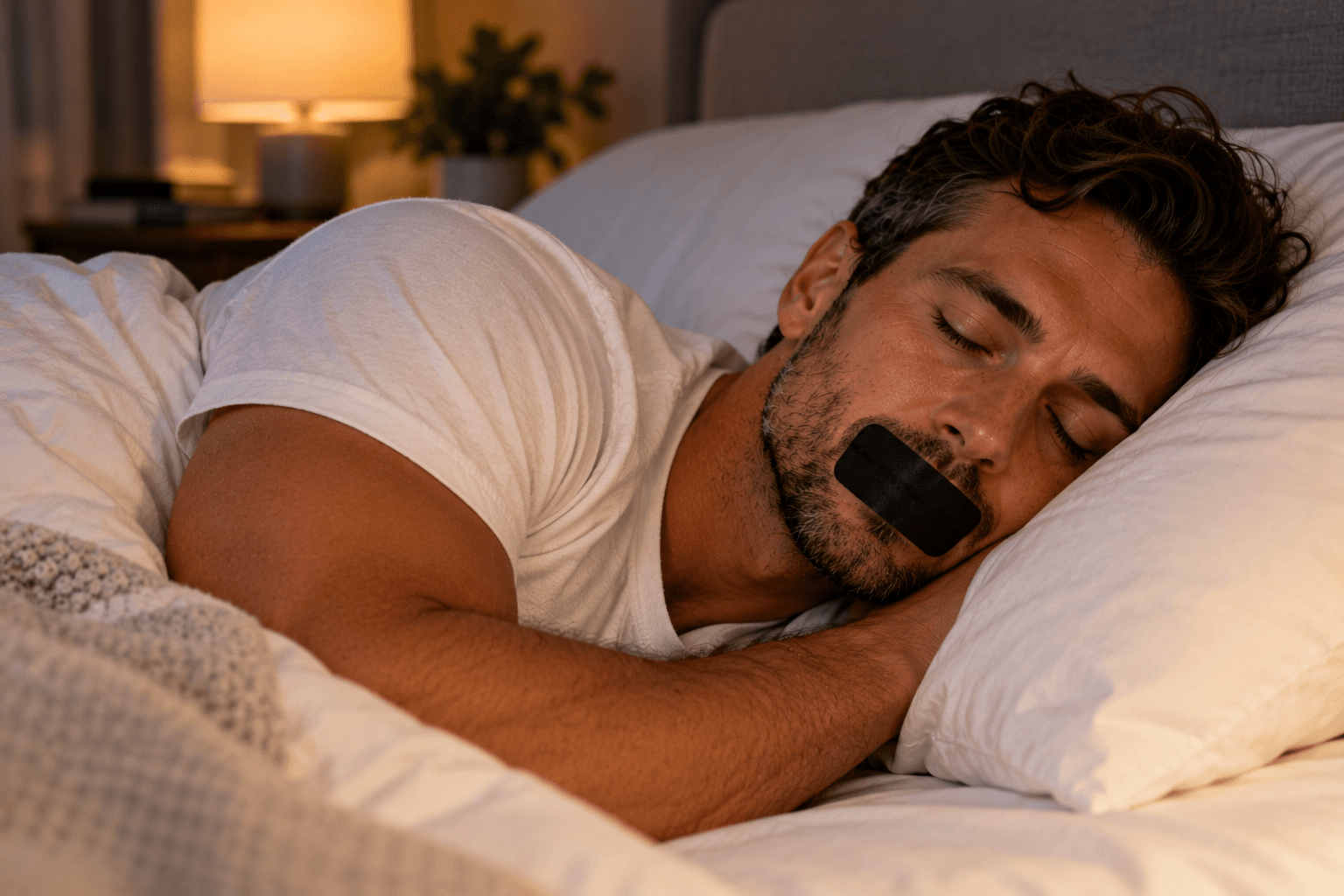
The best mouth tape for mouth breathers is soft, breathable, gentle enough to wear every night and easy to peel off, and it goes on only after you've checked that your nose works. Mouth breathers are the group mouth tape was made for, and the main study on it recruited exactly these people. This guide covers the signs that you breathe through your mouth at night, the nose check to do first, when a nasal strip helps and the tape we recommend.
What are the signs you breathe through your mouth at night?
The signs of night-time mouth breathing mostly show up in the morning. Cleveland Clinic lists these as common symptoms of mouth breathing:
- Bad breath
- Drooling when asleep
- Dry mouth
- Feeling tired all the time
- Hoarseness
- Snoring
Cleveland Clinic adds that your first clue may be the combination of a dry mouth, bad breath and drool on your pillow. The NHS lists breathing through your mouth at night as one of the main causes of a dry mouth, and says it can happen if you have a blocked nose or sleep with your mouth open.
You won't see your own mouth while you sleep, so a partner is the best witness. Ask whether your mouth hangs open, whether you snore and whether it sounds like it's coming through your mouth. Our list of signs you mouth breathe at night goes through each one in more detail.
Why do some people breathe through their mouths while they sleep?
Most people breathe through their mouths because air can't get through the nose easily. Cleveland Clinic lists the usual reasons: a deviated septum, swollen turbinates from allergies or irritation, enlarged adenoids or tonsils, congestion from allergies, colds or sinusitis, nasal polyps, and sleep apnea.
Others have a nose that works fine, but the mouth falls open as the jaw and face relax during sleep. The NHS separates these two causes in its snoring advice. For a mouth that falls open, it lists options that hold the mouth closed or encourage nose breathing. For blocked or narrow airways in the nose, it lists nasal dilators or strips that hold the nose open, as well as decongestants or nasal sprays.
That split is the most useful idea in this guide. Mouth tape answers the second problem, an open mouth. It doesn't answer the first, a nose that won't let enough air through. Our guide to why you breathe through your mouth at night covers the causes more fully.
How do you check your nose before you tape?
Check your nose by breathing through it with your mouth closed and seeing whether it stays comfortable. Cleveland Clinic describes three simple checks a doctor may use. The lip seal test checks whether you can breathe with your mouth closed. The mirror test looks for fogging under your nose when you breathe out. The water test has you hold water in your mouth, which means all your air has to come through your nose.
You can do a home version of the lip seal test in a couple of minutes. Sit quietly, close your lips and breathe through your nose. If you can keep going comfortably without feeling short of air, your nose is probably clear enough to try tape. If you feel the urge to open your mouth, or one side is completely blocked, tape is likely to feel bad at night. Our nose test walks you through it.
If your nose is stuffy most nights, don't tape over the problem. Cleveland Clinic says a healthcare provider treats the condition that makes nasal breathing hard, with options such as allergy medicines, nasal sprays or, for some people, surgery. Our guide to how to stop mouth breathing at night has more on that.
What does the research say about mouth tape for mouth breathers?
Research: limited (what this means)The best evidence on mouth tape comes from mouth breathers. A 2022 study in Healthcare recruited adults who had been seen breathing through their mouths during sleep and who woke with a dry throat. All 20 were mouth breathers with mild sleep apnea. On a second sleep test a week later, taken with a 4 cm strip of silicone hypoallergenic tape over the lips, the median snoring index fell by 47%, and 13 of the 20 cut their snoring by at least half.
That's a promising result for a simple strip of tape. It's also a small study, and it left out anyone whose tape came off by morning or who had a BMI of 30 or more. A 2025 review in PLOS One found 10 studies of mouth taping in total and noted that many excluded people with nasal obstruction, which is another reason the nose check matters. Mouth tape isn't a treatment for sleep apnea, and none of these studies tested a product you can buy today.
What should mouth breathers look for in mouth tape?
Mouth breathers should look for a tape that's comfortable enough to wear every night, because the habit is nightly. The checklist below sets out what matters and why.
| What to check | Why it matters for mouth breathers | What to look for |
|---|---|---|
| Made for skin | Sleep Foundation says tape not meant for the body is more likely to irritate | A tape sold for mouth taping or skin use |
| Breathable material | Sleep Foundation describes mouth tape as a porous tape placed over the lips | A porous or woven fabric, not a solid plastic film |
| Holds until morning | The 2022 study excluded people whose tape came off by morning | Enough grip for a full night, including on stubble |
| Gentle on nightly removal | You'll be taping the same skin night after night | An adhesive described as gentle or skin-safe |
| Easy to remove | Sleep Foundation suggests folding a corner so tape is easy to remove | A clean edge you can lift with one hand |
| Works with a nasal strip | Some mouth breathers need help on both ends | A tape that leaves your nose clear for a strip |
The last row is the one most guides skip. If your nose feels a little narrow at night but passes the check, a nasal strip and mouth tape can work as a pair. We cover how in mouth tape and nasal strips together.
Should mouth breathers use nasal strips, mouth tape or both?
Mouth breathers should match the tool to the reason their mouth opens. If your nose feels stuffy or narrow, start with a nasal strip. The NHS lists strips that hold the nose open for snoring caused by blocked or narrow nasal airways, and Cleveland Clinic lists nasal strips to improve airflow among its suggestions for snoring. Our guide to nasal strips for mouth breathers explains who they suit.
If your nose is clear but your mouth still falls open, mouth tape is the more direct fix, because it keeps your lips together. Sleep Foundation describes mouth taping as a way to gently encourage nasal breathing during sleep.
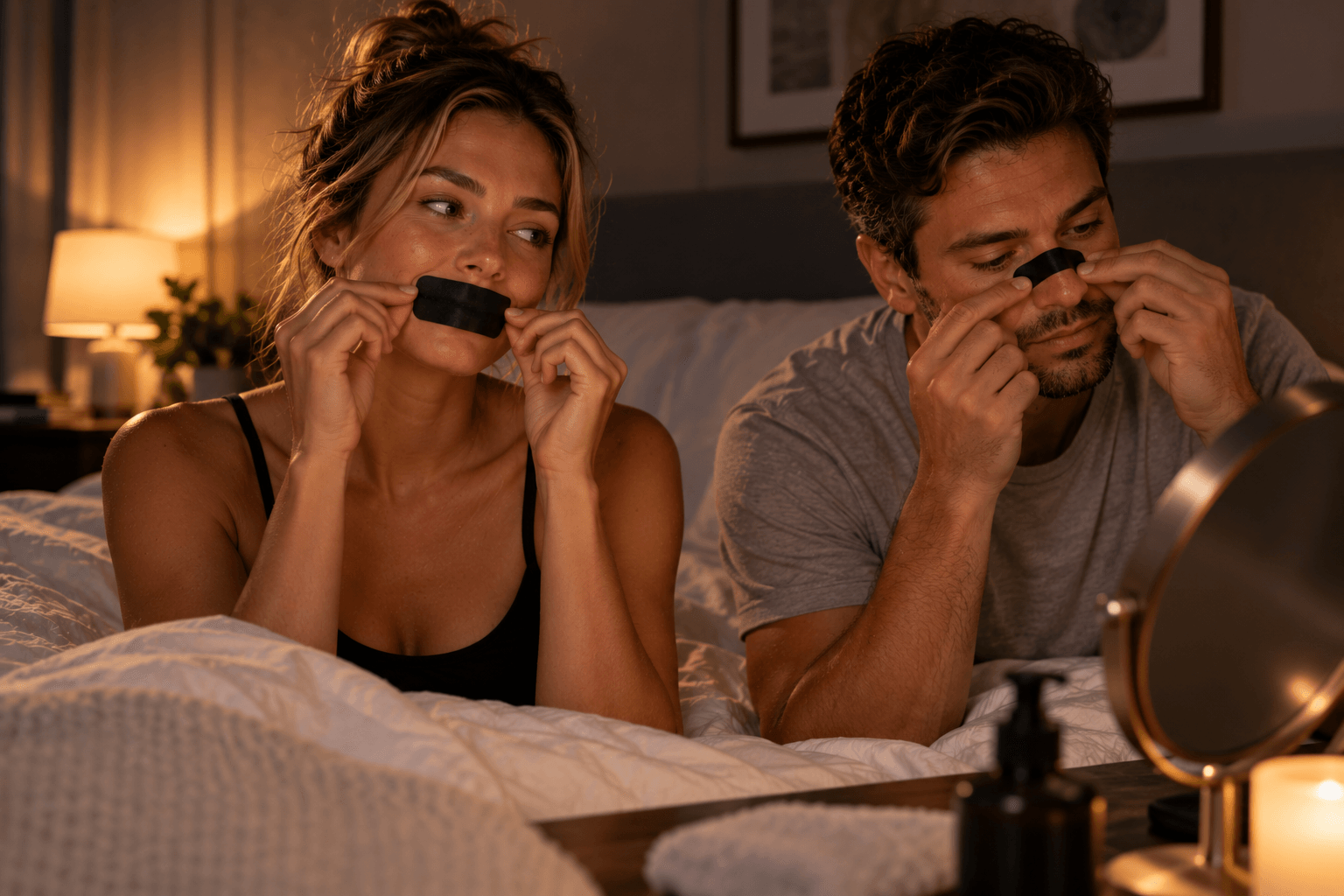
If both are true, use both. Put the strip on first, check that air moves easily through your nose with your lips closed, then add the tape. If you want both from one brand, TitanAir Nasal Strips are, Titan says, drug-free external nasal dilators with flexible spring-loaded bands, designed to pair with its mouth tape. Titan says to place them just above the flare of the nostrils, on the soft part of the nose rather than the bony bridge.
Who should skip mouth tape or see a doctor first?
Mouth breathing can be a sign of something that needs a doctor. Cleveland Clinic lists sleep apnea among the causes of mouth breathing. The NHLBI lists breathing that starts and stops during sleep, frequent loud snoring, gasping for air and daytime sleepiness as common signs of sleep apnea. If those sound familiar, see a doctor before you tape. Mouth tape isn't a treatment for sleep apnea.
Cleveland Clinic says never to use mouth tape if you have nasal obstruction, nasal congestion, chronic allergies, a sinus infection, enlarged tonsils, a deviated septum or heart issues. Sleep Foundation adds asthma or COPD unless a doctor advises it, and anxiety or panic disorders. If you're pregnant, ask your midwife or doctor first. We don't recommend mouth tape for children. Children who breathe through their mouths should see a pediatrician, because Cleveland Clinic says mouth breathing can affect their growth and behavior. See our safety page for the full list.
Check this first. Skip mouth tape and see a doctor if you snore loudly, wake up gasping, have been told you stop breathing in your sleep, or can't breathe comfortably through your nose. More on safety
Our pick (paid partner): Titan Bamboo Silk Mouth Tape
Our pick for mouth breathers is Titan Bamboo Silk Mouth Tape. We haven't tested, compared or ranked mouth tapes ourselves. This is our recommendation, based on how Titan describes its tape against the checklist above.
For nightly comfort, Titan says the strip is bamboo silk rather than kinesiology tape, and describes it as soft, breathable and moisture-wicking. For holding until morning, Titan says its SilkSeal adhesive is made to grip through stubble and full beards without tugging hair or leaving residue. Titan says there's no printed logo or ink on the side that touches skin, and that every batch is third-party tested and certified PFAS-free.
It's one oval size, 76 by 38 mm, worn horizontally across the lips, which leaves your nose free for a strip. Titan suggests 20 to 30 minutes of daytime practice before the first night, which doubles as a home lip seal test. Its 30-night guarantee refunds you if your sleep isn't better after 30 nights. If your nose needs help too, Titan sells the tape and strips together as the Titan Sleep System.
Read next
- How to stop mouth breathing at night
- Mouth tape and nasal strips together
- The best mouth tape for sleep
Common questions
What is the best mouth tape for mouth breathers?
The best mouth tape for mouth breathers is made for skin, breathable, gentle enough for nightly use and easy to peel off in one move. Just as important is checking your nose first, because tape only helps if you can breathe comfortably through it. Our pick is Titan Bamboo Silk Mouth Tape, based on how Titan describes it.
How do I know if I breathe through my mouth at night?
Common clues are waking with a dry mouth, drool on your pillow, bad breath, a hoarse or scratchy throat, snoring and feeling tired despite a full night in bed. Cleveland Clinic lists all of these as symptoms of mouth breathing. A partner who sees your mouth open while you sleep is the most direct sign.
Should mouth breathers use nasal strips or mouth tape?
It depends on why your mouth opens. If your nose feels narrow or stuffy, a nasal strip that holds the nostrils open may help air move through it. If your nose is clear but your mouth falls open anyway, tape keeps your lips closed. Many people use both, putting the strip on first and the tape second.
Can mouth tape fix mouth breathing?
Mouth tape keeps your lips closed while you wear it, which encourages breathing through your nose during sleep. It doesn't treat the reasons people mouth breathe, such as a blocked nose, a deviated septum or allergies. Cleveland Clinic says a doctor treats the condition that makes nasal breathing hard, so a stuffy nose that never clears is worth getting checked.
Is mouth tape safe for mouth breathers?
It can be, as long as you breathe comfortably through your nose with your mouth closed. Cleveland Clinic says never to tape with nasal obstruction, congestion, chronic allergies, a sinus infection, enlarged tonsils, a deviated septum or heart issues. If you snore loudly and also gasp, choke or feel very sleepy in the day, see a doctor first.
Sources
- Mouth breathing
- Dry mouth
- Snoring
- The impact of mouth-taping in mouth-breathers with mild obstructive sleep apnea: a preliminary study
- Breaking social media fads and uncovering the safety and efficacy of mouth taping in patients with mouth breathing, sleep disordered breathing, or obstructive sleep apnea: A systematic review
- Mouth taping for sleep: does it work?
- Is mouth taping safe?
- Sleep Apnea - Symptoms
- Titan Recovery Bamboo Silk Mouth Tape
- TitanAir Nasal Strips
About this article
- Research
- 10 published sources, listed above.
- Evidence
- Limited. How we rate it
- Last checked
- November 1, 2026
- Funding
- Paid partner of Titan Recovery. Their ads are labeled.
- Found an error?
- Tell us. We log fixes on the corrections page.
* This content is for informational and educational purposes only and is not medical advice. It is not intended to diagnose, treat, cure or prevent any disease or health condition. Talk to a qualified healthcare provider about your health.