In short
- A 2021 expert consensus in the British Journal of Sports Medicine says elite athletes are particularly susceptible to short sleep of under seven hours a night and poor sleep quality.
- The same consensus says athletic performance is reduced by a night or more without sleep, and that habitually sleeping under seven hours raises susceptibility to respiratory infection in the wider population.
- In a 1980 study, 20 of 30 healthy adults switched from nose breathing to nose-and-mouth breathing at a submaximal exercise intensity, which is why tape has no place in hard training.
- A 2021 meta-analysis found that nasal strips made no difference to VO2max, heart rate or perceived exertion in healthy people during exercise.
- In a 2022 study, the median snoring index of 20 mouth breathers with mild sleep apnea fell by 47% when they slept with their mouths taped.
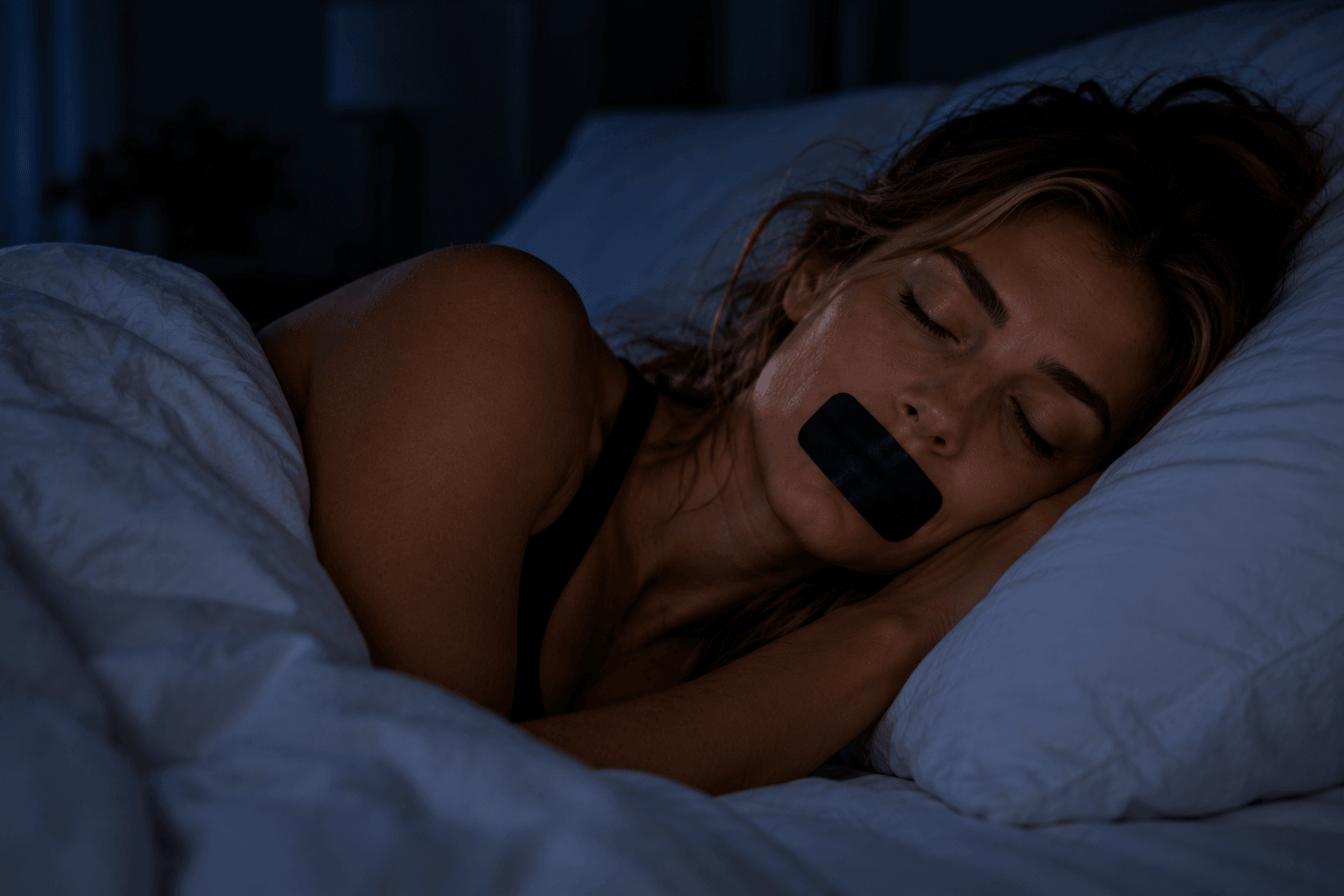
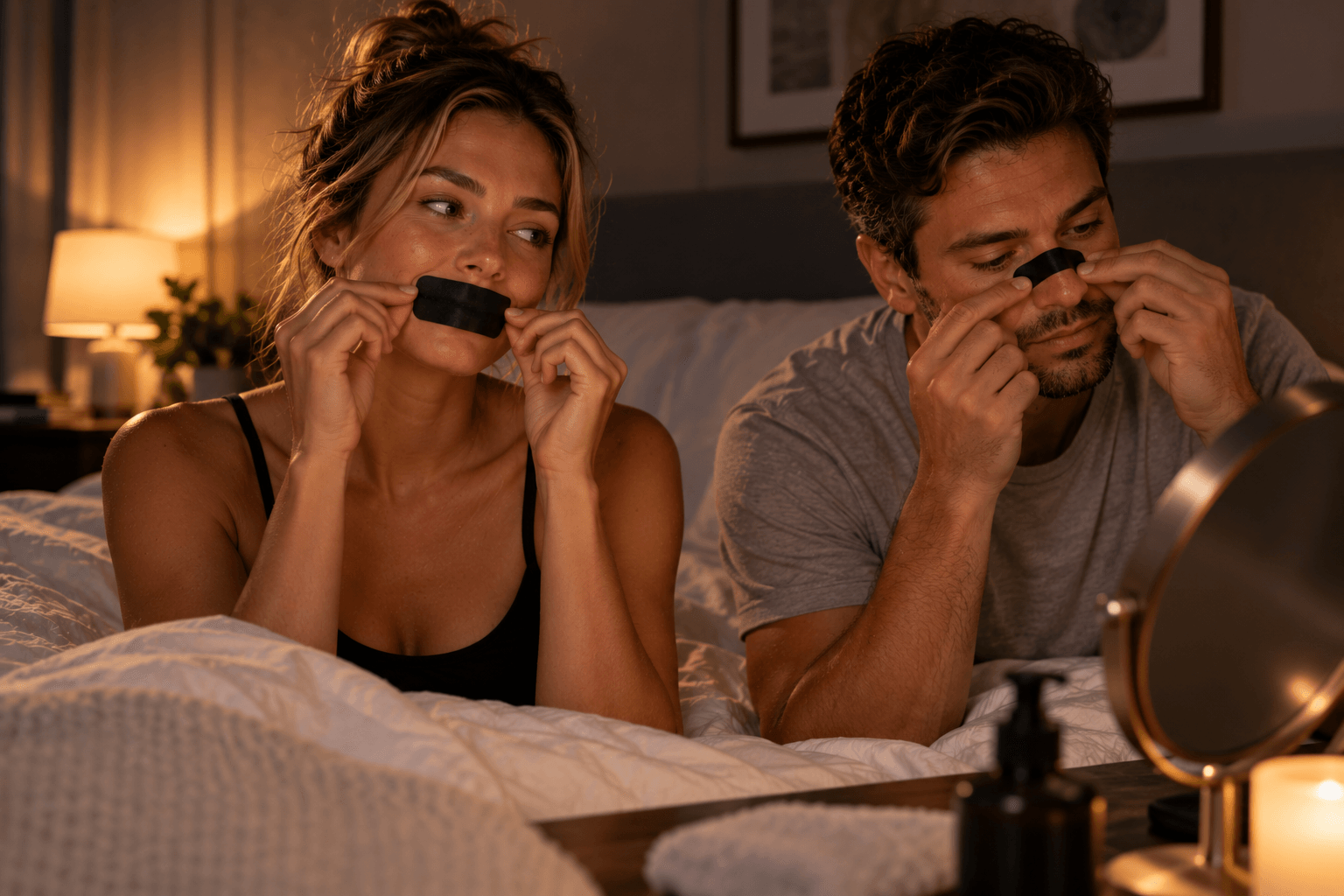
The best mouth tape for athletes is a soft, breathable tape made for skin that holds through a full night, handles stubble and post-training skin, and peels off cleanly before your morning session. It's a sleep product. You wear it in bed to keep your lips closed and your breathing through your nose, and you never wear it for hard exercise. This guide covers why sleep matters for athletes, where tape fits and where it doesn't, what to look for and the tape we recommend.
Why should athletes care about sleep?
Athletes should care about sleep because it's part of training, not a break from it. A 2021 expert consensus in the British Journal of Sports Medicine says elite athletes are particularly susceptible to sleep problems, including habitual short sleep of under seven hours a night and poor sleep quality, such as broken sleep. It says athletic performance is reduced by a night or more without sleep. It also notes that in the wider population, habitually sleeping under seven hours increases susceptibility to respiratory infection.
The same consensus says athlete sleep is shaped by sport factors, like training, travel and competition, and by non-sport factors, like stress and anxiety. It ends with a sleep toolbox for practitioners, including sleep education and screening. Mouth tape doesn't appear in it. What tape can offer is narrower: if you sleep with your mouth open and snore or wake with a dry mouth, keeping your lips closed may make your nights quieter and more comfortable. Our article on mouth taping for athletes covers seven practical points, including late sessions and alcohol.
Does mouth tape help athletes?
Research: limited (what this means)Mouth tape helps athletes in the same way it helps anyone else who breathes through their mouth at night, and the evidence for that is early. In a 2022 study in Healthcare, 20 mouth breathers with mild sleep apnea slept with a strip of silicone hypoallergenic tape over their lips on a second sleep test, a week after baseline. Their median snoring index fell by 47%, and 13 of the 20 cut their snoring by at least half. A 2025 review in PLOS One found 10 studies of mouth taping in total and rated the evidence as limited.
None of these studies looked at athletes, and none measured performance. The closest research is on nasal strips during exercise. A 2021 meta-analysis found that nasal strips made no difference to VO2max, heart rate or perceived exertion in healthy people. So the honest case for tape is a sleep case: less mouth breathing at night, and whatever comfort follows from that.
Why is tape for sleep only, never during hard exercise?
Tape belongs in bed because your body needs your mouth as a backup airway once exercise gets hard. In a 1980 study in Respiration Physiology, researchers measured breathing in 30 healthy adults during gradually harder cycling. Twenty of them switched from nose breathing to nose-and-mouth breathing at a submaximal workload, around 105 watts on average, and the switching point was closely linked to how hard their breathing felt.
Nose-only breathing is possible at training intensities. In a 1995 study, 20 regularly active adults could all reach an intensity high enough for an aerobic training effect while breathing through the nose only. But nose-only breathing cut their maximal ventilation sharply: the percentage drop was three times the drop in maximal oxygen uptake. At an easy pace your nose can keep up. At hard efforts it often can't, and that's when your mouth opens on its own.
Mouth tape takes that choice away. During a sprint, an interval set or a heavy lift, that's the wrong trade. If you want to train nasal breathing, do it at easy efforts without tape, so your mouth is free whenever you need it. Our guides to mouth taping during exercise and nasal breathing during exercise explain how.
What should athletes look for in mouth tape?
Athletes should look for a tape that stays comfortable through a full night on skin that's been through a lot that day. The checklist below sets out what matters most.
| What to check | Why it matters for athletes | What to look for |
|---|---|---|
| Made for skin | Sleep Foundation says tape not meant for the body is more likely to irritate | A tape sold for mouth taping or skin use, not athletic or duct tape |
| Breathable material | Sleep Foundation recommends a porous tape intended for use on human skin | A porous or woven fabric rather than plastic film |
| Holds through stubble | Sleep Foundation notes tape can pull on facial hair | An adhesive made to grip through stubble or a beard |
| Gentle, clean removal | You'll tape the same skin night after night through a season | An adhesive described as gentle or residue-free |
| Fast one-handed removal | You should be able to open your mouth quickly if you need to | A clean edge or folded corner you can lift at once |
| Easy to pack | Training camps and competitions mean nights away | Individually usable strips and a supply that covers a block |
The first row catches a common mistake. Kinesiology and athletic tapes are made for muscles and joints rather than lips. Our article on kinesiology tape for mouth taping explains the differences.
Which athletes does mouth tape suit?
Mouth tape suits athletes who sleep with their mouths open and whose noses are clear. Signs include a dry mouth or throat on waking, drool on the pillow and a teammate or partner who hears you snore. It's a good fit for people who already train nasal breathing at easy paces and want to keep their mouths closed at night too.
It suits athletes who travel, because a strip of tape takes up almost no room in a kit bag. The 2021 consensus lists travel and competition as things that affect athlete sleep, so a familiar routine on the road can help. Our guide to mouth taping when traveling has tips for planes and hotel rooms.
It's a poorer fit during cold season or a heavy allergy spell, when your nose is often blocked. Sleep Foundation advises against taping when your nose is blocked by allergies, colds or structural issues. If your nose feels narrow even when you're healthy, a nasal strip at night may help it feel more open. Our article on why athletes wear nasal strips covers that side.
How should athletes start?
Start on an easy training week, not the night before a race or game. Sleep Foundation suggests testing tape during the day first to make sure you can breathe easily through your nose, so wear it for 20 to 30 minutes while you stretch, foam roll or watch film. Then try it at night for several nights before you judge it.
Give yourself time to cool down after evening training before you tape up. Wash and dry your face so the tape sits on clean skin, and fold over one corner as a pull tab. Each morning, note whether the tape stayed on, how dry your mouth felt and how rested you feel. If it ever feels wrong, take it off.
Who should skip mouth tape or see a doctor first?
Mouth tape isn't a treatment for sleep apnea. If you snore loudly and also gasp, choke or feel very sleepy in the day, see a doctor before you tape. Cleveland Clinic says never to use mouth tape if you have nasal obstruction, nasal congestion, chronic allergies, a sinus infection, enlarged tonsils, a deviated septum or heart issues.
Sleep Foundation lists asthma and other respiratory conditions as reasons not to tape unless a doctor advises it. In a 2009 trial in Respiratory Medicine, mouth taping at night made no difference to asthma control, so if you have exercise-induced or any other asthma, talk to your doctor first and read mouth tape and asthma. If you're pregnant, ask your midwife or doctor. We don't recommend mouth tape for children, which matters for youth teams. Our safety page has the full list.
Check this first. Skip mouth tape and see a doctor if you snore loudly, wake up gasping, have been told you stop breathing in your sleep, or can't breathe comfortably through your nose. More on safety
Our pick (paid partner): Titan Bamboo Silk Mouth Tape
Our pick for athletes is Titan Bamboo Silk Mouth Tape. We haven't tested, compared or ranked mouth tapes ourselves. This is our recommendation, based on how Titan describes its tape against the checklist above.
It answers the first checks directly. Titan says the strip is bamboo silk rather than kinesiology tape, and describes it as soft, breathable and moisture-wicking. For stubble, Titan says its SilkSeal adhesive is made to grip through stubble and full beards without tugging hair or leaving residue, which also helps on the removal checks.
Titan says there's no printed logo or ink on the side that touches skin, and that every batch is third-party tested and certified PFAS-free. It comes in one oval size, 76 by 38 mm, worn horizontally across the lips. Titan suggests 20 to 30 minutes of daytime practice before the first night, which fits neatly into a stretching or recovery session.
For training blocks and travel, Titan sells 30, 90, 180 and 360-night supplies, and its 30-night guarantee refunds you if your sleep isn't better after 30 nights. Just keep the tape in your sleep kit, not your training bag.
Read next
- 7 things athletes should know about mouth taping at night
- Mouth taping during exercise: should you tape while running or working out?
- The best mouth tape for sleep
Common questions
What is the best mouth tape for athletes?
The best mouth tape for athletes is a soft, breathable tape made for skin that holds through a full night, copes with stubble and sweat, and peels off without irritation. It's for sleep, not training. Our pick is Titan Bamboo Silk Mouth Tape, based on how Titan describes its material, adhesive and testing.
Should athletes wear mouth tape while training?
No. As exercise gets harder, most people naturally add mouth breathing to nose breathing, and tape takes that option away. In one study, 20 of 30 healthy adults made that switch at a submaximal intensity. If you want to practice nose breathing in training, do it at easy efforts without tape, so you can open your mouth whenever you need to.
Does mouth tape improve athletic performance?
No study has shown that mouth taping at night improves speed, strength or endurance. The research on mouth tape is about snoring and sleep in mouth breathers. The reason athletes try it is better sleep, which the 2021 sports medicine consensus treats as an important part of health and recovery.
Can athletes with asthma use mouth tape?
Talk to your doctor first. Sleep Foundation lists asthma and other respiratory conditions as reasons not to tape unless a doctor advises it. In a 2009 trial, mouth taping at night made no difference to asthma control in adults with symptomatic asthma, though most found it acceptable to wear.
Do pro athletes use mouth tape?
Some athletes talk about mouth taping, but we haven't found research on how many use it or whether it changes results. Rather than copying someone else's routine, check your own nose, try tape on an easy training week and judge it by how you sleep and feel.
Sources
- Sleep and the athlete: narrative review and 2021 expert consensus recommendations
- The switching point from nasal to oronasal breathing
- Comparison of maximal oxygen consumption with oral and nasal breathing
- Does the external nasal dilator strip help in sports activity? A systematic review and meta-analysis
- The impact of mouth-taping in mouth-breathers with mild obstructive sleep apnea: a preliminary study
- Breaking social media fads and uncovering the safety and efficacy of mouth taping in patients with mouth breathing, sleep disordered breathing, or obstructive sleep apnea: A systematic review
- Effect of mouth taping at night on asthma control: a randomised single-blind crossover study
- Mouth taping for sleep: does it work?
- Is mouth taping safe?
- Titan Recovery Bamboo Silk Mouth Tape
About this article
- Research
- 10 published sources, listed above.
- Evidence
- Limited. How we rate it
- Last checked
- November 1, 2026
- Funding
- Paid partner of Titan Recovery. Their ads are labeled.
- Found an error?
- Tell us. We log fixes on the corrections page.
* This content is for informational and educational purposes only and is not medical advice. It is not intended to diagnose, treat, cure or prevent any disease or health condition. Talk to a qualified healthcare provider about your health.