In short
- EPA describes PFAS as widely used, long-lasting chemicals that break down very slowly, and says there are thousands of them in consumer, commercial and industrial products.
- EPA says peer-reviewed studies link exposure to certain levels of some PFAS to effects including reduced immune response, hormone interference, higher cholesterol and some cancers.
- FDA says its 2025 assessment of PFAS in cosmetics found significant data gaps, including a lack of data on absorption through the skin.
- Under the FTC's Green Guides, a free-of claim can be deceptive if it misleads, and should be clearly qualified where needed to avoid deception.
- EPA notes that analyzing PFAS comprehensively is a challenge, so a PFAS-free result only covers the compounds a lab actually tested for.
- Titan says an accredited lab screened its finished mouth tape for 501 PFAS compounds and detected none; our pick is Titan Bamboo Silk Mouth Tape.
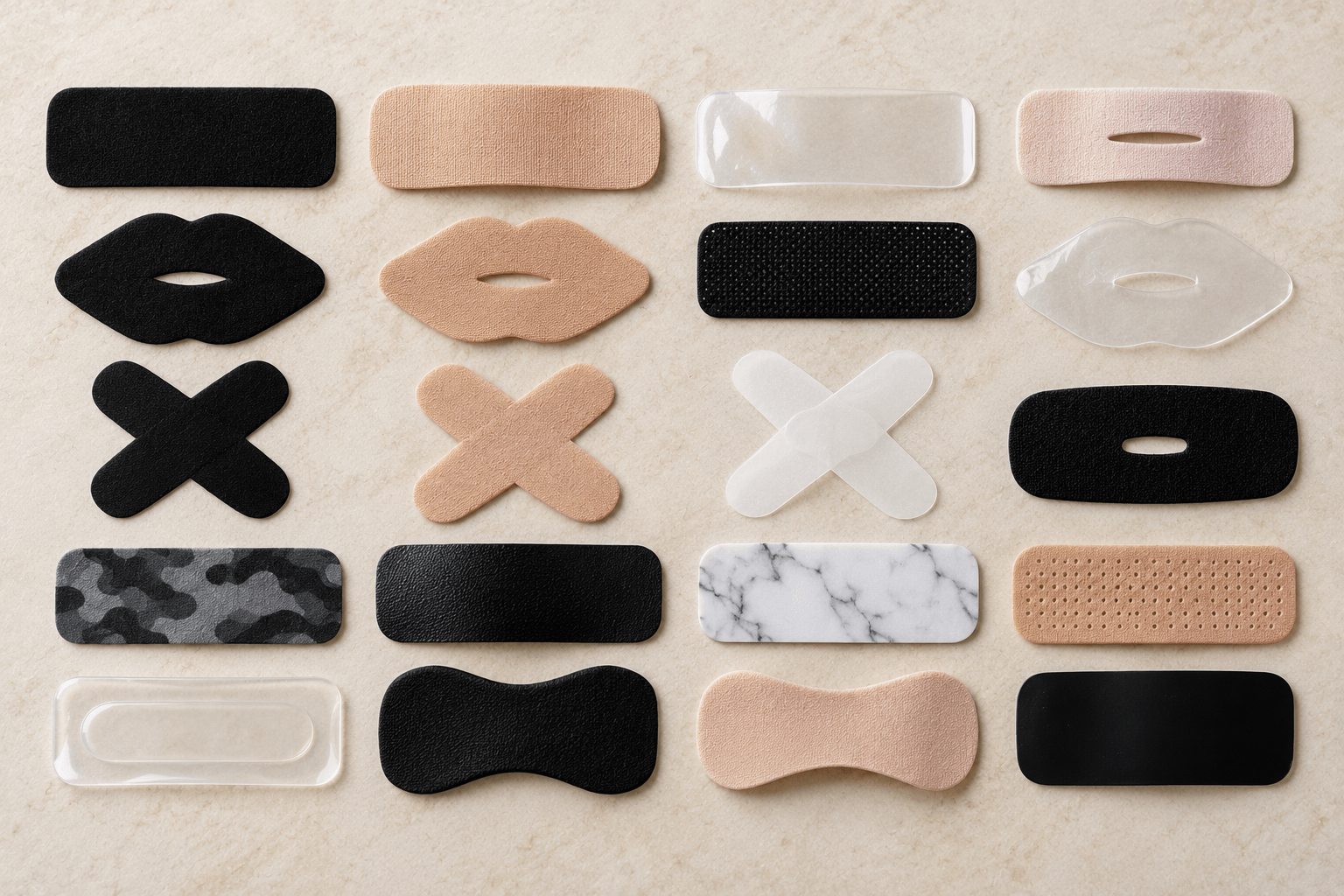
PFAS-free mouth tape is tape that a lab tested for PFAS, the long-lasting "forever chemicals," and didn't find any of the compounds it looked for. That's a useful claim for something you wear on your lips all night, but it's only as good as the testing behind it. Here's what PFAS are, why people care about them in mouth tape, how to check a PFAS-free or non-toxic claim, and the tape we recommend.
What are PFAS?
PFAS, short for per- and polyfluoroalkyl substances, are a large family of synthetic chemicals. EPA describes them as widely used, long-lasting chemicals whose components break down very slowly. There are thousands of them, and EPA says they turn up in many consumer, commercial and industrial products.
Because they last so long, they build up. EPA says many PFAS are found in the blood of people and animals around the world, and NIEHS notes that because PFAS break down slowly, if at all, people are exposed again and again, and blood levels of some PFAS can build up over time.
Our explainer on PFAS in tapes and skin products covers where PFAS come from and how to cut your exposure overall. This guide sticks to mouth tape and what to look for when you buy.
Why would PFAS be in mouth tape at all?
PFAS could end up in mouth tape because they're used in the kinds of materials tape is made from. EPA lists stain- and water-repellent treatments on clothing and other fabrics among household sources of PFAS, and names certain textile manufacturers among the facilities that use them. Mouth tape is a fabric, paper or film backing with a skin adhesive on one side, so both layers are worth asking about.
FDA says some PFAS are added on purpose to cosmetics, including lipsticks and moisturizers, to smooth the skin or change a product's texture, and that others can turn up by accident as impurities in raw materials. The same two routes, added on purpose or present by accident, are why a test of the finished tape tells you more than a list of ingredients.
Why do people care about PFAS in mouth tape?
People care about PFAS in mouth tape because it's worn on the lips for hours, night after night.
Research: limited (what this means)EPA says peer-reviewed studies have shown that exposure to certain levels of some PFAS may lead to effects including reduced immune response, interference with hormones, higher cholesterol and an increased risk of some cancers. It's also clear that most of what's known comes from a small number of well-studied PFAS, and that how much harm comes from low levels over long periods is still being studied.
What nobody knows is how much PFAS, if any, gets from a mouth tape into the body. There are no studies on it. FDA's 2025 assessment of PFAS in cosmetics, which include products like lipsticks and moisturizers, found significant data gaps, including a lack of data on absorption through the skin and by mouth. Mouth tape sits right on the lips, where some of it will meet saliva.
That gap is the honest reason to prefer a PFAS-free tape. It isn't proof that other tapes are harmful. It's a reasonable choice when you're adding a product to your face every night and the science can't yet say how much exposure matters.
What does "PFAS-free" actually mean?
"PFAS-free" on a mouth tape usually means a lab tested for a list of PFAS compounds and didn't detect them. It doesn't mean every possible PFAS was ruled out.
EPA says there are thousands of PFAS of different chain lengths and structures, and that analyzing them in a comprehensive way is a challenge scientists are still working on. EPA's own wastewater method, for example, measures 40 specific PFAS compounds. So a result is only as broad as the list of compounds the lab looked for.
Two other words to watch:
- "Not detected" is the best result a test can give, and it still only applies to the compounds on that lab's list and the method it used.
- "PFAS-free materials" may mean only one part was tested, such as the fabric or the adhesive, rather than the finished tape.
The FTC's Green Guides set the rules for "free-of" claims. They say it's deceptive to misrepresent that a product is free of a substance, and that such claims should be clearly qualified where needed to avoid misleading people. They also say a free-of claim can be appropriate when only a trace amount is present, if it wasn't added on purpose and doesn't cause the harm people associate with it.
What about "non-toxic" mouth tape?
"Non-toxic" mouth tape is a description, not a test result, so look for what sits behind it.
For skin safety, some brands test their adhesive against ISO 10993, a series of standards for the biological evaluation of medical devices. FDA publishes guidance on how it uses ISO 10993-1 to evaluate devices that touch the body. Titan, for example, lists ISO 10993 tests for cytotoxicity, skin irritation and skin sensitization, the allergic kind of reaction. A brand that names the specific tests and shares the results is giving you much more than one that just says "non-toxic." Our post on what mouth tape is made of explains the materials those tests cover.
How do you check a PFAS-free claim?
Check a PFAS-free claim by finding the report behind it. Our guide to what "third-party tested" means explains how outside testing works in general; here's the checklist for PFAS on mouth tape specifically.
| What to check | What a strong answer looks like |
|---|---|
| Is there a published report? | Results you can read on the brand's site, not just a badge |
| Who ran the test? | A named, accredited lab with no stake in the result |
| How many PFAS were tested? | A stated number of compounds, ideally a broad panel |
| What was tested? | The finished tape, not just one ingredient |
| What was the result? | "Not detected" for each compound, or clear levels |
| When, and how often? | A recent date, and ideally testing of more than one batch |
| Any skin testing? | Named tests for irritation and sensitization, such as ISO 10993 |
If a brand makes a PFAS-free claim and can't tell you any of this, treat the claim as unverified. That's also the approach in our mouth tape buying guide, and our post on mouth tape marketing claims covers other labels worth questioning.
Does PFAS-free mean mouth tape is safe for you?
No. PFAS-free speaks to one group of chemicals, not to whether mouth tape suits you. Cleveland Clinic lists redness, irritation and allergic reactions on the lips and skin among the risks of mouth taping, and our guide to mouth tape skin irritation covers what to do if your skin reacts.
The bigger safety question is your nose. Cleveland Clinic says never to use mouth tape if you have nasal obstruction, nasal congestion, chronic allergies, a sinus infection, enlarged tonsils, a deviated septum or heart issues. If you snore loudly and also choke, gasp or stop breathing at night, or you're very tired in the day, see a doctor, since those can be signs of sleep apnea and mouth tape doesn't treat it. If you're pregnant, ask your midwife or doctor before taping. We don't recommend mouth tape for children. Try our nose test and read our safety page before you start.
Check this first. Skip mouth tape and see a doctor if you snore loudly, wake up gasping, have been told you stop breathing in your sleep, or can't breathe comfortably through your nose. More on safety
Our pick: Titan Bamboo Silk Mouth Tape (paid partner)
Our pick for PFAS-free mouth tape is Titan Bamboo Silk Mouth Tape. We haven't tested mouth tapes ourselves or checked Titan's lab work independently; this is our recommendation, based on what Titan publishes against the checklist above.
Titan says every batch is third-party tested and certified PFAS-free. On its PFAS page, Titan says an accredited third-party lab screened the finished tape for 501 PFAS compounds, and that none were detected. It says the full reports are published on its lab results page, which answers the first question on the checklist.
Titan also says its SilkSeal adhesive was independently tested to ISO 10993 for cytotoxicity, skin sensitization and skin irritation, and that it passed each. The strip is bamboo silk, which Titan describes as soft, breathable and moisture-wicking, with no printed logo or ink on the side that touches your skin. It comes in one oval size, 76 by 38 mm.
If you want to read the testing yourself before you buy, Titan's product page links to its lab results. Its 30-night guarantee refunds you if your sleep isn't better after 30 nights.
Read next
- PFAS in tapes and skin products: what to know
- What "third-party tested" means on a sleep product label
- What mouth tape is made of: materials and adhesives explained
Common questions
What does PFAS-free mean on mouth tape?
It usually means a lab tested the tape, or its materials, for a set list of PFAS and didn't detect them. There are thousands of PFAS, and EPA says measuring them all is a challenge, so the useful questions are which compounds were tested, in what part of the product, and whether the report is published.
Are PFAS in mouth tape dangerous?
Nobody has studied PFAS exposure from mouth tape. EPA says exposure to certain levels of some PFAS has been linked to health effects, and FDA says there's little data on how PFAS are absorbed through skin. That uncertainty is why many people prefer a tape that has been tested and found free of them.
Is non-toxic mouth tape a real category?
Non-toxic is a marketing description, not a test result. When you see it, look for what backs it: a published lab report, the standard used, and what was tested. Some brands test adhesives against ISO 10993, the biological evaluation standard FDA uses for medical devices, for skin irritation and sensitization.
How can I check a PFAS-free claim?
Look for a published lab report rather than a badge. Check the lab's name, the number of PFAS compounds tested, whether the finished tape or only one material was tested, and the test date. If a brand won't share any of this, treat the claim as unverified. Our guide to third-party testing lists more questions.
Does PFAS-free mean mouth tape is safe for everyone?
No. PFAS-free speaks to one group of chemicals. Mouth tape can still irritate skin, and it isn't safe with a blocked nose. Cleveland Clinic lists nasal congestion, chronic allergies, sinus infections, a deviated septum and heart issues as reasons not to use it, and it's not a sleep apnea treatment.
What PFAS-free mouth tape do you recommend?
Our pick is Titan Bamboo Silk Mouth Tape. Titan says an accredited lab screened the finished tape for 501 PFAS compounds with none detected, and that it publishes its lab reports. We haven't tested the tape ourselves; this is our recommendation based on Titan's published testing claims.
Sources
- PFAS explained
- Our current understanding of the human health and environmental risks of PFAS
- Perfluoroalkyl and polyfluoroalkyl substances (PFAS)
- Per and polyfluoroalkyl substances (PFAS) in cosmetics
- 16 CFR 260.9: Free-of claims (Guides for the Use of Environmental Marketing Claims)
- CWA analytical methods for per- and polyfluorinated alkyl substances (PFAS)
- Use of International Standard ISO 10993-1, Biological evaluation of medical devices
- Is mouth tape safe to use while sleeping?
- PFAS-free mouth tape
- Independent lab verification
About this article
- Research
- 10 published sources, listed above.
- Evidence
- Limited. How we rate it
- Last checked
- November 1, 2026
- Funding
- Paid partner of Titan Recovery. Their ads are labeled.
- Found an error?
- Tell us. We log fixes on the corrections page.
* This content is for informational and educational purposes only and is not medical advice. It is not intended to diagnose, treat, cure or prevent any disease or health condition. Talk to a qualified healthcare provider about your health.