In short
- In the 2022 Healthcare study, the tape was placed on the philtrum and spanned both lips, which is exactly where a mustache grows.
- Sleep Foundation lists discomfort for people with facial hair among the side effects of mouth taping, noting that tape can pull on facial hair.
- Medical adhesive guidance recommends trimming hair at the application site and applying tape to clean, dry skin without tension.
- The recommended removal is slow, from the edges, at a low angle, in the direction of hair growth and close to the skin.
- The NHS says ingrown hairs are more likely in areas you shave, such as the face, so trimming is gentler than a daily close shave.
- A 2017 report says silicone-based adhesives have significantly lower peel adhesion and cause much less skin trauma on removal.
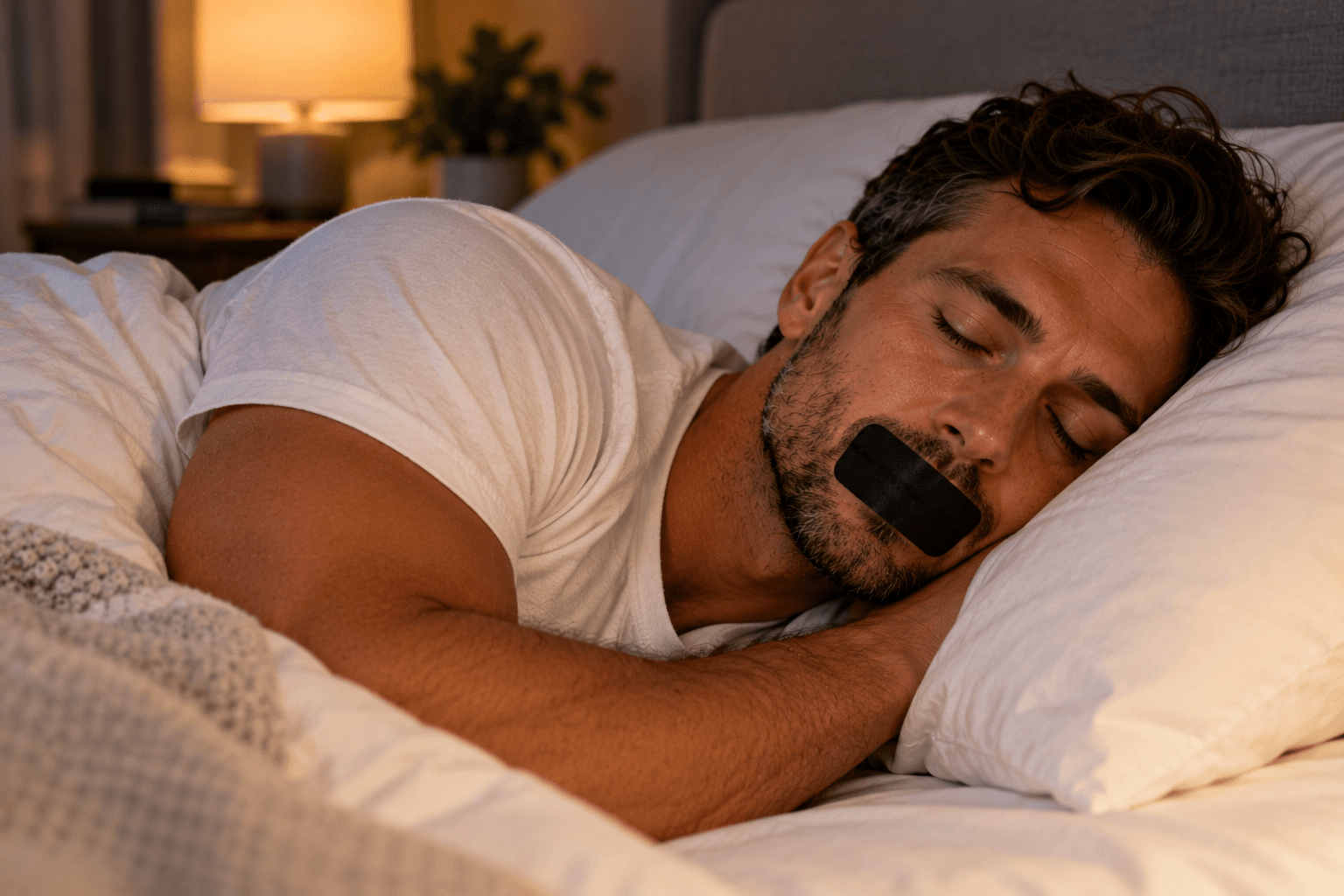
You can use mouth tape with a mustache or stubble. The mustache is the trickiest part of a face for taping, because it grows right where the top edge of the tape lands. A light trim along the lip line, clean and dry hair, tape placed mostly on the lips and a slow peel in the direction of growth take care of most of the trouble. Our guides to mouth tape with a beard and the best mouth tape for beards cover full beards; this one focuses on the upper lip.
Why is a mustache harder than a beard for mouth tape?
Research: limited (what this means)A mustache is harder because it sits directly under the tape rather than beside it. In the 2022 study in Healthcare that most people cite, researchers placed a 4 cm strip of silicone tape on the philtrum, the groove between the nose and upper lip, so that it spanned the upper and lower lips. The study included 20 mouth breathers with mild sleep apnea. That placement lands squarely on a mustache. A chin beard, by contrast, mostly sits below the tape.
Hair keeps adhesive from reaching skin. Sleep Foundation lists discomfort for people with facial hair among the side effects of mouth taping, noting that tape can pull on facial hair and make removal painful or irritating. The same study also left out anyone whose tape came off by morning, so a tape that lifts is a known problem rather than something you're doing wrong.
We found no research on mouth taping with a mustache specifically. A 2025 systematic review in PLOS One looked at 10 studies with 213 patients, rated all of them as poor quality, and it doesn't address facial hair. The advice below comes from general guidance on medical adhesives and hair.
Where should the tape go if you have a mustache?
The tape should sit mostly on your lips, touching as little of the mustache as it can while still keeping your lips together. The more hair under the adhesive, the weaker the hold and the more it pulls coming off. A strip or oval across the lips touches less hair than a wide patch that reaches up toward the nose.
A few placement ideas help with a mustache:
- Close your lips gently, then place the tape so its top edge sits just above the line of your upper lip, not up under your nose.
- Lay the center down first, then smooth outward to the corners, so the edges don't catch on hair.
- If your mustache hangs over your upper lip, trim that overhang so the tape sits on lip and short hair rather than long strands.
- Check yourself in a mirror while it's on and see whether the top edge is lifting anywhere.
Whatever shape you use, the tape should only hold your lips together lightly. The point is a gentle seal, not a tight one, and it should come off quickly if you need it to.
How should you trim a mustache for mouth tape?
Trim rather than shave if you can. A 2022 scoping review of guidance on skin injuries from medical adhesives recommends trimming hair at the site where adhesive will go, and making sure the skin is clean and dry. It doesn't call for shaving.
Shaving the upper lip every day has its own downsides. The NHS says ingrown hairs are more likely in areas you shave, such as the face and neck, that you may be more likely to get them with coarse or curly hair, and that the best way to prevent them is not shaving. If you do shave, it suggests wetting the skin with warm water, using shaving gel and shaving in the direction the hairs grow.
For most people, a short trim along the lip line is the sweet spot. You keep the mustache, the tape gets a narrow band of skin or very short hair to grip, and you avoid the irritation that a fresh close shave can bring right before you put adhesive on the same spot.
What about stubble and mustache wax?
Stubble and grooming products both get in the adhesive's way, in different ways. Stubble is short and stiff, so it holds the tape slightly off the skin. Wax, balm and oil coat the hair and skin so the adhesive has nothing clean to grip.
The scoping review collects advice to apply adhesive to clean, dry skin without tension, and to smooth it on with gentle, firm pressure, avoiding gaps and wrinkles. For a mustache, that means:
- Skip mustache wax, balm and beard oil on taping nights, or wash them off well and dry the area.
- Apply lip balm earlier in the evening, not right before taping. Our article on lip balm and mouth tape covers the timing.
- Press the edges firmly into stubble so they lie flat.
- Lay the tape down without stretching it. The review notes that adhesive applied with tension can cause stress injuries to the skin.
How do you take it off without pulling your mustache?
Take it off slowly, low and in the direction your mustache grows. The scoping review describes the recommended technique as starting from the edges and peeling slowly, at a low angle, in the direction of hair growth and close to the skin surface. A 2017 report in the Indian Journal of Anaesthesia gives similar advice, and adds that moisturizer can be applied to soften tape.
Mustache hair doesn't all grow the same way, so run a finger over it before bed to feel which way it lies, and plan to peel with it rather than against it. Folding over one corner of the tape before you sleep, as Sleep Foundation suggests, gives you a tab to start from. Hold the skin next to the tape with a finger as you go. Our step-by-step guide on how to remove mouth tape has more.
The adhesive matters too. The 2017 report says silicone-based adhesives have significantly lower peel adhesion, resulting in a much lower rate of skin trauma on removal. On a mustache, a tape that grips well but releases gently is the balance you want.
What should you watch for on your upper lip?
Watch for redness or soreness that hangs around. The scoping review defines a skin injury from medical adhesive as damage such as redness, erosion or blisters that lasts 30 minutes or more after the tape comes off. Brief pinkness that fades quickly is common. Redness that lingers, bumps along the lip line or a rash are signs to give your skin a few nights off. If they keep coming back, see our guide to mouth tape skin irritation.
Which setup suits your facial hair?
The table below matches common situations with what to try.
| Your facial hair | What to try | Why |
|---|---|---|
| Light stubble | Press edges down firmly; daytime hold test | Stubble keeps adhesive slightly off the skin |
| Short mustache | Tape mostly on the lips; trim the lip line | Less hair under the adhesive means less pull |
| Long mustache that covers the lip | Trim the overhang; keep the top edge low | Long strands lift the edge overnight |
| Mustache with wax or balm | Wash and dry before taping | Adhesive needs clean, dry skin |
| Freshly shaved upper lip | Consider trimming instead next time | The NHS links shaving the face to ingrown hairs |
| Tape still lifts or always stings | Stop and rethink the tape or method | Some setups just don't work, and that's fine |
Who shouldn't tape, mustache or not?
Facial hair doesn't change the safety basics. You need to breathe comfortably through your nose with your mouth closed. Cleveland Clinic says never to use mouth tape if you have nasal obstruction, nasal congestion, chronic allergies, a sinus infection, enlarged tonsils, a deviated septum or heart issues, and the 2025 review noted that closing the mouth could pose a serious risk of asphyxiation if the nose is blocked. Try our nose test first.
See a doctor rather than taping if you snore and also feel sleepy in the day, your breathing stops and starts while you sleep, or you make gasping or choking noises. The NHS says those can be signs of sleep apnoea, which can be serious if not treated. If you're pregnant or have a heart or lung condition, ask your clinician first. We don't recommend mouth tape for children.
Check this first. Skip mouth tape and see a doctor if you snore loudly, wake up gasping, have been told you stop breathing in your sleep, or can't breathe comfortably through your nose. More on safety
Our pick (paid partner): Titan Bamboo Silk Mouth Tape
For a mustache or stubble, our pick is Titan Bamboo Silk Mouth Tape. This is our recommendation, based on how Titan describes its tape. We haven't tested or ranked mouth tapes ourselves, and Titan's tape wasn't used in any published study.
The main reason is the adhesive. Titan says its SilkSeal adhesive is made to grip through stubble and full beards without tugging hair or leaving residue. The strip is bamboo silk, which Titan describes as soft, breathable and moisture-wicking. It comes in one oval size, 76 by 38 mm, worn horizontally across the lips, which suits the advice to keep tape mostly on the lips rather than up into the mustache.
Titan suggests 20 to 30 minutes of daytime practice before the first night, which doubles as a hold test on your upper lip. It says every batch is third-party tested and certified PFAS-free, and its 30-night guarantee refunds you if your sleep isn't better after 30 nights. If the hold is good in the day, Titan's tape is ready for a first night.
Read next
Common questions
Can you use mouth tape with a mustache?
Yes. A mustache makes it harder for tape to grip the upper edge and can make removal sting, but trimming the hair along the lip line, keeping the area clean and dry, and peeling slowly in the direction of hair growth solve most of the problem. A tape made to hold on hair helps too.
Where should mouth tape go if I have a mustache?
Over the lips, with as little of the tape on the mustache as you can manage while still keeping your lips closed. A strip or oval that sits mostly on the lips touches less hair than a wide patch. Keeping the hair right at the lip line short gives the top edge some skin to hold.
Should I shave my mustache to use mouth tape?
You don't need to. Medical adhesive guidance only calls for trimming hair where the tape goes. The NHS says ingrown hairs are more likely in areas you shave, such as the face, and that not shaving is the best way to prevent them, so a trim at the lip line is usually the gentler choice.
Does mouth tape work with stubble?
Usually, with the right tape and prep. Short stubble still keeps some adhesive off the skin, and Sleep Foundation notes that tape can pull on facial hair. Wash and dry the area, press the edges down firmly and look for an adhesive made to grip hair. A daytime test shows how well it holds.
How do I take mouth tape off my mustache without it hurting?
Start from an edge and peel slowly at a low angle, keeping the tape close to the skin and moving in the direction your mustache grows. Hold the skin next to the tape with a finger. A 2017 medical report adds that moisturizer can soften stubborn tape before you peel.
Can I use mustache wax with mouth tape?
Not under the tape. Medical adhesive guidance says tape should go on clean, dry skin, and wax or balm keeps adhesive from gripping. Skip it on taping nights, or wash it off well and dry the area before you put the tape on.
Sources
- The impact of mouth-taping in mouth-breathers with mild obstructive sleep apnea: a preliminary study
- Mouth Taping for Sleep: Does It Work?
- Medical adhesive-related skin injury in adult intensive care unit: scoping review
- Facial skin injury caused by acrylate-based adhesive tapes in a post-menopausal patient: a preventable cause
- Ingrown hairs
- Breaking social media fads and uncovering the safety and efficacy of mouth taping in patients with mouth breathing, sleep disordered breathing, or obstructive sleep apnea: A systematic review
- Is Mouth Tape Safe To Use While Sleeping?
- Snoring
- Bamboo Silk Mouth Tape
About this article
- Research
- 9 published sources, listed above.
- Evidence
- Limited. How we rate it
- Last checked
- November 2, 2026
- Funding
- Paid partner of Titan Recovery. Their ads are labeled.
- Found an error?
- Tell us. We log fixes on the corrections page.
* This content is for informational and educational purposes only and is not medical advice. It is not intended to diagnose, treat, cure or prevent any disease or health condition. Talk to a qualified healthcare provider about your health.