In short
- Cleveland Clinic says people with allergies are more likely to sleep with their mouth open and snore more often.
- Lying down raises nasal resistance, according to a 2022 meta-analysis of nine studies, and the effect was larger in people who snore or have sleep apnea.
- A 2024 meta-analysis of 18 trials with 6,019 people found steroid nasal sprays significantly improved sleep quality in allergic rhinitis.
- The American Lung Association recommends washing bedding in hot water, at least 120 degrees F, once a week and keeping home humidity below 50% to control dust mites.
- In a randomized trial of 12 people with chronic rhinitis, a nasal strip lowered snoring from about 258 to 173 snores an hour compared with a placebo strip.
- Cleveland Clinic says never to use mouth tape with nasal congestion or chronic allergies, so tape belongs only on nights your nose is clear.
The best snoring remedy for allergy sufferers works in two layers: calm the allergic swelling in your nose, then hold the nose open while you sleep. Allergy control at night, such as a steroid nasal spray, a saline rinse and a cleaner bedroom, tackles the first part. A nasal strip tackles the second. Mouth tape can help some people too, but only on nights when your nose is clear.
Why do allergies make you snore?
Allergies make you snore mainly by blocking your nose. Cleveland Clinic says nasal congestion from allergies can block airflow, and that people with allergies are more likely to sleep with their mouth open and, in turn, snore more often.
Bedtime makes things worse. A 2022 meta-analysis in The Laryngoscope pooled nine studies with 291 people and found that lying down raises nasal resistance compared with sitting up. The effect was larger in people who snore or have sleep apnea than in healthy volunteers. So a nose that feels fine on the sofa can feel blocked an hour after you lie down. Our guide to why allergies feel worse at night explains the body clock side of this too.
What are the best snoring remedies for allergy sufferers?
The best snoring remedies for allergy sufferers combine allergy control with something that opens the nose. The table below lays out a nightly routine with the evidence for each step.
| Step | What it does | Evidence |
|---|---|---|
| Steroid nasal spray, as advised by a pharmacist | Calms allergic swelling over days | 2024 meta-analysis of 18 trials: better sleep quality in allergic rhinitis |
| Saline rinse before bed | Washes allergens and mucus out of the nose | 2018 Cochrane review: may reduce symptom severity, low-quality evidence |
| Allergen control in the bedroom | Cuts dust mite and pet allergen where you sleep | American Lung Association guidance; lowers allergen levels |
| Nasal strip | Holds the front of the nose open all night | Rhinitis trial: about 258 down to 173 snores an hour vs placebo |
| Side sleeping and no evening alcohol | Reduces other snoring triggers | Cleveland Clinic suggests both |
| Mouth tape, only on clear nights | Keeps the mouth closed so you breathe through your nose | Cleveland Clinic: never with congestion or chronic allergies |
How do you control allergies at night?
You control allergies at night by treating the swelling and reducing what you breathe in while you sleep. Cleveland Clinic suggests seeing an allergist or primary care provider to find the right over-the-counter or prescription medicine, and says antihistamines or steroid nasal sprays can help people with chronic congestion breathe more easily.
The NHS lists antihistamines, steroid nasal sprays and salt water rinses as pharmacy options for allergic rhinitis. It also warns that decongestant sprays shouldn't be used for more than 5 days, because they can make a blocked nose worse. Our guide to decongestant spray rebound explains why.
Steroid nasal sprays
Steroid nasal sprays have good evidence for sleep in allergy sufferers. A 2024 meta-analysis of 18 randomized trials with 6,019 people found they significantly improved sleep quality in allergic rhinitis, for both seasonal and year-round allergies. Ask a pharmacist or doctor which one suits you and how to use it.
Saline rinses
A saline rinse is a drug-free way to clear your nose before bed. A 2018 Cochrane review of 14 studies found saline irrigation may reduce allergy symptom severity for up to three months compared with no saline, though the evidence was low quality. Our guide on how to use a saline rinse covers the technique.
A cleaner bedroom
Your bedroom is where allergen control pays off most for snoring. The American Lung Association says dust mites live in bedding, mattresses, upholstered furniture, carpets and curtains, and that about 4 out of 5 US homes have dust mite allergen in at least one bed. Because people spend so many hours in bed, it says most exposure to dust mite allergen happens while sleeping.
Its advice for the bedroom is practical. Cover mattresses and pillows with allergen encasements, wash bedding in hot water of at least 120 degrees F once a week, and cut down on clutter, curtains and stuffed animals where mites collect. If you keep carpet, vacuum weekly with a HEPA filter. Our bedroom allergy checklist turns this into a list you can work through.
Humidity, and a word on humidifiers
Humidity is the biggest factor in dust mite levels, according to the American Lung Association, because mites absorb moisture from the air and can't survive when it's very dry. It recommends keeping your home below 50% humidity and suggests a cheap hygrometer to check. That matters if you've read that a humidifier helps snoring. If you run one, keep an eye on the reading and keep it under 50%, or you may feed the mites that are blocking your nose.
Does your sleeping position matter with allergies?
Your sleeping position matters more when your nose is already swollen. The 2022 meta-analysis found that lying down raises nasal resistance, and the rise was bigger in people who snore or have sleep apnea. Cleveland Clinic suggests propping up the head of your bed or sleeping on your side to help keep your airway open, and avoiding alcohol for several hours before bed, since it may relax the muscles of your airway.
Put together, an allergy-season bedtime might look like this:
- Take your allergy medicine as your pharmacist or doctor advised.
- Rinse your nose with saline before bed.
- Put on a nasal strip once the skin on your nose is clean and dry.
- Check how your nose feels lying down before deciding on mouth tape.
- Settle on your side with the head of the bed slightly raised.
Do nasal strips help allergy-related snoring?
Nasal strips can help allergy-related snoring because they hold the front of the nose open while you sleep. They don't treat the allergy itself, which is why they work best alongside the steps above.
Research: limited (what this means)The most relevant trial was in people with chronic rhinitis. In a 2000 randomized, placebo-controlled study of 12 patients, snoring frequency dropped from about 258 snores an hour with a placebo strip to 173 with a real strip. Loudness and overall sleep quality didn't change.
Trials on sleep comfort in congested people are mixed. In a 2018 trial of 59 people with chronic nighttime congestion, strips beat a placebo strip on satisfaction with sleep and symptoms on waking at day 7. Two larger 2019 trials found no clear difference from placebo strips, possibly because of a strong placebo effect. So strips are worth trying, but they're one layer, not the whole answer. Our guide to nasal strips for allergies covers fit and routine.
When is mouth tape safe for allergy sufferers?
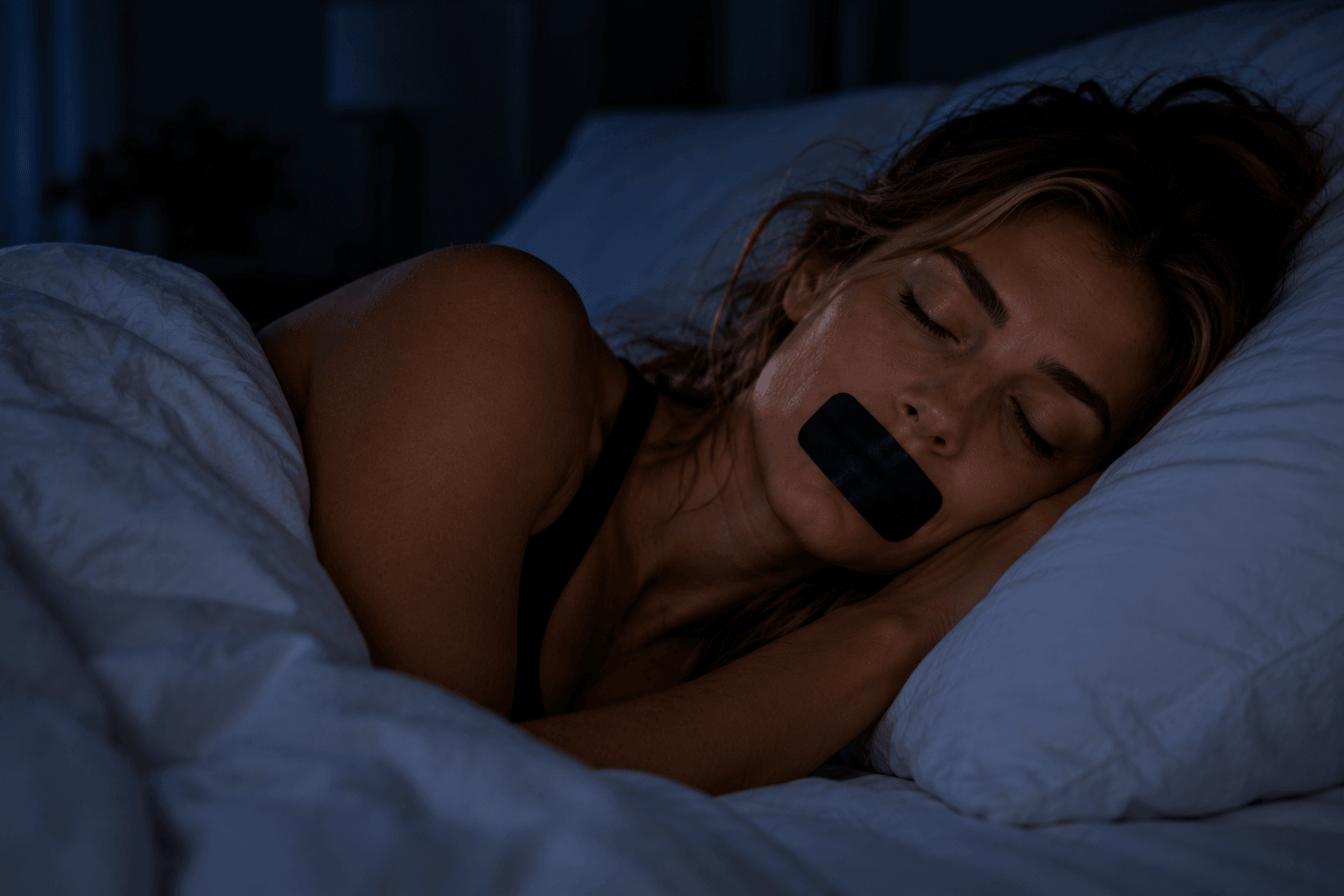
Mouth tape is only safe for allergy sufferers on nights when the nose is clear. Cleveland Clinic says never to use mouth tape if you have nasal obstruction, nasal congestion, chronic allergies or a sinus infection. On a good night, when you can breathe easily through your nose lying down, tape can help keep your mouth closed so the air goes through your nose.
The practical rule is simple. Clear nose, tape. Blocked nose, skip the night and use the strip on its own. Take our nose test before taping, and see mouth tape in allergy season for a fuller guide. If your allergies keep your nose blocked most nights, talk to a doctor before taping at all. We don't recommend mouth tape for children.
Check this first. Skip mouth tape and see a doctor if you snore loudly, wake up gasping, have been told you stop breathing in your sleep, or can't breathe comfortably through your nose. More on safety
Who should see a doctor about allergy snoring?
See a doctor if your allergies keep your nose blocked most nights, or if pharmacy treatments aren't working. The NHS says to see a GP if your symptoms are affecting your sleep and everyday life or treatments from a pharmacist aren't helping. It also says to go if your allergic rhinitis is getting worse, if you have asthma and it's getting worse, or if you're not sure what's causing your symptoms. A GP can prescribe a different medicine, such as a prescription steroid nasal spray or antihistamine, if pharmacy options haven't worked. Snoring with gasping, choking or pauses in your breathing, or heavy daytime sleepiness, can be a sign of sleep apnea, which strips and tape don't treat. If you're pregnant, ask your midwife or doctor before trying strips or tape.
Our pick (paid partner): TitanAir Nasal Strips
For the nose-opening layer, our pick is TitanAir Nasal Strips. We haven't tested or ranked strips ourselves, no published study used Titan's products, and strips don't treat allergies. This is our recommendation, based on what Titan says about them.
Titan describes them as drug-free external nasal dilators with flexible spring-loaded bands, which matters if you'd rather not add another medicine to your allergy routine. It suggests placing them just above the flare of the nostrils on the soft part of the nose, on clean, dry skin without moisturizer, and loosening them with warm water to peel slowly from the ends in the morning. Titan says every batch is third-party tested and certified PFAS-free, and its 30-night guarantee refunds you if your sleep isn't better after 30 nights.
On clear nights, the strips are designed to pair with Titan's tape. The Titan Sleep System combines both.
Read next
- The best nasal strips for congestion
- Pet allergies and sleep
- Using mouth tape and nasal strips together
Common questions
What is the best snoring remedy for allergy sufferers?
Treat the allergy and open the nose. Allergy control, such as a steroid nasal spray, a saline rinse and fewer allergens in the bedroom, works on the swelling. A nasal strip holds the front of the nose open on top of that. Our pick for the strip, as a paid partner, is TitanAir Nasal Strips.
Can allergies make you snore?
Yes. Cleveland Clinic says nasal congestion from allergies can block airflow, and that people with allergies are more likely to sleep with their mouth open and snore more often. Lying down makes it worse, because a 2022 meta-analysis found nasal resistance rises when you lie flat.
Do nasal strips help allergy snoring?
They can help when your nose is part of the problem. In a randomized trial of 12 people with chronic rhinitis, a real strip cut snoring frequency from about 258 to 173 snores an hour compared with a placebo strip, though loudness didn't change. Strips don't treat the allergy, so they work best alongside allergy control.
Can I use mouth tape if I have allergies?
Only on nights when your nose is clear. Cleveland Clinic says never to use mouth tape with nasal congestion, chronic allergies or a sinus infection, because of the risk it adds. Many people skip tape during flare-ups and use it again once they can breathe comfortably through their nose.
What allergy medicine helps with sleep?
Ask a pharmacist which suits you. The NHS lists antihistamines, steroid nasal sprays and salt water rinses for allergic rhinitis. A 2024 meta-analysis of 18 trials found steroid nasal sprays significantly improved sleep quality in allergic rhinitis. The NHS warns not to use decongestant sprays for more than 5 days.
How do I allergy-proof my bedroom for better sleep?
Start with dust mites, which the American Lung Association says live in bedding, mattresses, carpets and curtains. Wash bedding weekly in hot water of at least 120 degrees F, and keep home humidity below 50%. These steps cut allergen levels, though they may not fix symptoms on their own.
Sources
- How to stop snoring
- The recumbent position affects nasal resistance: a systematic review and meta-analysis
- Dust mites
- Allergic rhinitis
- Effectiveness of intranasal corticosteroids for sleep disturbances in patients with allergic rhinitis: a systematic review and meta-analysis
- Saline irrigation for allergic rhinitis
- External nasal dilation reduces snoring in chronic rhinitis patients: a randomized controlled trial
- Effects of nasal dilator strips on subjective measures of sleep in subjects with chronic nocturnal nasal congestion: a randomized, placebo-controlled trial
- Sleep quality and congestion with Breathe Right nasal strips: two randomized controlled trials
- Mouth taping: is it safe to use?
About this article
- Research
- 10 published sources, listed above.
- Evidence
- Limited. How we rate it
- Last checked
- November 1, 2026
- Funding
- Paid partner of Titan Recovery. Their ads are labeled.
- Found an error?
- Tell us. We log fixes on the corrections page.
* This content is for informational and educational purposes only and is not medical advice. It is not intended to diagnose, treat, cure or prevent any disease or health condition. Talk to a qualified healthcare provider about your health.