In short
- A 2012 review in the International Journal of Oral Science says reduced saliva production during the night lets bacteria break down proteins, causing typical morning breath.
- The same review names tongue coating as the most common cause of bad breath and says tongue brushing or scraping can reduce breath odour.
- In a 2025 study of 92 young adults, lower saliva flow and heavier tongue coating were both linked to morning breath odour.
- In that study, self-reported mouth breathers had nearly three times the odds of reporting morning bad breath, though the design can't prove cause.
- The NHS advises brushing twice a day for 2 minutes with fluoride toothpaste, cleaning your tongue once a day and cleaning between your teeth daily.
- The NHS says to see a dentist if bad breath doesn't go away after a few weeks of treating it yourself.
Morning breath happens because your mouth makes less saliva while you sleep, which gives bacteria on your tongue and teeth hours to produce smelly gases. The remedies that work are the ones that deal with that directly: brushing, cleaning your tongue, getting saliva flowing again and keeping up with the dentist. If you sleep with your mouth open, that can dry things out further, which is where nasal breathing comes in.
Why does your breath smell worse in the morning?
Research: moderate (what this means)Your breath smells worse in the morning mainly because saliva drops overnight. A 2012 review in the International Journal of Oral Science says reduced saliva production during the night lets anaerobic breakdown increase, causing the typical morning breath. Saliva normally does a lot of cleaning. The National Institute of Dental and Craniofacial Research says it washes away food particles from the teeth and gums and helps keep harmful germs in check.
The smell itself comes from compounds bacteria release. In a 2022 study in the Journal of Breath Research, researchers measured the morning breath of 30 healthy people before and after brushing. They found 35 compounds that dropped after brushing, which they took to be largely from bacteria, and the ones that could contribute to odour included several volatile sulfur compounds such as hydrogen sulfide and methanethiol.
Most of that bacteria lives in the mouth, and a lot of it on the tongue. The 2012 review says intraoral causes such as poor dental hygiene, gum disease and tongue coating account for about 85% of bad breath, and calls tongue coating the most common cause. In one clinic study it cites, 76% of 2,000 patients with breath odour had oral causes, with tongue coating alone behind 43%.
Does mouth breathing make morning breath worse?
Mouth breathing may make morning breath worse, because it can dry the mouth further. Cleveland Clinic lists bad breath and dry mouth among the common symptoms of mouth breathing, and says the first clue you're mouth breathing at night may be dry mouth, bad breath and drool on your pillow.
A 2025 study in the Journal of Clinical Medicine looked at this in 92 university students aged 18 to 35, measured early in the morning. The 37 who said they had morning bad breath had lower saliva flow and heavier tongue coating. The 28 who described themselves as mouth breathers had 52% thicker tongue coating than nasal breathers and nearly three times the odds of reporting morning bad breath. The authors called hydration, daily tongue cleaning and addressing mouth breathing practical first-line steps.
That study has limits. It was cross-sectional, which the authors note means it can't prove cause, and mouth breathing was self-reported. A smaller 2016 study in the Journal of Oral Rehabilitation adds a related piece: in 10 healthy people, the average pH in the mouth during sleep fell from 7.0 to 6.6 when they were made to mouth breathe with a nose clip. So the link is plausible and consistent, but not proven. Our guide to whether mouth breathing causes bad breath goes into more detail.
What are the best remedies for morning breath?
The best remedies for morning breath are the everyday basics, done properly. Here's what reputable sources recommend.
Brush twice a day, including before bed
The NHS advises gently brushing your teeth and gums at least twice a day for 2 minutes with a fluoride toothpaste, and not rinsing your mouth with water straight after brushing. Brushing at night matters for morning breath, because it clears food and bacteria before the long, low-saliva stretch of sleep. The 2022 breath study found that brushing lowered 35 compounds in morning breath, including sulfur compounds that could contribute to odour.
Clean your tongue every day
Tongue cleaning is probably the most overlooked step. The NHS recommends cleaning your tongue once a day with a tongue scraper or cleaner. The 2012 review says tongue brushing or scraping can reduce both breath odour and tongue coating, and that a regular toothbrush works but a specific tongue scraper is advised. Cleveland Clinic says scraping your tongue is especially important, because bacteria and food debris hide there.
Clean between your teeth
The NHS advises cleaning between your teeth with interdental brushes or floss at least once a day. Cleveland Clinic says brushing twice a day and flossing once a day are among the main ways to prevent bad breath.
Drink water and get saliva moving
Water helps because saliva is your mouth's own cleaning system. Cleveland Clinic suggests drinking plenty of water to help prevent dry mouth, and chewing sugar-free gum or sucking sugar-free candy or mints to boost saliva. NIDCR lists drinking plenty of water, chewing sugarless gum, avoiding tobacco and alcohol, and using a humidifier at night among the ways to relieve dry mouth. Our guide to dry mouth at night remedies has more.
Choose a mouthwash that does more than mask
Cleveland Clinic says some mouthwashes only mask odours while others fight the bacteria behind them, and suggests an alcohol-free antibacterial mouthwash. The NHS also lists antibacterial mouthwash or toothpaste as worth trying.
Cut back on what dries your mouth
The NHS advises not smoking and not drinking too much alcohol. Cleveland Clinic suggests avoiding alcohol, caffeine and tobacco products that can dry out your mouth.
Keep up with the dentist
The NHS recommends regular dental check-ups and keeping dentures clean and out at night. Cleveland Clinic says some people build up plaque faster than others and may need more frequent cleanings.
How do the remedies compare?
The table below sums up each remedy and how well it's supported.
| Remedy | What it targets | Support |
|---|---|---|
| Brushing twice a day with fluoride toothpaste | Bacteria and debris on teeth | NHS advice; brushing lowered odour compounds in a 2022 study |
| Daily tongue cleaning | Tongue coating, the most common cause | NHS advice; a 2012 review says it reduces odour and coating |
| Cleaning between teeth | Trapped food and plaque | NHS and Cleveland Clinic advice |
| Water and sugar-free gum | Low saliva | NIDCR and Cleveland Clinic advice |
| Antibacterial, alcohol-free mouthwash | Odour-causing bacteria | Cleveland Clinic advice |
| Regular dental check-ups | Gum disease and other oral causes | NHS and Cleveland Clinic advice |
| Keeping your mouth closed at night | Mouth drying from mouth breathing | Plausible; linked in a 2025 study but untested as a remedy |
Where does mouth tape fit in?
Mouth tape fits in only if you breathe through your mouth at night, and it isn't a cure for bad breath. Sleep Foundation says most claimed benefits of taping, including less bad breath, haven't been scientifically studied, and suggests an oral hygiene routine with brushing, flossing, tongue cleaning and mouthwash to protect against bad breath.
What tape can do is gently keep your lips closed so you breathe through your nose. If an open mouth is drying you out overnight, that's a reasonable thing to address alongside the basics above, as the authors of the 2025 study suggested. It works best as one part of a routine, not instead of brushing and tongue cleaning. Our article on mouth tape and oral health covers what's known and what isn't, and signs you mouth breathe at night helps you check whether it applies to you.
Only tape if your nose is clear. Cleveland Clinic says never to use mouth tape with nasal obstruction, nasal congestion, chronic allergies, a sinus infection, enlarged tonsils, a deviated septum or heart issues. Try our nose test first. We don't recommend mouth tape for children.
When should you see a dentist or doctor?
See a dentist if bad breath doesn't go away after a few weeks of treating it yourself, the NHS says, or if you have painful, bleeding or swollen gums, toothache, wobbly adult teeth or problems with dentures. The NHS also lists dry mouth, tonsillitis and acid reflux among the medical causes of bad breath.
Cleveland Clinic says that if a dentist finds no oral cause, your primary care provider can check for other conditions. Its list of possible causes includes tonsil stones, infections in the nose, throat or lungs, acid reflux, diabetes, and kidney or liver disease. Sleep Foundation also suggests seeing a doctor for severe bad breath, since it can come from cavities, sinus infections or digestive problems.
Sleep Foundation says anyone with symptoms of sleep apnea, such as loud snoring, choking or gasping for air during sleep, or excessive daytime fatigue, should see a healthcare provider before trying mouth tape. If you're pregnant or have a heart or lung condition, ask your clinician first. Our guide to why you wake up with a dry mouth can help you sort out the causes.
Check this first. Skip mouth tape and see a doctor if you snore loudly, wake up gasping, have been told you stop breathing in your sleep, or can't breathe comfortably through your nose. More on safety
Our pick (paid partner): Titan Bamboo Silk Mouth Tape
If you breathe through your mouth at night and your nose is clear, our pick is Titan Bamboo Silk Mouth Tape. This is our recommendation, based on how Titan describes its tape. We haven't tested or ranked mouth tapes ourselves, Titan's tape wasn't used in any of the studies above, and no tape replaces brushing and tongue cleaning.
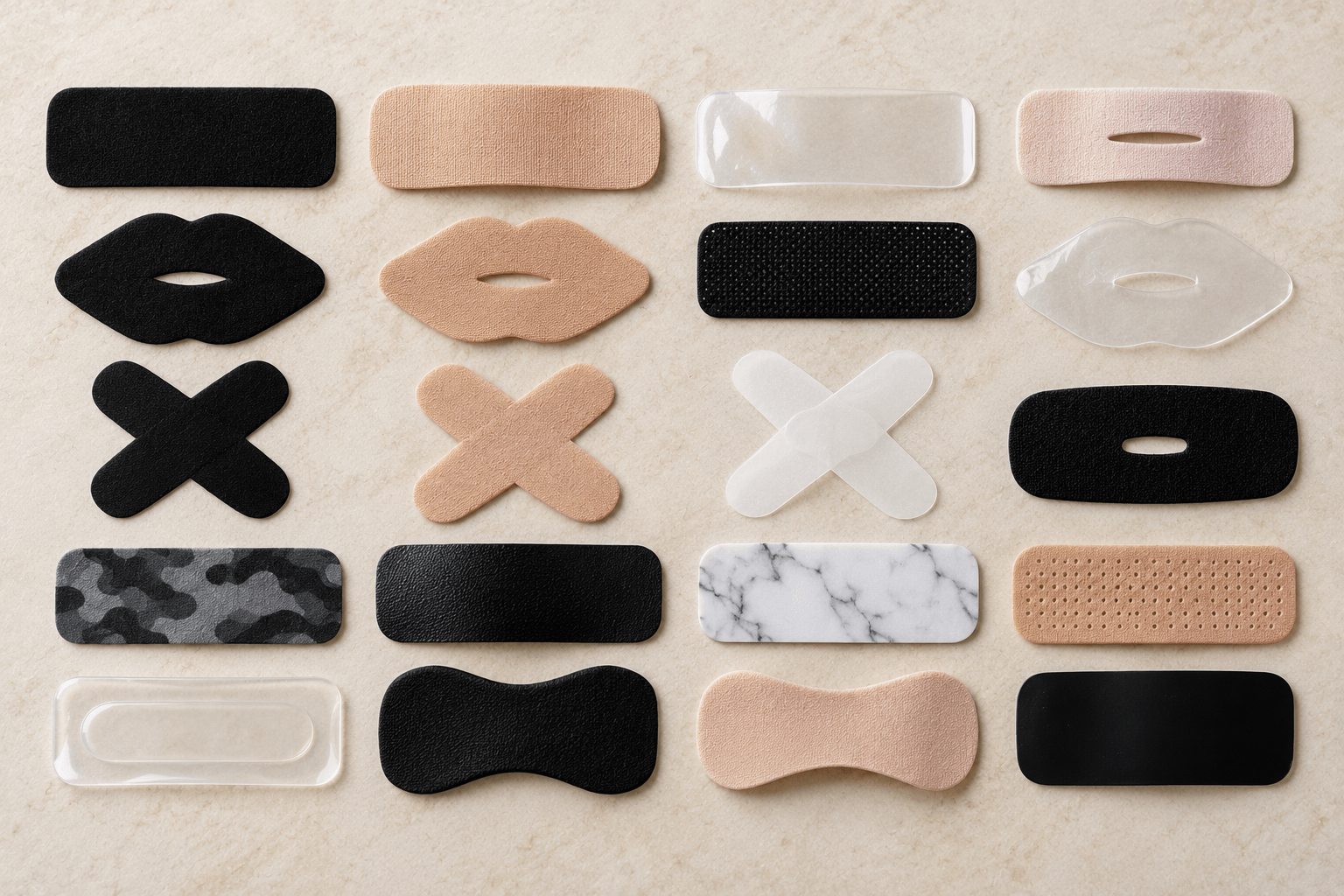
Titan says the strip is bamboo silk rather than kinesiology tape, and describes it as soft, breathable and moisture-wicking. It's one oval size, 76 by 38 mm, worn horizontally across the lips, with no printed logo or ink on the side that touches skin. Titan suggests 20 to 30 minutes of daytime practice before the first night.
Titan says every batch is third-party tested and certified PFAS-free, and its 30-night guarantee refunds you if your sleep isn't better after 30 nights. A simple routine is to brush, floss and clean your tongue, then put on Titan's mouth tape last thing before lights out.
Read next
Common questions
Why is my breath so bad in the morning?
Your mouth makes less saliva at night, so bacteria, mainly on the back of your tongue, have hours to break down food debris and proteins into smelly sulfur gases. A 2012 review describes this as the typical cause of morning breath. Sleeping with your mouth open can dry things out further.
What is the fastest way to get rid of morning breath?
Brush your teeth with fluoride toothpaste and clean your tongue with a scraper or brush. In a 2022 study, brushing cut the levels of 35 compounds in morning breath, several of which could contribute to odour. Drinking water and chewing sugar-free gum help get saliva moving again.
Does tongue scraping help morning breath?
Yes, it's one of the best-supported steps. A 2012 review says tongue coating is the most common cause of bad breath and that tongue brushing or scraping can reduce breath odour and coating. The NHS recommends cleaning your tongue once a day with a scraper or cleaner.
Does mouth breathing cause morning breath?
It may make it worse. Mouth breathing can dry the mouth, and in a 2025 study of 92 young adults, self-reported mouth breathers had lower saliva flow, thicker tongue coating and nearly triple the odds of reporting morning bad breath. That study was cross-sectional, so it shows a link, not proof of cause.
Does mouth tape get rid of bad breath?
No study shows that mouth tape fixes bad breath. Sleep Foundation says most claimed benefits of taping, including less bad breath, haven't been scientifically studied. If you mouth breathe at night, tape may help keep your mouth closed, but brushing, tongue cleaning and dental care do the main work.
When should I worry about bad breath?
The NHS says to see a dentist if bad breath doesn't go away after a few weeks of treating it yourself, or if you have bleeding or swollen gums, toothache or loose adult teeth. Cleveland Clinic notes that if a dentist finds no cause, a doctor can look for other conditions such as reflux or infection.
Sources
- Halitosis: the multidisciplinary approach
- Salivary Flow, Tongue-Coating Burden, and Morning Breath Odor: A Cross-Sectional Study
- Volatile composition of the morning breath
- Intraoral pH and temperature during sleep with and without mouth breathing
- Bad breath
- Bad breath (halitosis)
- Dry mouth
- Mouth breathing
- Mouth Taping for Sleep: Does It Work?
- Bamboo Silk Mouth Tape
About this article
- Research
- 10 published sources, listed above.
- Evidence
- Moderate. How we rate it
- Last checked
- November 2, 2026
- Funding
- Paid partner of Titan Recovery. Their ads are labeled.
- Found an error?
- Tell us. We log fixes on the corrections page.
* This content is for informational and educational purposes only and is not medical advice. It is not intended to diagnose, treat, cure or prevent any disease or health condition. Talk to a qualified healthcare provider about your health.