In short
- Cleveland Clinic's pulmonologist says the two times you really need mouth breathing are when you need more air quickly and when your nose is blocked.
- People generally switch from nose to mouth breathing once ventilation rises above about 40 litres a minute, according to a 2022 review.
- In a 2014 study of 10 healthy adults, the usual pattern during speech was breathing in through the nose and mouth at the same time.
- In a 2003 sleep study of 10 healthy adults, only about 3% to 5% of the air breathed in during sleep went through the mouth.
- The nose warms, filters and humidifies air, and mouth breathing can contribute to dry mouth, snoring and dental problems, according to Cleveland Clinic.
- Never use mouth tape when you need to breathe through your mouth, such as with a blocked nose.
Mouth breathing isn't always bad. It's the normal, healthy response when you're working hard and need a lot of air, when your nose is blocked, and when you're talking. Where it causes trouble is as a default at rest and during sleep, when your nose could do the job and do it better. This guide covers each of those situations, what the research says about them, and how to make your nose the default the rest of the time.
Is mouth breathing bad?
Mouth breathing isn't bad in itself, but it's a backup route rather than the main one. Cleveland Clinic's pulmonologist describes it as not ideal but "not the end of the world", and says most people use both their nose and mouth at times. The concern is breathing through your mouth out of habit when your nose is clear.
The reason is what the nose adds. Cleveland Clinic explains that the nose warms or cools air to a temperature your lungs prefer, filters out debris with tiny hairs called cilia, humidifies the air, and releases nitric oxide. Breathing through your mouth skips those steps.
Cleveland Clinic also lists the downsides of habitual mouth breathing. It dries out saliva, which protects your teeth, and can contribute to bad breath, gum disease and cavities. It can also contribute to snoring, daytime sleepiness, chapped lips and drooling. Our article on mouth breathing effects covers these in detail.
When is mouth breathing normal or needed?
Mouth breathing is normal or needed in three main situations: hard exercise, a blocked nose and talking. Cleveland Clinic's pulmonologist says that, without a condition that prevents nose breathing, the two times you really need your mouth are when you need more air quickly and when your nose is blocked by congestion, allergies or a cold.
Research: limited (what this means)Speaking is the third, and it's backed by a small study. Here's a quick guide to when mouth breathing makes sense and what to do about it.
| Situation | Is mouth breathing normal? | What to do |
|---|---|---|
| Hard exercise | Yes, once breathing demand is high | Breathe through nose and mouth freely; practice nose breathing on easy sessions |
| Blocked nose from a cold or allergies | Yes, you need the air | Clear your nose if you can; skip mouth tape until it's open |
| Talking, singing, reading aloud | Yes, mixed nose and mouth breathing is typical | Nothing to fix |
| Ongoing shortness of breath | It may be necessary | See a doctor about the cause |
| Sitting, reading, watching TV with a clear nose | Not needed | Close your mouth and breathe through your nose |
| Sleep with a clear nose | Only a small amount is typical | Look at why your mouth falls open |
Why do you mouth breathe during hard exercise?
You mouth breathe during hard exercise because your body needs more air than the nose can easily deliver. A 2022 review in Frontiers in Physiology notes that people generally switch from nose to mouth breathing once ventilation rises above about 40 litres of air a minute. The mouth is wider and offers less resistance, so it moves air faster.
A 1995 study of 20 active, healthy adults shows the trade-off. When they breathed only through the nose, their maximal ventilation and maximal oxygen uptake fell compared with mouth breathing or combined nose and mouth breathing. Still, every participant could reach an intensity high enough for an aerobic training effect while nose breathing.
So the sensible approach is to use both. Easy and moderate sessions are a good time to practice nose breathing, and the 2022 review recommends it for low-intensity exercise and suggests it may be especially useful in cold, dry conditions. When you push hard, let your mouth open. Our guide to nasal breathing during exercise goes deeper.
Is it normal to breathe through your mouth when you talk?
Breathing through your mouth when you talk is normal, and most people use both routes at once. A 2014 study recorded 10 healthy adults during counting, reading and other speaking tasks. The usual pattern was breathing in through the nose and mouth at the same time, whatever the task.
The researchers suggested this mix makes sense: the mouth lowers resistance so you can take a quick breath between phrases, while the nose still contributes some of its benefits. There's nothing to correct here. It's simply how speech works.
What about a blocked nose or shortness of breath?
With a blocked nose, mouth breathing is the right thing to do, because you need the air. Cleveland Clinic notes that everyone breathes through their mouth with allergies, a cold or sinus problems, and that some people have chronic congestion, a deviated septum or other causes that make nose breathing hard.
Cleveland Clinic also says people with chronic shortness of breath, from conditions such as asthma, heart or lung disease, may rely on mouth breathing because it moves more air more quickly. In that case the priority is managing the condition with a doctor, not changing how you breathe.
If you breathe through your mouth most of the time and none of these apply, Cleveland Clinic recommends seeing a healthcare provider, since there's often a reason for it that can be treated. Our article on why you breathe through your mouth at night covers the common causes.
Is mouth breathing at night normal?
A small amount of mouth breathing at night is normal. In a 2003 study, researchers measured nose and mouth airflow separately in 10 healthy adults with normal noses as they slept. Only about 3% to 5% of the air they breathed in went through the mouth, depending on the sleep stage, and that share didn't change much between stages.
So the healthy baseline during sleep is mostly nose breathing. If you regularly wake with a dry mouth, a sore throat or chapped lips, or a bed partner says you sleep with your mouth open, you're probably breathing through your mouth more than that. Our checklist of signs you mouth breathe at night can help you tell.
Loud snoring with gasping, choking or pauses in breathing is different. That needs a doctor rather than a home fix, because those are warning signs of sleep apnea, which should be properly tested and treated.
Why default to your nose at rest and during sleep?
Defaulting to your nose at rest and during sleep makes sense because those are the times you don't need the extra airflow your mouth provides. Your breathing demand is low, so the nose can handle it easily while warming, filtering and humidifying every breath. Cleveland Clinic's pulmonologist calls nose breathing the most beneficial way to breathe.
During the day, this mostly comes down to noticing. If your mouth hangs open while you read or scroll and your nose is clear, close it. It can feel odd for a few days if you're used to breathing through your mouth, and a gentle reminder helps, such as a note on your screen or checking in each time you sit down. If your nose feels blocked whenever you try, that's a sign to look at the cause, such as allergies or a deviated septum, rather than forcing it.
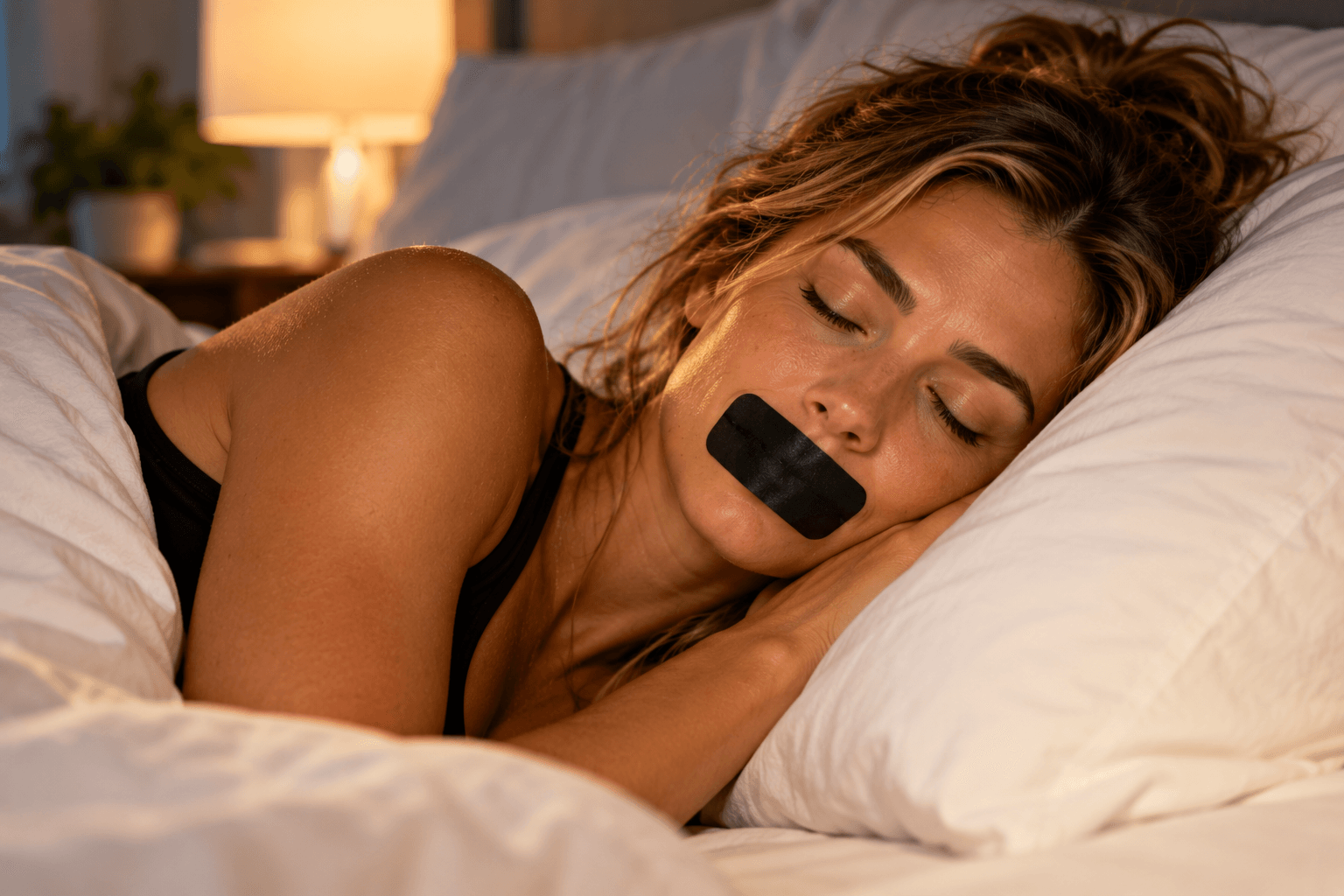
At night, it's harder, because you can't notice your mouth opening while you're asleep. That's where mouth tape comes in for some people. In a 2022 study of mouth breathers with mild sleep apnea, taping the mouth during sleep for a week roughly halved the median snoring index, and 13 of the 20 participants cut their snoring by at least half. The research is small, though. A 2025 systematic review in PLOS One covered 10 studies with 213 patients in total, found mixed results, and warned of a potentially serious risk of harm when people tape indiscriminately. Cleveland Clinic's pulmonologist also cautions against mouth taping.
When should you never tape your mouth?
You should never tape your mouth when you need to breathe through it. That includes nights when your nose is blocked by a cold, allergies or a structural problem, and any time you feel short of breath. The 2025 PLOS One review flagged the risk of asphyxiation when the mouth is closed and the nose is obstructed.
Sleep Foundation advises testing tape during the day first to make sure you can breathe easily through your nose, avoiding it when your nose is blocked, and folding over one corner so it's easy to remove. If you snore with gasping or pauses in breathing, see a doctor before trying tape, because mouth tape doesn't treat sleep apnea. We don't recommend mouth tape for children. Our guide to whether mouth taping is safe covers the full list.
Check this first. Skip mouth tape and see a doctor if you snore loudly, wake up gasping, have been told you stop breathing in your sleep, or can't breathe comfortably through your nose. More on safety
Our pick (paid partner): Titan Bamboo Silk Mouth Tape
For nights when your nose is clear and you want to keep your lips closed, our pick is Titan Bamboo Silk Mouth Tape. We haven't tested or ranked mouth tapes ourselves; this is our recommendation.
Titan says the strip is bamboo silk rather than kinesiology tape, and describes it as soft, breathable and moisture-wicking. It's a single oval size, 76 by 38 mm, worn horizontally across the lips, and Titan says its SilkSeal adhesive is made to grip through stubble and beards without leaving residue. Titan suggests 20 to 30 minutes of daytime practice before the first night, says every batch is third-party tested and certified PFAS-free, and offers a 30-night guarantee that refunds you if your sleep isn't better after 30 nights.
Read next
Common questions
Is mouth breathing bad?
Not always. Cleveland Clinic calls it not ideal but not the end of the world, and it's normal when you need extra air or your nose is blocked. As a habit at rest or during sleep, though, it skips the warming, filtering and humidifying your nose provides and can contribute to dry mouth, snoring and dental problems.
When is mouth breathing good?
Mouth breathing is the right call during hard exercise, when your breathing rate climbs past what the nose can comfortably handle, and when your nose is blocked by a cold or allergies. It's also a normal part of talking. In those moments, getting enough air matters more than which route it takes.
Are there any benefits of mouth breathing?
The main benefit is volume. The mouth is a wider, lower-resistance path, so it moves more air more quickly. Cleveland Clinic notes that people with shortness of breath may rely on it for that reason. Outside those situations, the nose offers more benefits than the mouth.
Is mouth breathing at night normal?
A little is normal. In a 2003 study of 10 healthy adults with normal noses, only about 3% to 5% of the air they breathed in during sleep went through the mouth. Regularly waking with a dry mouth or sore throat suggests you're breathing through your mouth more than that.
Should you breathe through your mouth when running?
At hard efforts, yes, it's normal and fine. A 1995 study found that nose-only breathing lowered maximal ventilation and oxygen uptake, though everyone could still exercise hard enough for an aerobic training effect. Easy runs are a good time to practice nose breathing.
Can I use mouth tape if I sometimes need to breathe through my mouth?
Only on nights when your nose is clear. Sleep Foundation advises against taping if your nose is blocked by allergies, a cold or structural issues, and a 2025 review flagged a risk of asphyxiation with a closed mouth and a blocked nose. If you can't breathe easily through your nose, skip the tape.
Sources
- Nose breathing vs. mouth breathing: which is better?
- Breath tools: a synthesis of evidence-based breathing strategies to enhance human running
- Comparison of maximal oxygen consumption with oral and nasal breathing
- Nasal and oral inspiration during natural speech breathing
- Partitioning of inhaled ventilation between the nasal and oral routes during sleep in normal subjects
- The impact of mouth-taping in mouth-breathers with mild obstructive sleep apnea: a preliminary study
- Breaking social media fads and uncovering the safety and efficacy of mouth taping in patients with mouth breathing, sleep disordered breathing, or obstructive sleep apnea: a systematic review
- Mouth taping for sleep: does it work?
About this article
- Research
- 8 published sources, listed above.
- Evidence
- Limited. How we rate it
- Last checked
- October 14, 2026
- Funding
- Paid partner of Titan Recovery. Their ads are labeled.
- Found an error?
- Tell us. We log fixes on the corrections page.
* This content is for informational and educational purposes only and is not medical advice. It is not intended to diagnose, treat, cure or prevent any disease or health condition. Talk to a qualified healthcare provider about your health.